What Is a Tuxedo Shirt?
Contents
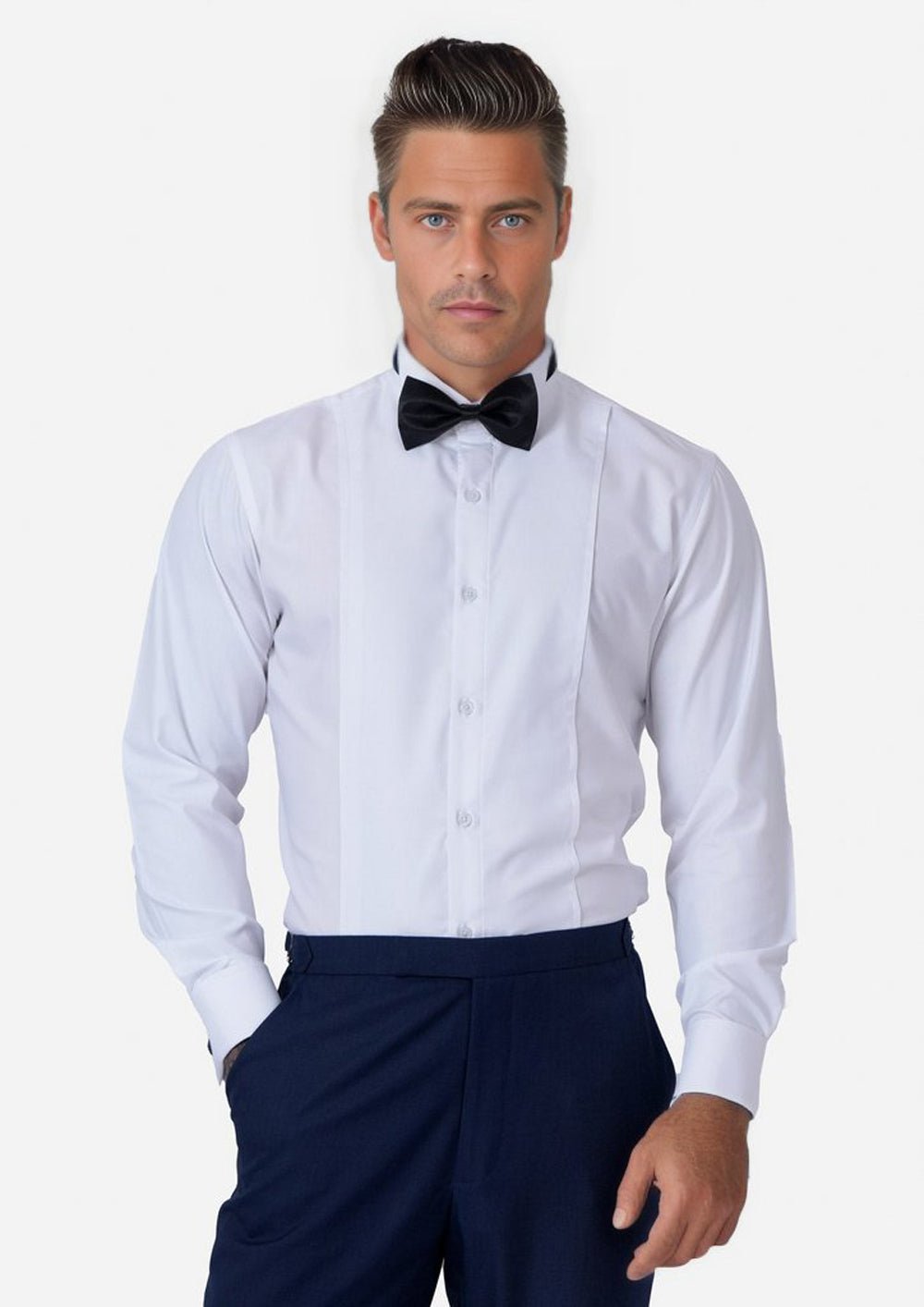
A tuxedo shirt is a formal dress shirt made specifically to be worn with a tuxedo, almost always for black-tie occasions such as evening weddings, galas and formal parties. It looks like a dress shirt at first glance, but a handful of distinct details, the bib front, the collar, the cuffs, set it apart and make it the correct partner for a tuxedo rather than an ordinary suit.
The style has deep roots. The tuxedo shirt emerged from British formalwear in the late 19th century, first paired with a white tie and tailcoat, then settling into the black-tie wardrobe we know today. Its core features have barely changed since, which is part of why it still reads as unmistakably formal.
What sets a tuxedo shirt apart
Several features separate a tuxedo shirt from a standard dress shirt:
- The bib front. A defining trait is the stud front, or bib, on the chest. It may be pleated for a classic look or left clean and pleatless for a more modern one. Traditionally it fastens with decorative studs rather than buttons.
- The collar. Wing collars are the most formal and the natural match for a bow tie; a turndown (spread) collar is more contemporary and works with both bow ties and long ties; a mandarin (band) collar is a minimalist option worn without a tie.
- French cuffs. Tuxedo shirts almost always have French (double) cuffs, which fold back and fasten with cufflinks instead of buttons, adding polish and a small point of personal expression.
- The placket. The button placket is often concealed for a clean, seamless front, though a placket with decorative studs is a traditional alternative.
Together these details create the crisp, formal front that a tuxedo is built around. For the wider picture of how the shirt fits into black-tie dressing, see tuxedo vs suit.
Tuxedo shirt fabrics
Fabric shapes both how the shirt looks and how comfortable it feels through a long evening. The common choices:
- Cotton is the classic. Crisp weaves such as broadcloth and twill give the clean, structured front formalwear calls for, and cotton breathes well.
- Egyptian and fine long-staple cottons offer a smoother hand and a subtle sheen, a step up in refinement while staying breathable.
- Bamboo is a softer, more breathable modern option with natural moisture management, comfortable for warm rooms and long events, though it can wrinkle more readily than crisp cotton.
Whatever the fibre, the goal is the same: a clean, even front that holds its shape. For the broader principles, our guide to what makes a quality dress shirt goes deeper on construction and cloth.
How to get the fit right
Fit matters as much as fabric. A well-fitted tuxedo shirt looks sharp and stays comfortable; a poorly fitted one undermines the whole outfit. Focus on four areas:
- Collar. It should sit comfortably around the neck with room for one or two fingers. Too tight is uncomfortable; too loose looks untidy and softens the line of the bow tie.
- Sleeves. The cuffs should extend slightly past the jacket sleeve, showing about half an inch of shirt, so the cufflinks are visible.
- Shoulders. The shoulder seam should line up with the edge of your shoulder, giving a clean, structured look without excess fabric.
- Chest and waist. The body should be trim but not constricting, so it tucks cleanly and does not billow when you move.
Off-the-rack shirts can be close, but few men match a standard pattern exactly, which is where a shirt cut to your own measurements removes the guesswork. For how fit reads across formalwear in general, see how a suit should fit.
When to wear a tuxedo shirt
A tuxedo shirt belongs to high formality and is reserved for black-tie occasions:
- Black-tie events such as galas, charity balls and formal award ceremonies.
- Formal weddings, especially evening receptions with a black-tie dress code, for the groom and groomsmen.
- Opera, ballet and theatre openings with a formal dress code.
- State dinners and diplomatic receptions, where the highest formality is expected.
A few etiquette points keep the look correct:
- Wear a tuxedo shirt with a tuxedo, not with an ordinary suit.
- Keep it crisp, clean and well pressed; a sharp front carries the whole outfit.
- Match the collar to your neckwear, with a wing collar the classic choice for a bow tie. If you need the technique, here is how to tie a bow tie.
- Mind the details: choose studs and cufflinks that complement, not compete with, the rest of the outfit.
Frequently asked questions
Are tuxedo shirts only for formal events?
Largely, yes. Tuxedo shirts are made for black-tie occasions, weddings and galas, where their formal front and details complete a tuxedo. They are not meant for everyday or business wear.
Can a tuxedo shirt be worn with any suit?
No. A tuxedo shirt is designed to pair with a tuxedo. Worn with an ordinary suit, its formal bib, studs and collar look out of place. Keep it for tuxedo occasions and choose a regular dress shirt for suits.
What collar styles do tuxedo shirts come in?
The main options are the wing collar, traditional for black tie and built around a bow tie; the turndown or spread collar, a more modern look that also works with a long tie; and the mandarin or band collar, a minimalist style worn without a tie.
Does a tuxedo shirt have to be white?
White is the classic and safest choice, but it is not the only one. Ivory, cream and pale blue can suit certain events or tastes. The priority is a clean, cohesive look with the rest of your formalwear.
Do tuxedo shirts need cufflinks?
Usually. Most tuxedo shirts have French cuffs, which have no buttons and fasten with cufflinks. Cufflinks are part of the traditional ensemble and a subtle way to personalise an otherwise uniform outfit.
How do I care for a tuxedo shirt?
Premium formal shirts are usually best dry-cleaned to protect their texture and colour. If washing is allowed, use a gentle cycle with cold water and a mild detergent, then iron while slightly damp and avoid high heat and direct sun when drying.
Expert insights from our team
Andy Fine
Founder
Hi, I’m Andy, founder of Sartoro. I started Sartoro because most guys don’t want “fashion”—they want to look sharp, feel confident, and not waste time. We make custom clothing simple: great fabrics, a clean process, and a fit you can trust. If you ever have a question about style, sizing, or what to wear, I’m always happy to help.