Tuxedo vs Suit: The Key Differences

Contents

The difference between a tuxedo and a suit is the satin trim. A tuxedo has satin or grosgrain facings on the lapels, covered buttons and a matching stripe down each trouser leg. It is worn with a bow tie for black tie events. A suit has none of these details, is worn with a necktie, and covers everything from the office to a cocktail party. If the invitation says black tie, wear a tuxedo. For almost anything else, wear a suit.

Key takeaways

  • A tuxedo is evening wear with satin or grosgrain details. A suit is made entirely of one cloth.
  • Black tie means a tuxedo, and black tie optional allows either. Cocktail attire, semi-formal and business professional call for a suit.
  • A bow tie does not turn a black suit into a tuxedo, because the trim that defines a tuxedo is built into the jacket and trousers.
  • Convention sets the rest of the tuxedo outfit: a white dress shirt, a black bow tie, a cummerbund or vest, and black patent or highly polished shoes.
  • If black tie events are a regular part of your year, owning a tuxedo makes more sense than renting one each time.

What is the difference between a tuxedo and a suit?

A tuxedo is a formal evening suit trimmed in satin or grosgrain, while a suit is a jacket and trousers made from the same cloth with no trim. The tuxedo, called a dinner suit in Britain, exists for one dress code: black tie. Most other occasions belong to the suit, the everyday garment of tailoring. The guide to what a tuxedo is goes into its origins and the main styles.

  • Lapels: on a tuxedo, faced in satin or grosgrain; usually peak or shawl. On a suit, same cloth as the jacket; usually notch or peak.
  • Buttons: on a tuxedo, covered in the facing fabric. On a suit, horn, plastic or similar.
  • Pockets: on a tuxedo, traditionally jetted, with no flaps; many now have flaps. On a suit, usually flap pockets.
  • Trousers: on a tuxedo, satin or grosgrain stripe down each leg; higher rise; no belt loops. On a suit, plain; usually belt loops.
  • Shirt: on a tuxedo, white formal shirt, often pleated, with French cuffs and often studs. On a suit, any dress shirt.
  • Neckwear: on a tuxedo, black bow tie. On a suit, necktie.
  • Waist: on a tuxedo, cummerbund or low-cut evening vest. On a suit, optional matching vest.
  • Shoes: on a tuxedo, black patent or highly polished oxfords. On a suit, any dress shoe that suits the outfit.
  • Occasions: on a tuxedo, black tie and black tie optional evenings. On a suit, black tie optional, cocktail and semi-formal, work, most weddings.

Is a dinner suit the same as a tuxedo?

Yes, a dinner suit is the same garment as a tuxedo. "Dinner suit" is the British name, and "tuxedo" is the American one. Both mean a black or midnight blue evening suit with faced lapels and a trouser stripe, worn for black tie. A dinner suit is not a business suit worn to dinner.

Look at the lapels to tell them apart. A satin or grosgrain facing marks the tuxedo, while the suit keeps its own cloth.
Reading a British dress guide? There, "dinner suit" means a tuxedo for black tie, not a business suit worn to dinner.

The tuxedo details, piece by piece

Much of what makes a tuxedo comes from taking practical details away, such as belt loops and, traditionally, pocket flaps, so nothing breaks the line of the jacket or trousers. The remaining contrast comes from the facing fabric. The shirt and bow tie are made for the occasion.

Lapels and buttons

A tuxedo's lapels are faced, meaning covered, in satin or grosgrain. Grosgrain is a ribbed fabric, traditionally silk. The facing is the detail that identifies a tuxedo from across a room. Peak and shawl lapels are the traditional tuxedo styles. A notch lapel exists on some tuxedos, but it sits lower on the formality scale. The buttons are covered in the same facing fabric, so they match the lapels instead of standing out against the cloth the way suit buttons do.

Pockets

Traditional tuxedo pockets are jetted: a slit trimmed with a narrow strip of fabric, with no flap. Many tuxedos made today have flap pockets, like a suit. If the flaps tuck into the pocket, tuck them in for the more formal look.

Trousers

Tuxedo trousers carry a stripe of satin or grosgrain down the outside of each leg. The stripe matches the lapel facing. There are no belt loops, because side adjusters or suspenders hold the waist up and a cummerbund or vest covers it. The rise is cut higher than on most suit trousers. The higher rise keeps the waistband under the cummerbund or vest when you sit, reach or dance, so no strip of shirt shows. The hem is left plain, without cuffs. It is cut with little or no break, so the stripe falls in a straight line onto the shoe. Suit trousers have no stripe, usually have belt loops, and can take a cuff.

Shirt

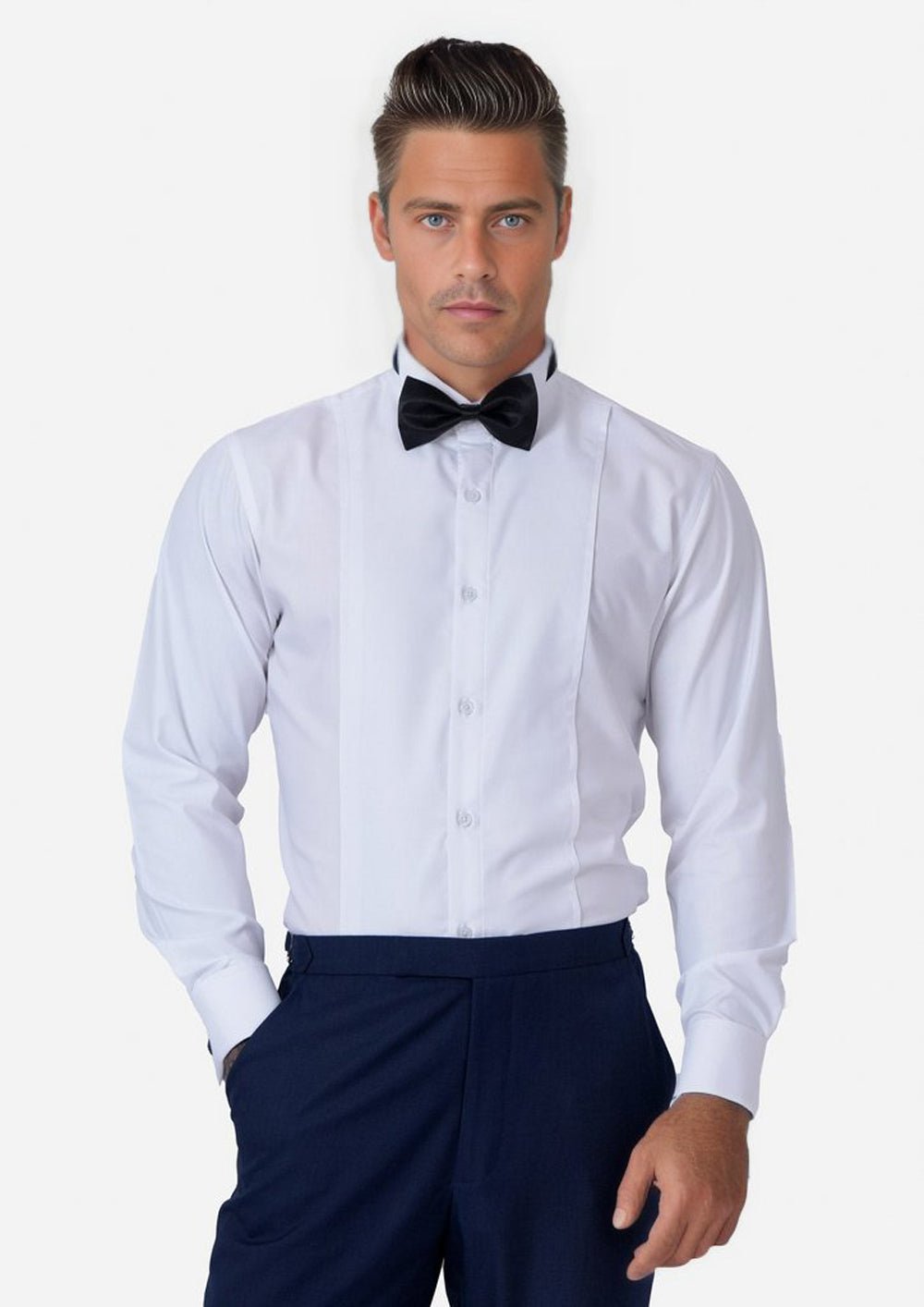
A tuxedo is worn with a white formal shirt. The shirt usually has a pleated or plain front, French cuffs for cufflinks, and a turndown or wing collar. A piqué front, a textured cotton weave, is another tuxedo option. Many tuxedo shirts close with studs instead of buttons. With a suit, any dress shirt works, in whatever color the occasion allows. That includes spread, point and button-down collars, button or French cuffs, and solid or patterned fabric. The tuxedo shirt guide goes through the options. The tuxedo shirts collection carries them.

Bow tie

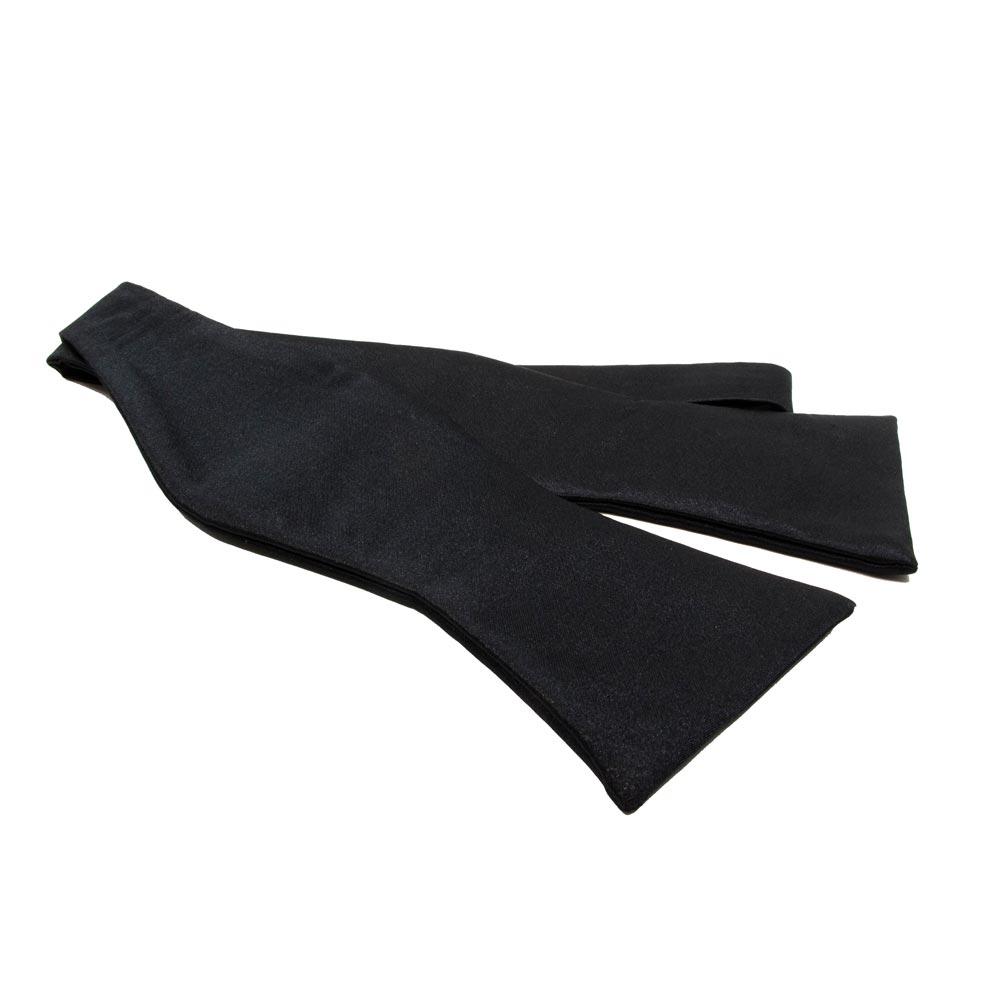
A black bow tie is the standard neckwear with a tuxedo. Ideally, it is a self-tie bow tie in a fabric that matches the lapels. A long necktie in its place is a modern variation, and a less formal one. A white pocket square is the usual finish. The bow tie guide shows how to tie one.

Cummerbund or vest

A tuxedo covers the waistband with either a cummerbund or a low-cut evening vest. A cummerbund is a pleated sash, worn with the pleats facing up. The cover matters most with a single-breasted jacket worn open. There, it keeps the shirt from showing between the jacket and trousers.

Shoes

Black patent leather lace-ups are the standard tuxedo shoe, and highly polished black calf oxfords are an accepted alternative. The opera pump, a low patent slipper with a bow, is the most traditional choice, but it is rarely worn today. A suit can be worn with any dress shoe that matches its color and the occasion.

Look at the facing first. It covers the lapels, and the buttons are wrapped in the same fabric so they match.
Try sitting down in it. With the higher rise and a cummerbund on, no shirt should show at the waist.
White Tuxedo Shirt885 White Tuxedo Shirt553
Premium, lightweight & comfortable classic cotton.
$140
Black Bow Tie918 Black Bow Tie874

When to wear a tuxedo and when to wear a suit

Wear a tuxedo when the invitation says black tie, and a suit for the formal dress codes below it. The wording on the invitation settles the question. So an event that feels important but asks for cocktail attire still calls for a suit.

  • Black tie calls for a tuxedo. That includes evening weddings, galas, charity balls and award dinners that state black tie.
  • Black tie optional leaves the choice to you. A tuxedo is welcome. A dark suit with a white shirt and a dark tie or a black bow tie is also correct.
  • Cocktail attire and semi-formal sit below black tie optional, and both call for a dark suit. A tuxedo overdresses most cocktail events. The cocktail attire guide covers that dress code in full.
  • Business professional calls for a suit. Business casual calls for separates, such as a sport coat and trousers. Neither ever calls for a tuxedo.

White tie sits above black tie and calls for neither garment, since it requires a tailcoat. The white tie vs. black tie guide explains the difference. Our dress codes guide ranks every code from casual to white tie.

Time of day matters as well, because a tuxedo is evening wear. Black tie events traditionally begin after six in the evening. A tuxedo at a daytime event looks out of place unless the hosts have asked for it.

Invitation says black tie? Wear a tuxedo, whether it is a gala, a charity ball or an evening wedding.
For cocktail attire, choose a dark suit. A tuxedo would overdress most of these evenings.
Liberty Black Sharkskin Tuxedo200
Liberty Black Sharkskin Tuxedo433
Liberty Black Sharkskin Tuxedo72

Liberty Black Sharkskin Tuxedo

Products in the outfit

Tuxedo or suit for a wedding?

At a wedding, the couple's dress code decides between a tuxedo and a suit. Your role in the wedding sets how closely you follow it.

  • The groom wears whatever the couple has chosen. For an evening black tie wedding, that is naturally a tuxedo.
  • Groomsmen match the groom, usually in the same tuxedo or suit.
  • Guests follow the invitation: a tuxedo for black tie, a tuxedo or dark suit for black tie optional, and a suit for cocktail or semi-formal weddings. A guest should not out-dress the wedding party.
In the wedding party? Match the groom, since groomsmen usually wear the same tuxedo or suit he does.
As a guest, follow the invitation and do not out-dress the wedding party.
Dean Dark Navy Twill Tuxedo - SARTORO513
Dean Dark Navy Twill Tuxedo - SARTORO715
Dean Dark Navy Twill Tuxedo - SARTORO370

A black suit is not a tuxedo

A black suit worn with a bow tie is still a suit. A bow tie is an accessory, and everything that makes a tuxedo is built into the jacket and trousers. Next to real tuxedos at a black tie event, the plain lapels in the jacket's own cloth give it away first. At black tie optional, a black suit with a white shirt and a black bow tie is the accepted alternative. At black tie, a tuxedo is required. A black suit is a good choice for black tie optional and evening cocktail events. It is not a good choice for the office or a daytime wedding. The black suit guide covers when it works best.

Turning a suit into a tuxedo rarely works well. Adding satin to the lapels of a finished jacket is a substantial alteration. It also leaves the plain buttons, belt loops and unstriped trousers, unless each of those is changed too. The result usually reads as an altered suit. When black tie comes up regularly, a tuxedo made as a tuxedo is the better route.

Check the lapels before black tie. A black suit with a bow tie keeps plain lapels in its own cloth, so it still reads as a suit.
At strict black tie, wear a tuxedo. Its satin-faced lapels set it apart from a black suit.

What changes when a tuxedo is cut instead of a suit

A tuxedo order settles five details that a suit order leaves open: lapels, buttons, pockets, trousers and hem. Check these five points whether you order a tuxedo or try one on:

  • Lapels. The lapel facing and lapel style are chosen together. Satin gives more shine, and grosgrain has a ribbed, matte surface. A shawl or peak lapel reads more formal than a notch.
  • Buttons. The buttons are covered in the facing fabric. A single-breasted tuxedo usually closes with one button, not the two of a business suit.
  • Pockets. Jetted pockets are the traditional choice. If the jacket has flaps that tuck in, wear them tucked in.
  • Trousers. The trousers drop the belt loops for side adjusters or suspender buttons. They take a higher rise, so the waistband stays covered. The stripe is in the same fabric as the lapels.
  • Hem. The hem has no cuff and little or no break, so the trouser stripe runs in an unbroken line to the shoe.

With a rental, these decisions are made for you. With a tuxedo you own, check each of them when you order or at the fitting. The tuxedos collection shows the cuts and colors. The custom suits collection covers the suit for everything else.

 Onyx Shine Black182
 Onyx Shine Black977
 Onyx Shine Black565

Tuxedo colors beyond black

Black is the standard tuxedo color. Midnight blue, a very dark navy, is the traditional alternative. Tuxedos are usually made in black or midnight blue wool, with satin or grosgrain facings. A white or ivory dinner jacket with black tuxedo trousers is the warm-weather option for summer evenings. At a wedding, a guest wears a white dinner jacket only if the couple asks for white. Velvet tuxedo jackets in deep green or navy belong at holiday and creative black tie events. The guide to what a tuxedo is covers the main styles.

Suits are made in far more colors and cloths, because they cover so many more occasions. They include navy, charcoal and light gray, as well as pinstripes and checks. Cotton and linen suits are made for warm weather. Suit color also follows the season, with lighter shades in summer and deeper ones in winter. Seeing a black suit and a black tuxedo side by side is the quickest way to learn the difference. The black suits collection is a useful place to compare them.

Want a tuxedo that is not black? Midnight blue, a very dark navy, is the traditional pick.
For a holiday party with a black tie code, pick a velvet tuxedo jacket in deep green.
Emerald Green Velvet Tuxedo - SARTORO672
Emerald Green Velvet Tuxedo - SARTORO557
Emerald Green Velvet Tuxedo - SARTORO445

Should you rent or own a tuxedo?

You should rent a tuxedo for a single event and own one once black tie is a regular part of your year. Three things settle it:

  • Events. Count the black tie events you expect in the next few years, including weddings, galas and work dinners.
  • Build. If you are broad in the shoulders, very tall or very slim, a rental will be a compromise in the sleeves, chest or trouser length.
  • Notice. A rental may not be available in your size when an invitation arrives late.

If two of the three point toward owning, owning is the better choice. A rental is made to fit a range of bodies, while a tuxedo you own can fit you exactly. If you own neither yet, a dark suit is the more practical first purchase. It covers work, interviews and most events. The tuxedo styling guide covers how to wear a tuxedo once you have it. The suit and tuxedo rental guide lists what rental typically includes. The tuxedo fit guide explains what a good fit looks like.

Broad shoulders, very tall or very slim? A tuxedo you own can fit you exactly, where a rental is a compromise.
Start with a dark suit if you own neither yet. It handles work, interviews and most events.

Frequently asked questions

Is a tuxedo a suit?

Yes, a tuxedo is a type of suit, made for evening and black tie. It is the more formal of the two. It differs from a regular suit in its satin or grosgrain lapels, covered buttons and trouser stripe.

Can you wear a suit to a black tie event?

No, you can't wear a suit to a strict black tie event, which calls for a tuxedo. For black tie optional, a dark suit with a white shirt and a dark tie or a black bow tie is correct.

Is a tux just a black suit?

No, a tux is not just a black suit. A black suit has no satin or grosgrain trim anywhere, so even with a bow tie it remains a suit.

Should you rent or buy a tuxedo?

You should rent a tuxedo for a single event. Buy one when at least two of these apply: black tie is a regular part of your year, you are hard to fit off the rack, or invitations often arrive at short notice.

Can a tuxedo be worn during the day?

No, a tuxedo is not traditionally worn during the day, meaning before six in the evening, because it is evening wear. A daytime wedding or event calls for a suit, unless the hosts specifically ask for black tie.

Do you wear a belt with a tuxedo?

No, you do not wear a belt with a tuxedo. The trousers are built without belt loops, so side adjusters or suspenders do the job a belt would.

Tuxedo or suit for prom?

For prom, either a tuxedo or a suit is acceptable, unless the school sets a dress code. A tuxedo is the more formal of the two, while a dark suit gets far more wear after prom night.

Is a three-piece suit the same as a tuxedo?

No, a three-piece suit is not a tuxedo. It is a suit with a matching vest, made in one cloth without satin details. It works for business and formal events, including black tie optional, but not for strict black tie. The two-piece vs. three-piece suit guide compares the two suit styles.

What shoes go with a tuxedo versus a suit?

A tuxedo needs black shoes with a high shine, either patent leather or polished calf. A suit is far more flexible. Wear black oxfords with the most formal suits, and brown leather or loafers for daytime and relaxed events. The shoe and pants color guide covers the shoe colors for each suit color.

About the author

Expert insights from our team

Andy Fine

Andy Fine

Founder

Hi, I’m Andy, founder of Sartoro. I started Sartoro because most guys don’t want “fashion”—they want to look sharp, feel confident, and not waste time. We make custom clothing simple: great fabrics, a clean process, and a fit you can trust. If you ever have a question about style, sizing, or what to wear, I’m always happy to help.

Sartoro 1st Employee
Fit Nerd
“Looks Good” Guarantee

Popular Posts