How to Tie a Bow Tie (and How to Wear One)

Contents

A bow tie comes down to two things, tying it cleanly and choosing the right one for the occasion. The short version up top: self-tie is the standard, black silk is the safe choice for black tie, butterfly is the safe shape, and you keep the bow in proportion to your lapels. Everything below is the full guide, from the step-by-step tie to the shape, fabric, size, and matching rules that separate a correct bow tie from a costume one.

How to tie a bow tie (step by step)

Tying a self-tie bow tie is the same move as tying your shoelaces, only it sits at your throat where you cannot see it. Do it at a mirror the first few times. Start with your collar up and the tie around your neck.

  1. Drape and set the length. Lay the tie around your neck with the longer end on your right, longer by a few inches. That offset is what gives you enough length to finish.
  2. Cross. Bring the long end over the short end at your throat.
  3. Loop up into a loose half-knot. Pass the long end up under and through the loop at your neck, then let it hang down the front. Pull it gently snug. This is just a half-knot.
  4. Fold the short end into the front bow. Take the short end and fold it horizontally toward your opposite shoulder so it makes the front bow shape. Pinch it at the collar and hold it there.
  5. Drape the long end down over the center. Bring the hanging long end straight down over the middle of the folded front bow.
  6. Fold the long end back and find the hidden loop. Fold the long end back on itself, then feel for the small loop sitting behind the front bow. This is the step almost everyone gets stuck on, so go slow and do it at a mirror. The loop is there even when you cannot see it.
  7. Push the fold through and tighten. Push the folded long end through that hidden loop to form the back half of the bow, then pull gently on the opposing leaves, front of one side against back of the other, until it sits even and snug.

For the fit and finish, you should be able to slide one finger between the band and your neck. And a slight asymmetry is correct. That small imperfection is exactly what tells people the bow was tied by hand rather than bought ready-made.

Step-by-step diagram showing how to tie a bow tie

Step-by-step diagram showing how to tie a bow tie

Which bow tie for which occasion

This is the quick reference. Find your occasion, then match the shape, fabric, and color.

  • Black tie -- Shape: Butterfly (batwing also fine); Fabric: Black silk, satin or grosgrain matched to the lapel; Color / pattern: Black, self-tied
  • White tie -- Shape: Semi-butterfly or batwing; Fabric: White cotton piqué (marcella); Color / pattern: White, self-tied
  • Wedding -- Shape: Butterfly or semi-butterfly for formal; batwing or diamond for daytime; Fabric: Silk for formal; linen or cotton for daytime; Color / pattern: Black or navy for black-tie weddings; softer color or subtle pattern for daytime, coordinated to the palette
  • Business / creative -- Shape: Batwing, diamond point, or modest butterfly; Fabric: Silk, wool, knitted, cotton; Color / pattern: Solids are easiest; restrained pattern as an accent
  • Casual -- Shape: Diamond point, club, or batwing; Fabric: Wool, knitted, cotton, linen, seersucker; Color / pattern: More color and pattern freedom; texture welcome
Bow tie occasion guide for black tie, white tie, wedding, business, and casual

Bow tie occasion guide for black tie, white tie, wedding, business, and casual

Bow tie shapes, and how formal each one is

Shape is not just looks. It carries formality, and the differences are real enough to rank.

  • Butterfly (classic or thistle). The flared, pinched-waist hourglass profile, typically around 2¼ to 2½ inches tall, with an oversized version near 3 inches. This is the most formal shape and the black-tie standard. It suits most faces and builds, and the larger size reads well on broader frames.
  • Semi-butterfly. A smaller butterfly with less flare. Formal, and the shape to reach for at white tie alongside the batwing. A restrained, modern choice.
  • Batwing (straight or slim). A roughly 2-inch straight band with no flare. Slim and contemporary, it works from dressy down to casual, and it is a valid white-tie shape too.
  • Diamond point. Pointed tips and slightly asymmetric ends, about 2 to 2⅜ inches. Casual to semi-formal, with a bit of visual interest. Not the black-tie pick.
  • Rounded or club. Rounded ends. Casual and playful, made for everyday or creative dress.
  • Single-end. One flat blade and one shaped end. A specialist formal shape built for wing-collar tuxedo shirts, so no hardware shows behind the winged collar.

The formality ranking, plainly: butterfly is the most formal and the black-tie standard, then semi-butterfly for white tie, then batwing as the dressy-to-casual modern option, with diamond point and club sitting in casual and creative territory.

The proportion rule matters more than your face shape. Scale the bow to your lapel width and collar spread. A bow that overwhelms a narrow lapel, or disappears against a wide one, looks wrong no matter how good the tie is. If you want a soft face-shape cue, fuller shapes flatter rounder or broader faces and slimmer shapes suit angular or oval ones, but treat that as guidance, not a rule.

Bow tie shapes compared: butterfly, semi-butterfly, batwing, diamond point, club, and single-end

Bow tie shapes compared: butterfly, semi-butterfly, batwing, diamond point, club, and single-end

Self-tie vs pre-tied vs clip-on

Three ways to get a bow tie around your neck, and they are not equal.

  • **Self-tie** -- What it is: You tie it by hand. The slight asymmetry reads as care, and the shape and knot are yours to adjust.; When it fits: The standard for anything formal. Required for black tie and white tie. The default for adults.
  • **Pre-tied** -- What it is: A finished bow on an adjustable band. Fast and neat.; When it fits: A convenience option. Fine for kids or a genuine last resort. The tell-tale perfect symmetry usually gives it away.
  • **Clip-on** -- What it is: A finished bow that clips to the collar, no band around the neck.; When it fits: Children or novelty use only. The least formal of the three.

The principle is simple. Self-tie for formal occasions. Pre-tied and clip-on are convenience options, not the formal choice.

Self-tie, pre-tied, and clip-on bow ties compared side by side

Self-tie, pre-tied, and clip-on bow ties compared side by side

Bow ties for black tie

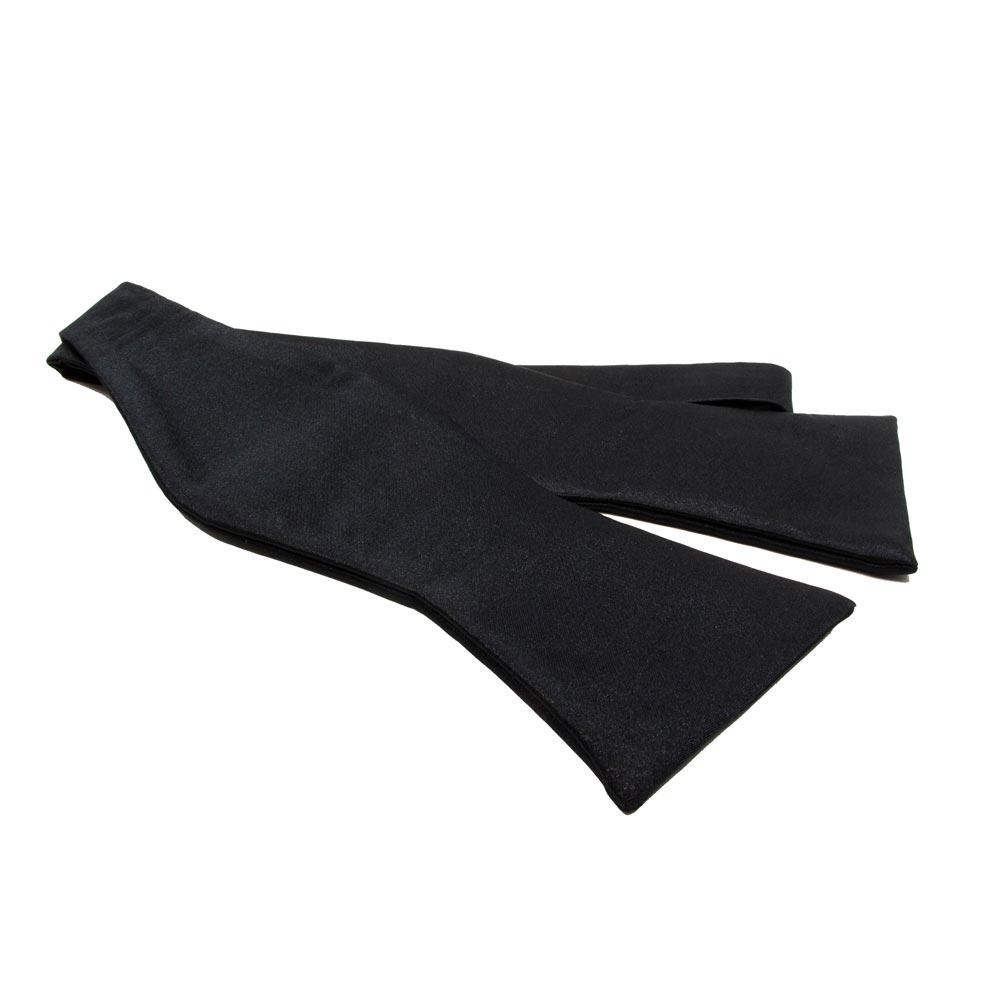
Black tie has a clear answer: a black silk bow tie, self-tied, in the butterfly shape. That is the anchor look, and almost everything else is a variation on it.

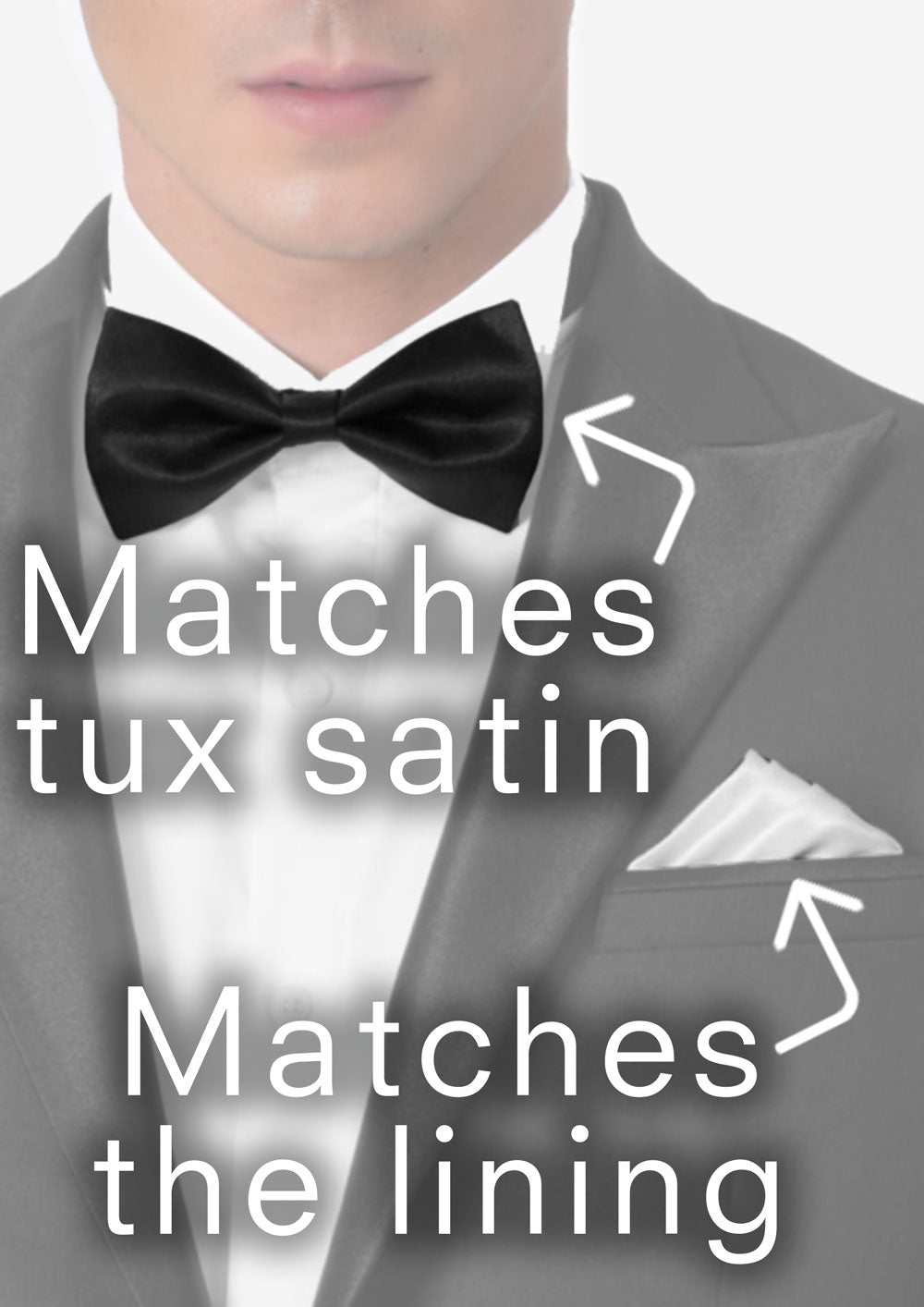
The one detail people fuss over is satin versus grosgrain. The rule that settles it: match the bow tie's lustre to the lapel facing. A satin bow with satin-faced lapels, a grosgrain or barathea bow with grosgrain-faced lapels. Mismatched shine, a matte bow against glossy lapels or the reverse, makes one piece look like it belongs to a different outfit. If you want the difference between black tie and its stricter cousin spelled out, our guide to black tie versus white tie covers the full dress codes.

Black tie bow ties in satin versus grosgrain matched to the lapel facing

Black tie bow ties in satin versus grosgrain matched to the lapel facing

Bow ties for white tie

White tie is the most formal dress code, and the bow tie is fixed. It is white cotton piqué, the textured weave often called marcella, self-tied, in a semi-butterfly shape (batwing also works). Ideally the piqué matches the waistcoat and shirtfront for one continuous white. A pre-tied white-tie bow reads as a shortcut on an occasion that allows none.

One point worth stating clearly, because it trips people up: a black bow tie is black tie, not white tie. The two codes are not interchangeable, and the dress-code distinctions are worth a read if you are dressing for either.

Bow tie fabrics and how to match them

Fabric sets both the formality and the season. Here is what each one does and where it belongs.

  • Silk satin -- Character: Smooth, high sheen; Best for: Black tie with satin-faced lapels
  • Silk grosgrain (barathea) -- Character: Ribbed, low sheen; Best for: Black tie with grosgrain-faced lapels; understated formal
  • Cotton piqué (marcella) -- Character: Crisp, textured white; Best for: White tie
  • Velvet -- Character: Plush, rich; Best for: Formal or festive winter; works with satin or grosgrain lapels
  • Wool and knitted -- Character: Matte, textured; Best for: Business-casual to casual, fall and winter; never black tie
  • Linen, cotton, seersucker -- Character: Light, matte, summery; Best for: Daytime or outdoor weddings, casual summer

A few matching rules carry across all of them:

  • Match the lustre to the lapel. Satin with satin, grosgrain with grosgrain. This is the same rule that resolves the black-tie question.
  • Coordinate, do not over-match. Pull a color out of the outfit rather than twinning it. Never buy a matching shirt-and-bow set; it reads as a kit, not a choice.
  • Solids are the easiest to wear. Patterns work as an accent if they coordinate, and if you are mixing patterns, vary the scale so they do not compete.
Bow tie fabrics: silk satin, silk grosgrain, cotton pique, velvet, wool, and linen

Bow tie fabrics: silk satin, silk grosgrain, cotton pique, velvet, wool, and linen

Bow tie sizing and fit

A well-sized bow tie is mostly about proportion, with one comfort measurement underneath it.

  • Standard spread: about 4.5 to 5 inches end to end when tied, with a height around 2.25 to 3 inches.
  • Proportion is the real rule. Keep the bow in scale with your lapel width, collar spread, and build. Too small looks like a child's accessory; too large overwhelms the outfit. Fuller for formal or larger frames, slimmer for casual or slimmer frames.
  • Measure the band. Wrap a tape around your neck where the collar sits and add about half an inch for comfort, a little more if the collar is stiff.
  • Adjustable range: most adult self-tie bow ties adjust across roughly 14.5 to 18.5 inches, though the exact range varies by brand.
  • Fit test: one finger should slide between the band and your neck, snug with no gaps or bunching.
Bow tie sizing diagram showing spread width, height, and the one finger fit test

Bow tie sizing diagram showing spread width, height, and the one finger fit test

Bow tie vs necktie: which is more formal

The bow tie is the more formal of the two. It is required with a tuxedo and with a pleated or stud-front formal shirt, where a necktie would simply cover the studs and look wrong. The necktie is the everyday and business default, more versatile across suits and offices.

So the choice is short. Reach for a bow tie when the dress code is black or white tie, or when you want clear formal presence. Reach for a necktie for general business and most suit-and-tie settings.

Bow tie versus necktie formality comparison

Bow tie versus necktie formality comparison

How to wear a bow tie without looking costume-y

The line between deliberate and costume is mostly about restraint and matching. A few habits keep you on the right side of it:

  • Pull a color from the outfit. Tie the bow to something already in the look, the suit, the shirt, a stripe, rather than introducing a loud new note.
  • Do not twin the shirt. A bow that exactly repeats the shirt color or pattern looks like a set. Coordinate instead.
  • Pair with a pocket square that complements rather than matches. A square in a related tone, not an identical one, reads as considered. If you are new to it, our guide on how to fold a pocket square covers the simple folds.
  • Mind the collar. A point or spread collar carries a bow tie cleanly; an over-tall or floppy collar fights it.

The goal is to look like you chose every piece on purpose. For the wider picture of how a bow tie sits among the rest of your accessories, see our overview of suit accessories for men.

Common bow tie mistakes to avoid

The faux pas are easy to name and easy to skip:

  • A pre-tied or clip-on bow at a formal or black-tie event.
  • A colored or novelty bow at black tie.
  • A lustre mismatch, a matte bow against satin lapels or the reverse.
  • A black bow tie worn to white tie.
  • A matching shirt-and-bow set bought as a kit.
  • A bow out of proportion to the lapels, either swamping them or vanishing against them.

Choosing your bow tie

If you buy one bow tie, make it a self-tie black silk. It covers black tie and most formal needs, and it never looks out of place where the dress code is real. From there you can add color, texture, and casual shapes as the occasions call for them.

The part that actually flatters you is not the color, though. It is the proportion to your lapels and collar and the way the band sits at your neck. That is the quiet work of fit, and it is where made-to-measure and custom tailoring earn their place: a bow scaled to your jacket, on a band measured to your neck, reading as deliberate rather than off-the-rack. Sartoro's custom ties are built around that idea, the bow sized to the suit rather than the suit accommodating a generic bow.

Black Bow Tie148 Black Bow Tie423
Matching Bowtie & Pocket Square725 Matching Bowtie & Pocket Square930
On Sale
Jet Black Twill Tuxedo669 Jet Black Twill Tuxedo396
Classic
All-season wool blend
$575

Frequently asked questions

How do you tie a bow tie?

Drape it with the longer end on your right, cross and loop the long end up into a loose half-knot, fold the short end into the front bow, drape the long end down over the center, fold it back and push it through the hidden loop behind the bow, then tighten the opposing leaves. Do it at a mirror until the fold-through step becomes muscle memory.

Is a self-tie or pre-tied bow tie better?

Self-tie, for anything formal. The slight asymmetry of a hand-tied bow reads as care, while a pre-tied bow's perfect symmetry usually gives it away. Pre-tied is a convenience option for kids or a last resort, not the formal choice.

What bow tie do I wear for black tie?

A black silk bow tie, self-tied, in the butterfly shape. Match the bow's lustre to your lapels: satin with satin-faced lapels, grosgrain with grosgrain.

What bow tie do I wear for white tie?

White cotton piqué (marcella), self-tied, in a semi-butterfly or batwing shape. A black bow tie belongs to black tie, not white tie.

Can you wear a bow tie casually?

Yes. Diamond point, club, and batwing shapes in wool, knitted, cotton, or linen dress down easily, and casual settings give you far more color and pattern freedom.

What bow tie shape suits my face?

Proportion to your lapel and collar matters more than your face shape. As a soft guide, fuller shapes like the butterfly flatter rounder or broader faces, and slimmer shapes like the batwing suit angular or oval ones.

How wide should a bow tie be?

About 4.5 to 5 inches across when tied is standard. Beyond that number, keep it in proportion to your lapel width, collar spread, and build.

Bow tie vs necktie, which is more formal?

The bow tie is more formal. It is required with a tuxedo and with a pleated or stud-front shirt, where a necktie would cover the studs. A necktie is the everyday business choice.

What color bow tie for a wedding?

Black or navy for black-tie weddings, and softer colors or a subtle pattern for daytime or outdoor ceremonies. Coordinate to the wedding palette, but do not exactly match the whole party.

Are clip-on bow ties acceptable?

For children or novelty use only. They are the least formal option and not the choice for adults at a formal event.

About the author

Expert insights from our team

Andy Fine

Andy Fine

Senior Menswear ConsultantSartoro 1st Employee

Hi, I’m Andy, founder of Sartoro. I started Sartoro because most guys don’t want “fashion”—they want to look sharp, feel confident, and not waste time. We make custom clothing simple: great fabrics, a clean process, and a fit you can trust. If you ever have a question about style, sizing, or what to wear, I’m always happy to help.

15+ years experienceSartoro 1st Employee
Certified Style ConsultantFit Nerd
Published Author“Looks Good” Guarantee
Connect:
Your cart is empty
Looking for ideas?
We'll send measurement instructions
to you. Or create your fit profile now.
    Secured checkout through Shopify with: