How to Tell a Quality Suit: The Signs You Can See and Feel

Contents

A quality suit comes down to two things you can judge with your own eyes and hands. It fits your body cleanly, and it shows careful hand-work in the spots you can actually look at. Everything else, like which mill wove the cloth, you mostly take on faith.

So this guide splits the job in two. First, the signals you can verify yourself in about a minute. Then, the few you have to trust the maker on. We lead with fit, because that is the one marker nobody can fake for you, and we close on why it matters most.

Key takeaways

  • Fit comes first. A clean shoulder, a collar that grips your neck, and a chest with no pulling tell you more than any label.
  • Look for hand-work where it shows. Working cuffs, pick stitching, matched patterns, real buttons, and flat pockets are checkable signs of care.
  • Check the trousers too. Most guides forget them. The waistband, hems, and seat reserve say plenty.
  • Some "quality" signals prove nothing. A famous label, a sky-high Super number, or surgeon cuffs on their own are not proof.
  • What can never be faked is fit to your own body. The details get copied. Your exact shape does not.
A linen suit jacket deconstructed into its panels and inner structure, laid out symmetrically on a grey background

A linen suit jacket deconstructed into its panels and inner structure, laid out symmetrically on a grey background

Quality suit signals you can check yourself versus what you take on faith

Quality suit signals you can check yourself versus what you take on faith

Start with fit, the one thing that cannot be faked

Fit is where most guides go quiet, and it is the single biggest tell. A jacket can have every fancy detail and still look cheap if it sits wrong on you. Walk through these points in front of a mirror.

  • Shoulder — What good looks like: Seam ends right at your shoulder bone, lies smooth; What cheap looks like: Overhangs the edge, divots, or collapses
  • Collar gap — What good looks like: Collar hugs your neck, about half an inch of shirt collar shows; What cheap looks like: Gap behind the neck, collar stands away
  • Chest — What good looks like: Buttons flat, no creases pulling across; What cheap looks like: An "X" of wrinkles tugging from the button
  • Drape — What good looks like: Clean lines down the torso, gentle shape; What cheap looks like: Ripples, bunching, or a boxy hang
  • Sleeve — What good looks like: Hangs straight, no twist, ends near the wrist bone; What cheap looks like: Twists at the pitch, too long or too short
  • Trouser break — What good looks like: One soft fold at the shoe, clean leg line; What cheap looks like: Pooling fabric or floods at the ankle
  • Seat — What good looks like: Smooth across the back, no pull lines; What cheap looks like: Tight tugs or sagging fabric

If the shoulders are wrong, almost nothing else can be fixed. So check them first. The collar gap is the next big one. When a jacket pulls away from your neck, it usually means the cut does not match your posture, and people with uneven shoulders see this most in off-the-rack suits. There is a deeper walkthrough in our guide on how a suit should fit.

One more thing you can check by hand. Turn back a seam at the center back or the trouser side. A quality suit leaves about an inch of spare cloth so it can be let out later. No reserve means no room to adjust.

Quality suit fit checklist: shoulder, collar, chest, sleeve and trouser break

Quality suit fit checklist: shoulder, collar, chest, sleeve and trouser break

A clean suit collar versus a collar gap standing away at the back of the neck

A clean suit collar versus a collar gap standing away at the back of the neck

Finishing you can see and check

Once fit passes, look at the hand-work. These are the details a careful maker puts where you can find them.

Working cuffs, also called surgeon buttonholes. Real cuff buttons unbutton. It is a classic mark of better suiting. But be honest with yourself here. Many off-the-rack makers now add working cuffs too, so treat them as a signal, not proof. They tell you someone cared about the detail, nothing more.

Buttonhole stitch quality. Look closely at the buttonholes. Hand-finished ones have a raised, dense, slightly silky edge with tiny irregularities. The finest style, the Milanese, is worked in fine silk over a thin cord and looks almost three-dimensional. Machine holes look flat and perfectly even.

Pick stitching. This is the small row of stitches running about a quarter inch inside the edge of the lapels, pockets, and hems. Its job is to keep edges crisp and stop them curling. Hand pick stitching looks a little uneven and alive. Machine versions are dead-straight and uniform.

Pattern matching. On checks, stripes, or windowpane cloth, the pattern should line up where panels meet. Check these four spots:

  • The gorge seam, where the collar meets the lapel
  • The pocket flaps against the body
  • The center-back seam
  • The sleeve head where it joins the shoulder

Lines that drift out of alignment mean corners got cut. Our breakdown of the parts that make up a suit shows where each of these sits.

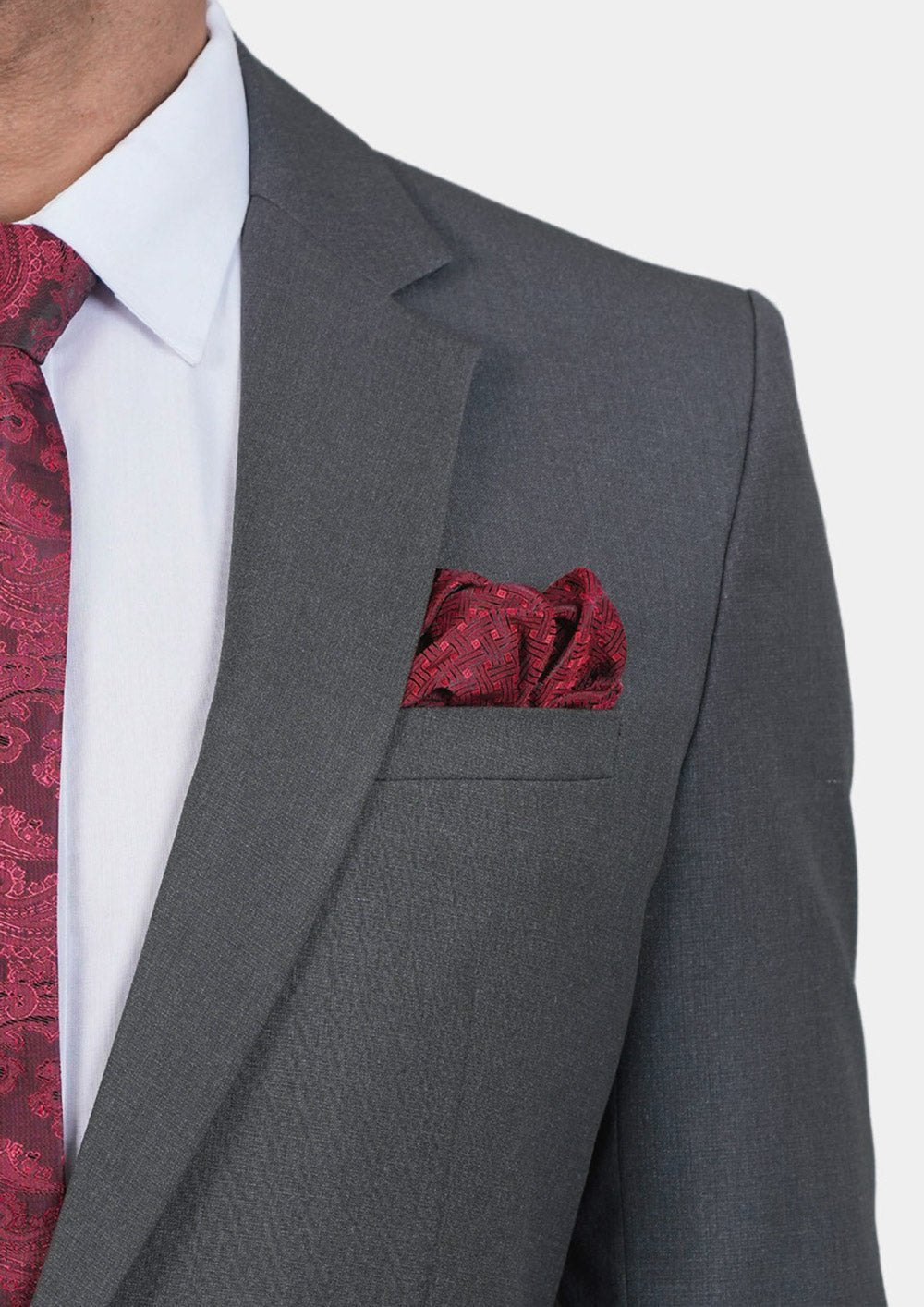
Pockets. Hip pockets should lie flat and flush, never gaping open. A curved welted breast pocket, called a barchetta after the Italian for "little boat," is a hand-intensive touch that follows the chest line. Strong pocket bags, sometimes lined in the suit cloth, hold their shape over years.

Buttons. Real horn, corozo, or mother-of-pearl buttons feel solid and a touch irregular. Plastic sounds hollow and looks too perfect. Good buttons sit on a small thread shank, a little stem that lets the button stand off the cloth so it closes cleanly.

Edges and the lapel roll. Lapel tips and hem corners should be rounded and neatly finished, which keeps them from fraying. Press the lapel gently and let go. On a quality jacket it rolls into a soft curve, takes your shape, and springs back. A cheap one lies dead-flat or shows a hard pressed crease.

Pick stitching running a quarter inch inside a charcoal suit lapel edge

Pick stitching running a quarter inch inside a charcoal suit lapel edge

Glen-check suit with the pattern matched across the pocket flap and body seam

Glen-check suit with the pattern matched across the pocket flap and body seam

Inside the jacket, what the interior tells you

Open the jacket and look. The inside should look as cared-for as the outside.

A good lining sits clean and moves with your body rather than feeling stiff or boardy. Interior seams should look tidy and finished, not raw or fraying. High-wear spots, like the armholes and the vents, often get reinforced so they hold up to daily wear. Some jackets even line parts in the suit cloth itself for durability. None of this needs a magnifying glass. If the interior looks messy, that tells you something.

A working surgeon cuff with one buttonhole undone on a navy suit sleeve

A working surgeon cuff with one buttonhole undone on a navy suit sleeve

Genuine horn suit buttons with thread shanks resting on wool cloth

Genuine horn suit buttons with thread shanks resting on wool cloth

Don't forget the trousers

Trousers get ignored in most guides, which is a shame, because they show quality just as clearly.

  • Waistband. A well-built waistband sits smooth, often with a clean inner curtain. Suspender buttons inside are a traditional touch.
  • After-dinner split. A small split at the center back of the waistband gives a little room when you sit. Tiny detail, big tell.
  • Hems. Clean, even hems that hang straight, finished neatly inside.
  • Seat reserve. Like the jacket, good trousers keep spare cloth in the seat and side seams for future alterations.
  • Lining. Many quality trousers line the knee and seat in sturdy cotton, which adds comfort and helps the leg hold its line.
Inside of grey wool suit trousers showing a clean curtain-lined waistband interior

Inside of grey wool suit trousers showing a clean curtain-lined waistband interior

After-dinner split, the small V notch at the center-back waistband of grey wool suit trousers

After-dinner split, the small V notch at the center-back waistband of grey wool suit trousers

The cloth

Fabric sits in the middle of the quality question. You can judge a lot by feel, but some of it you take on faith.

Start with fiber. Natural fibers like wool, and wool blended with silk, cashmere, linen, or cotton, drape better, breathe better, and last longer than heavy synthetic mixes of polyester, nylon, or viscose. Run the cloth between your fingers. Good wool has a clean, even weave, a soft hand with a quiet lustre, and a weight that suits its purpose. The dye should be even and deep, not patchy.

Now the Super number, the figure you see like Super 120s or Super 150s. Finer cloth is genuinely softer, smoother, and more luxurious in hand and drape, which is a real upside. The catch is at the top end. Much beyond Super 130s the cloth turns more delicate, creasing and wearing faster. So finer is more luxurious, not more durable, and for a suit in regular rotation Super 100s to 130s is the sweet spot. On a Sartoro fabric this figure is shown as the Thread Count, next to the composition, weight in GSM, and care.

  • Natural fiber content — Better drape, breathability, and lifespan
  • Even weave and deep dye — Careful milling and finishing
  • Higher Super number — Finer and softer, but not tougher; past 130s, more delicate
  • A respected mill — A reasonable signal, never a guarantee

A well-known mill is a fair signal, but you cannot verify it by touch, so do not lean on it. For a fuller breakdown of weaves and weights, see our suit fabric guide.

A hand feeling fine natural wool suiting cloth with a soft drape

A hand feeling fine natural wool suiting cloth with a soft drape

Signals that are not proof

A few things look like quality but prove very little on their own. Treat these with care.

  • A famous label. A name in the lining tells you about marketing, not always about make. Judge the suit, not the badge.
  • A sky-high Super number. It means finer and softer, not tougher or higher quality, and past Super 130s it can wear faster. Not proof on its own.
  • Surgeon cuffs by themselves. Now common on off-the-rack suits. Nice to have, but not proof of anything alone.
  • A flashy lining. A bright lining is a style choice. It says nothing about how well the suit is built.

None of these are bad. They just are not evidence on their own. Stack them with fit and visible hand-work before you trust them.

Signals that are not proof of a quality suit: brand label, high Super number, surgeon cuffs, flashy lining

Signals that are not proof of a quality suit: brand label, high Super number, surgeon cuffs, flashy lining

What still cannot be faked, fit to your body

Here is the honest part. Almost every detail above now shows up on ready-made suits. Working cuffs, pick stitching, real buttons, matched patterns. Makers copy the look, and many do it well. So if the details are copied, what is left that cannot be mass-produced?

Your body. A suit cut to your exact measurements, your shoulders, your posture, your proportions, is the one quality marker a rack can never hold in stock. Off-the-rack starts from an average and trims toward you. Custom starts from you.

That is what Sartoro builds. A custom suit is cut to your individual measurements, so the fit signals at the top of this guide, the clean shoulder and the gripping collar, come from the pattern itself rather than from luck on the rack. If you want to see how that works, our custom suits page lays it out, and the case for going custom covers the value side.

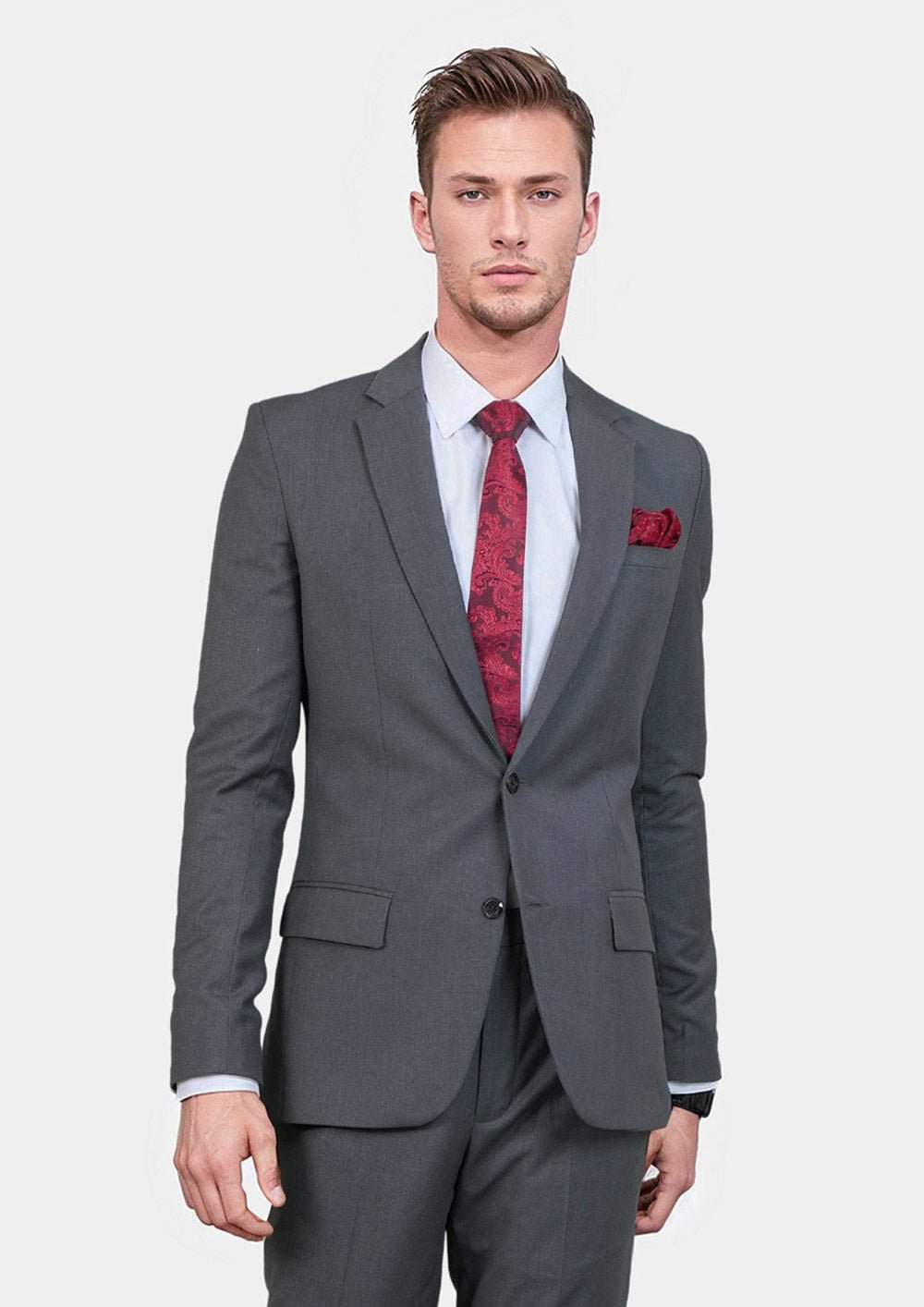
A man in a precisely fitted charcoal suit, cut to the individual body

A man in a precisely fitted charcoal suit, cut to the individual body

Bryant Charcoal Crosshatch Suit567 Bryant Charcoal Crosshatch Suit527
Sold Out
All Season Wool in a Textured Weave
$535
Astor Dark Navy Twill Suit635 Astor Dark Navy Twill Suit126
All Season Wool in a Classic Weave
$525
Grey Charcoal Crosshatch Suit920 Grey Charcoal Crosshatch Suit221
Sold Out
All Season Wool in a Textured Weave
$495
Charcoal Prince of Wales Suit36 Charcoal Prince of Wales Suit831
Premium
All-season premium wool blend
$645

FAQ

How can you tell if a suit is good quality?

Check fit first, then visible hand-work. A clean shoulder, a collar that hugs your neck, and a flat chest matter most. After that, look for working cuffs, pick stitching, matched patterns, real buttons, and a tidy interior.

What is the most important sign of a quality suit?

Fit. A suit that sits clean on your shoulders and grips your neck with no gap will always beat a poorly fitting suit loaded with fancy details.

What is a collar gap?

It is the space that opens up between your shirt collar and the jacket collar at the back of your neck. A quality, well-fitting jacket hugs the neck with only about half an inch of shirt collar showing. A gap usually points to a cut that does not match your posture.

What is pick stitching?

A subtle line of stitches running about a quarter inch inside the edges of lapels, pockets, and hems. It keeps edges crisp and stops them curling. Hand pick stitching looks slightly irregular, while machine versions are perfectly uniform.

What are surgeon cuffs?

Cuff buttons that actually unbutton, also called working buttonholes. They are a mark of higher-end suiting, but they now appear on many off-the-rack suits, so treat them as a signal rather than proof.

What is a barchetta pocket?

A gently curved welted breast pocket, named after the Italian word for "little boat." It follows the line of the chest and lapel and is a hand-intensive Italian touch.

Does pattern matching matter?

Yes, on checks, stripes, and windowpane cloth. Check that the pattern lines up across the gorge seam, the pocket flaps, the center-back seam, and the sleeve head. Misalignment is a clear sign of corners cut.

Is 100% wool important?

Natural fibers like wool drape, breathe, and wear better than heavy synthetic blends. Wool mixed with silk, cashmere, linen, or cotton can be excellent too. The thing to watch is a high share of polyester, nylon, or viscose.

Do higher Super numbers mean a better suit?

Not in the way people assume. A higher Super number means a finer, softer, more luxurious yarn, a genuine upside in hand and drape. But it does not make a tougher or higher-quality suit, and much beyond Super 130s the cloth turns more delicate and wears faster. For a suit in regular rotation, Super 100s to 130s is the sweet spot.

About the author

Expert insights from our team

Andy Fine

Andy Fine

Senior Menswear ConsultantSartoro 1st Employee

Hi, I’m Andy, founder of Sartoro. I started Sartoro because most guys don’t want “fashion”—they want to look sharp, feel confident, and not waste time. We make custom clothing simple: great fabrics, a clean process, and a fit you can trust. If you ever have a question about style, sizing, or what to wear, I’m always happy to help.

15+ years experienceSartoro 1st Employee
Certified Style ConsultantFit Nerd
Published Author“Looks Good” Guarantee
Connect:
Your cart is empty
Looking for ideas?
We'll send measurement instructions
to you. Or create your fit profile now.
    Secured checkout through Shopify with: