How to Dress Like Harvey Specter
Contents
- Key takeaways
- The power suit and why peak lapels
- How Harvey's suits evolved across the seasons
- The neutral palette
- The three-piece that commands the room
- Shirt, collar, tie and the Windsor knot
- Shoes, watch and outerwear
- Craft over cost, and how to wear it on your body
- From the conversation
- Frequently asked questions
Harvey Specter never just wore suits. He used them. The wardrobe was a tool, switched on the moment he walked into a room, and it did half his work before he opened his mouth. That is the whole point, and it is why the look still gets searched years after the show.
The formula is short. A neutral palette of navy, charcoal, grey and brown. Flawless tailoring. And, when he wants to own the room, a three-piece suit that settles the question of who is in charge before a word is said. As Harvey put it, your appearance speaks before you do.
Here is the part most guides miss. None of this rests on spending several grand. It rests on knowing how to build a look that demands respect, which comes down to fit and the right details, not the price tag. This guide breaks the look down piece by piece, tells you honestly what to copy and what to skip, and shows you how to wear it on a real body in a real office.
It builds on a short Sartoro reel on dressing like Harvey Specter that drew close to forty thousand likes, and on the questions the comments raised, which are answered below.
Key takeaways
- Harvey treats clothing as a signal of authority. Every choice is deliberate, never decorative.
- Peak lapels are the signature. He switched to them when he made partner, and that was a status move, not a fashion one.
- The palette is tight: navy, charcoal, grey and brown. Solids and quiet patterns only.
- A three-piece commands a room and holds the look together once the jacket comes off.
- Fit carries everything. Get the proportions right and the look reads powerful. Get them wrong and it reads costume.
The power suit and why peak lapels
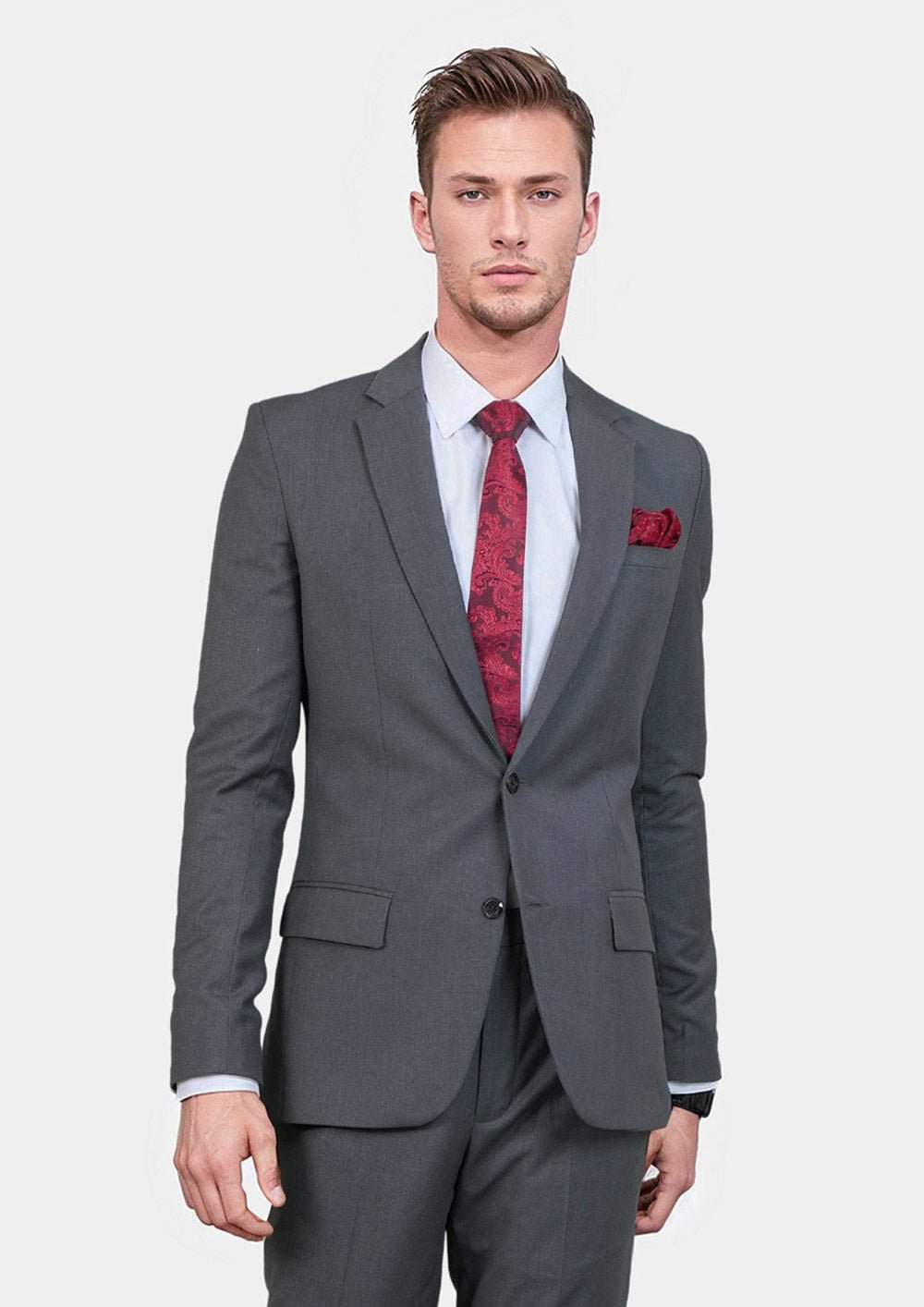
The shape is the message. A Harvey Specter suit sits close to the body with one clean line running shoulder to hem. The shoulder is built up just enough to square the frame, sometimes with a light rope at the sleeve head, but it stops well short of heavy padding. High armholes keep the chest trim and let the jacket move with you. The fit is slim, not tight, and the screen version respects that gap.
Most jackets are two-button, single-breasted, with side vents instead of a single rear vent. Side vents drape cleaner when your hands are in your pockets, and they read more formal. The pockets are flapped, often with a slanted ticket pocket above the right one for a touch of old-school detail.
Now the lapel, because it carries the whole signal. When Harvey made partner at Pearson Hardman, he switched to peak lapels and never looked back. That was not an accident. A peak lapel has points that angle up toward the shoulder, with no notch cut into the seam. A notch lapel, the step you see on most business suits, is the quiet default. A shawl lapel is one smooth curve, mostly kept for dinner jackets. The peak is the one that lifts.
That lift is borrowed authority. Peak lapels come from formalwear, the tailcoat, the morning coat, the dinner jacket. Put them on an ordinary business suit and you pull a little of that ceremony into a Tuesday meeting. That is why a peak lapel suit reads as power, and it is the reason the head term gets searched on its own.
Two numbers decide whether it works. Width sits around 3.5 to 4.5 inches at the widest as a general powerful range, scaled to your chest. Gorge height matters even more, meaning where the lapel meets the collar. Set it too high and the peak crowds your shoulder and tips into costume. Set it too low and it looks dated. The middle is where it lands.
Choose peak when you want presence: the big meeting, the pitch, the room you need to control. Choose notch when you want to blend in or the setting is loose.
A Harvey Specter-style man in a charcoal three-piece peak-lapel suit in a modern office
How Harvey's suits evolved across the seasons
The wardrobe was never one fixed uniform. Across the nine seasons the costume team kept around fifty suits in rotation for the lead and cycled in ten to fifteen new ones a year, so the look shifted as the character aged. What held constant was the discipline: dark power colours, sharp tailoring, and for most of the run that peak lapel.
Two tailoring stories sit behind the show. Early on, the wardrobe mixed real Tom Ford suits with in-house versions cut on the show's own patterns, slimmer and with tweaked buttons and lapels, but always keeping the Tom Ford peak lapel. The later seasons were tailored by Garrison Bespoke in Toronto, who say they evolved the lapel season by season as Harvey aged. Read the table as a map of that evolution, not as an episode-by-episode record, since no reliable scene-by-scene list exists.
- Era: but not tailor
- Seasons 1 to roughly 6 (main run): but not tom Ford, plus in-house Tom Ford-inspired suits
- Later seasons (Garrison era): but not garrison Bespoke, Toronto
- Season 7: but not garrison Bespoke
- Season 9: but not garrison Bespoke
The takeaway is not the label but the consistency. For most of a decade the colours stayed dark and disciplined and the lapel stayed assertive, which is why the silhouette still reads as Harvey no matter the season.
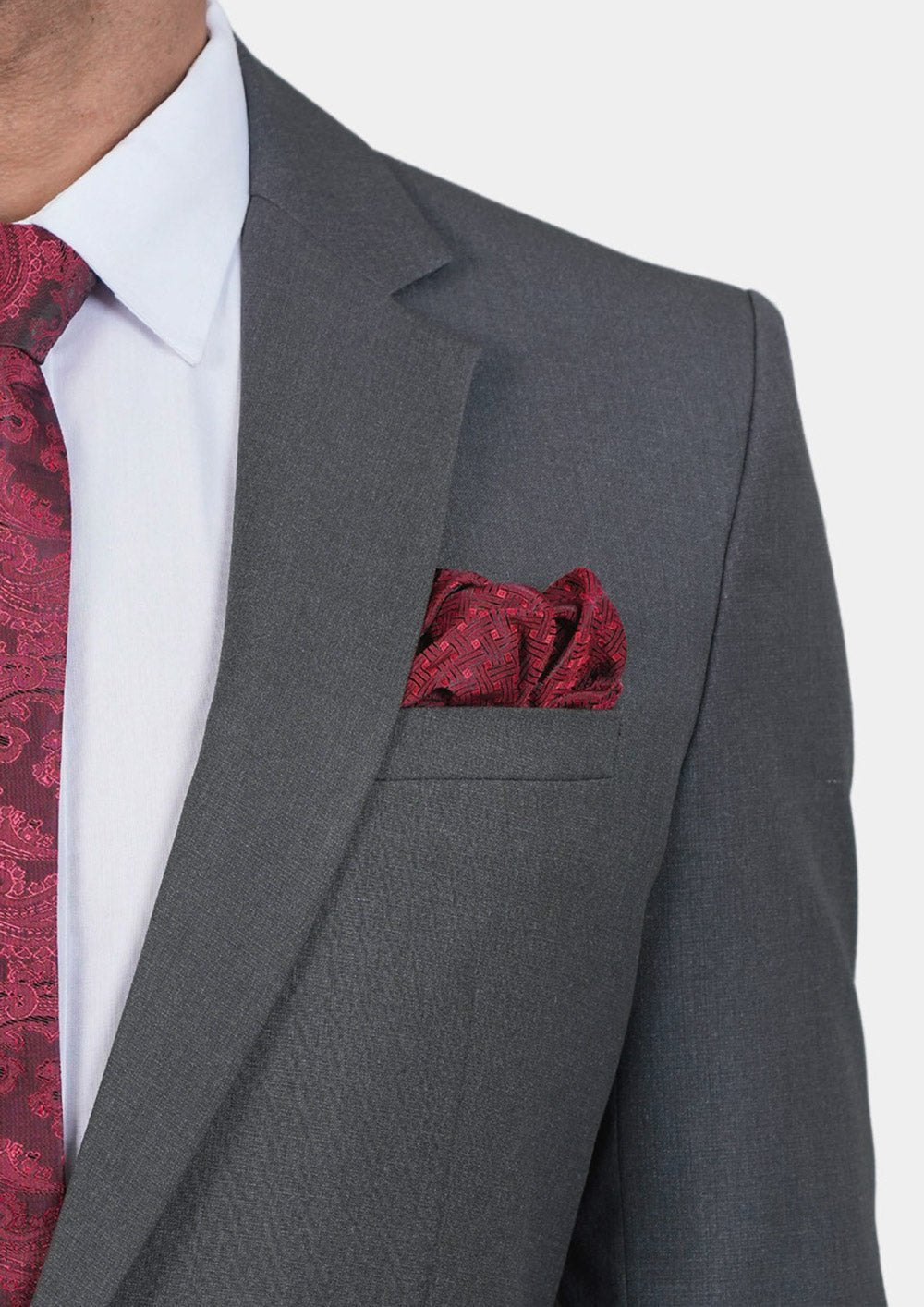
Close-up of a wide peak lapel on a charcoal Prince of Wales check suit jacket with a white pocket square
The neutral palette
Harvey works inside four colours and almost never leaves. Charcoal and mid-grey lead, because they read serious without going funereal. Navy is the strong second, and it flatters nearly everyone. Black turns up for the most formal moments rather than as a daily suit. And brown, which most copycats drop, earns its place for less adversarial days, softer than charcoal but still controlled.
The pattern rule is restraint. Solids do most of the work. When a pattern shows up it stays subtle, like sharkskin with its fine two-tone weave, a small low-contrast Prince of Wales check, or a quiet rope stripe. Nothing announces itself across the room.
- Charcoal, mid-grey, navy, brown: but not bright or fashion colours
- Black for formal occasions: but not black as your everyday suit
- Sharkskin, small Prince of Wales check, rope stripe: but not bold windowpane, loud pinstripe
- Subtle two-tone weaves: but not high-contrast or shiny cloth
If you are building a working wardrobe around a few shades, this guide to suit colours and what each one says covers how they behave in different rooms.
Charcoal, mid-grey and navy suit jackets on hangers — the Harvey Specter colour palette
The three-piece that commands the room
The third piece is what separates a good Harvey outfit from a great one. The waistcoat is single-breasted, no lapel, cut in a clean V, made from the same cloth as the suit so the whole thing reads as one column. It runs five or six buttons, the bottom one stays undone, and side adjusters at the back dial in the fit. You skip the belt entirely. The waistcoat already covers your waistband, and a buckle peeking out underneath breaks the line.
The waistcoat does two jobs. It adds formality, and it keeps you looking finished when the jacket comes off, which is exactly when most men fall apart at a desk. That unbroken vertical column is what commands a room before you speak.
Reach for the third piece when you want maximum presence and the setting can carry it: the courtroom, the presentation, the meeting that decides something. For an ordinary day, a clean two-piece does the job without trying too hard. If you want the underlying logic, the parts that make up a suit are worth knowing before you brief any tailor.
White spread-collar dress shirt with a burgundy silk tie in a full Windsor knot under a charcoal lapel
Shirt, collar, tie and the Windsor knot
The shirt is simple. White leads, pale blue is the steady second, and a subtle stripe shows up now and then. Nothing busy. The collar is the part people overlook, and it matters most: a tall spread or semi-spread frames the knot and opens the V at your chest, which is the exact line the whole outfit chases.
The tie is silk, and the signature is navy grenadine, with purple, burgundy and black in rotation. Width sits in the classic range, roughly 8 to 9 cm, about 3 to 3.5 inches. The knot is a full Windsor, broad and symmetrical, built to fill that spread collar.
One honest correction. The on-screen Windsor often runs too big for the collar under it, and a knot that swamps the gap looks heavy rather than commanding. Size yours to your own collar spread, and drop to a four-in-hand or half-Windsor if your tie is thick. Finish with a single centred dimple just under the knot, and pick a tie with enough body to hold it, since grenadine and heavier silks keep that dimple all day. Treat the dimple as part of the build, not a happy accident. One thing to get right by leaving out: there is no tie bar in the canonical look.
Shoes, watch and outerwear
Shoes stay dark and polished. Black cap-toe Oxfords or derbies handle the grey and navy suits, and brown full-brogue Oxfords add character with greys and browns. The screen footwear drew criticism for sitting on plain lasts and being laced carelessly, which is easy to beat. Pick a cleaner last, lace them so the facings sit parallel and close, and keep them genuinely polished.
The watch lesson is discipline. Harvey wore one notable watch, a Patek Philippe, in season one, then went without for the rest of the show on the logic that the suit looks cleaner without one. One good piece worn consistently, or none at all, beats anything that fights the suit for attention. The point is restraint, not the watch.
Outerwear keeps the same rules. A knee or three-quarter length wool or cashmere overcoat in navy, grey or black, often with peak lapels to echo the suit. A dark cashmere scarf for the cold, a black trench for rain. Grooming follows the same restraint, with short structured or slicked-back hair and a clean shave. To match the formality of all this to the actual event, it helps to know what the dress codes really mean before you commit to the full kit.
A Harvey Specter-style man in a charcoal-navy overcoat with peak lapels on a city street
Craft over cost, and how to wear it on your body
Here is the line the listicles skip, and the one the look actually turns on. It is not about spending several grand. It is about knowing how to craft a look that demands respect. Harvey is a tall actor lit for camera. You are not, and that is fine, because the look is built on proportion, and proportion can be tuned to any frame.
If you are shorter, keep the lapel medium, lift the gorge slightly, and use a higher button stance so the leg looks longer. A three-piece helps here, since the unbroken column adds height. If you are broader, ease off the padded shoulder, take the lapel toward the narrower end, and keep the waist suppression gentle so the jacket does not strain. If you are slim, you can carry a wider peak and a stronger shoulder to build the V you may lack naturally. For an everyday office, dial the drama down: swap peak for notch, drop the waistcoat, lean on softer greys and blues. You keep the discipline without looking like you walked off a set. The fundamentals start with how a suit should actually fit.
The single thread tying every detail together is control over fit and specification. Lapel width, gorge height, armhole position, shoulder line: none of it works off the rack for most men, because off-the-rack is built for an average nobody actually is. A custom suit cut to your measurements is how you set those numbers for your own frame, which is the difference between commanding the room and wearing a near miss.
Well-fitted mid-grey Prince of Wales check suit on a man in a bright modern office
From the conversation
The look clearly resonates. Sartoro's reel on dressing like Harvey Specter drew close to forty thousand likes and a long thread of replies. "This is how classic menswear should look," one viewer wrote, and another singled out the three-piece as "so smart and respectful."
It also drew sharp questions. Two came up again and again, and both are worth answering directly: why Harvey never wears a double-breasted suit, and whether suits cut like his are bespoke or made-to-measure. Both are covered below.
Frequently asked questions
What brand of suits does Harvey Specter wear?
The on-screen wardrobe reportedly used Tom Ford in the early seasons and shifted to Garrison Bespoke later on. Those are facts about the show's costuming, not a single label Harvey is loyal to. The look matters more than the name inside the jacket.
Did Harvey Specter's suits change across the seasons?
Yes. The costume team kept around fifty suits in rotation and added ten to fifteen new ones each year, so the wardrobe evolved as the character aged. The early seasons mixed Tom Ford with in-house copies on a wide peak lapel; the later seasons were tailored by Garrison Bespoke, who describe moving from a broad peak to a sharper, higher hybrid notch by season seven and a "Sicilian notch" in season nine. The constant was the dark palette and the assertive lapel.
Are suits like Harvey's bespoke or made-to-measure?
It depends on who built them, and the words are not interchangeable. Bespoke means a pattern drafted from scratch and refined over several in-person fittings, the slowest and most hands-on route. Made-to-measure, often called custom, starts from a proven base pattern and adjusts it to your measurements with a set of design choices, which is faster and more consistent while still cut to you. A viewer raised exactly this point on the reel, and it is worth getting right: most modern made-to-measure suits, including Sartoro's, are custom rather than bespoke.
Why did Harvey Specter never wear double-breasted suits?
Because a single-breasted peak lapel reads lean and sharp, which is the signal he wants. Double-breasted suits carry a more flamboyant, old-money flavour and pull attention toward the jacket itself. Harvey's power comes from a clean vertical line, so he stays single-breasted and lets the peak lapel do the talking.
What kind of lapel does Harvey Specter wear?
Wide peak lapels. The points aim up toward the shoulder with no notch, which gives the jacket its lift and presence. He switched to them when he made partner, and it became the most recognisable part of his look.
What is a peak lapel suit and when should you wear one?
A peak lapel suit has lapels whose points angle up toward the shoulders, borrowing authority from formalwear like tailcoats and dinner jackets. Wear one when you want presence, in a big meeting, a pitch, or a formal event. For relaxed settings, a notch lapel blends in better.
Does Harvey Specter wear a two-piece or three-piece suit?
Both. He wears clean two-piece suits often and reaches for a three-piece when he wants to command the room. The waistcoat adds formality and keeps the look intact when the jacket comes off.
What tie knot does Harvey Specter use?
A full Windsor, broad and symmetrical, built to fill a spread collar. Copy the knot type, but watch the size. The on-screen version often runs too big, so scale your knot to your own collar spread rather than going as wide as possible.
What colour and width are Harvey Specter's ties?
Navy grenadine is the signature, with purple, burgundy and black in rotation. Width sits in the classic range, roughly 8 to 9 cm, about 3 to 3.5 inches. Always silk, always finished with a centred dimple.
Can you dress like Harvey Specter if you are not tall or athletic?
Yes. The look is about proportion, not height or build. Keep the lapel medium, lift the gorge a touch, use a higher button stance, and consider a three-piece for an unbroken vertical line. Cut to your own measurements, the same authority carries to any frame.
Expert insights from our team
Blake Vincent
Senior Menswear ConsultantSenior Menswear Consultant
I’m Blake Vincent, Sartoro’s menswear advisor. I’ve helped over 200 weddings and clients across the USA find clothing that fits their lives and personalities. My goal is to make you look great and feel confident, with honest advice and practical tips—always here if you want to chat about style!