Interview Attire for Men: What to Wear to a Job Interview
Contents
- Key takeaways
- What should a man wear to a job interview?
- Interview attire by industry
- The interview suit: color, cut and fit
- Shirt, tie, shoes and accessories
- How to find out the dress code
- What to wear to a video interview
- Getting an interview suit in time
- Second and final-round interviews
- What not to wear to an interview
- Frequently asked questions
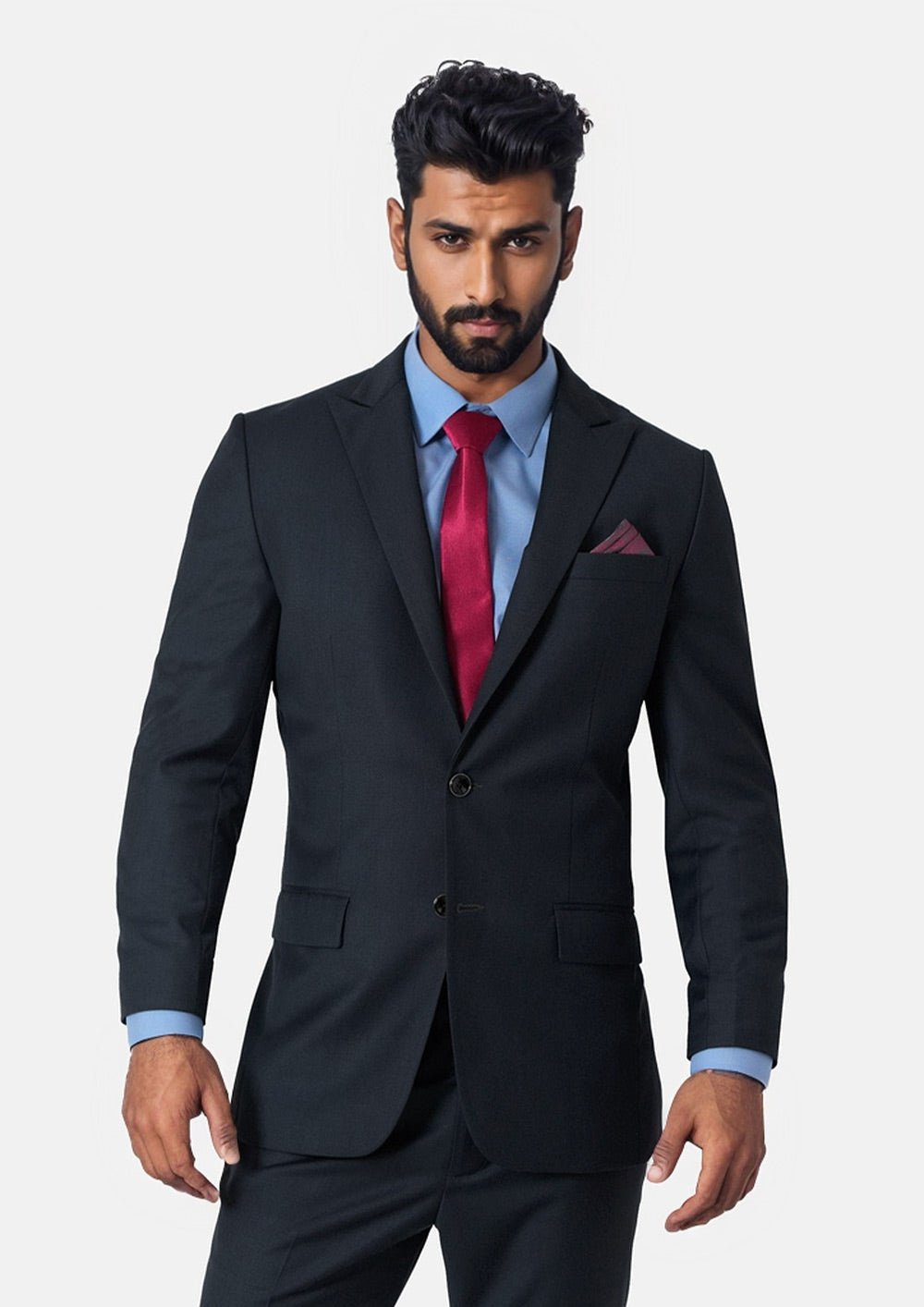
Interview attire for men is a navy or charcoal suit, a white or light blue dress shirt, a conservative tie, and polished black or dark brown leather shoes. Wear that unless the company has told you its dress code is more relaxed.
This interview outfit works because it sits one step above what most teams wear on an ordinary day. Where the team wears jackets, you wear a suit. Where the team wears collared shirts, you wear a sport coat.
Key takeaways
- A navy or charcoal suit with a white or light blue shirt is correct for most interviews. Black is the one dark suit color to skip.
- Dress one step above what the company wears every day.
- The industry sets the level. Finance, law and consulting call for a suit and tie. Many tech and creative roles call for a suit without a tie, or a jacket and trousers.
- Fit matters more than price. Most of an interview happens in a chair, so check the suit seated as well as standing.
- If you need a new suit, count the days to the interview before you order. A custom suit needs at least the Rush delivery window of 7 to 8 days.
What should a man wear to a job interview?
A man should wear a well-fitting suit to most job interviews: navy or charcoal, with a white or light blue shirt, a quiet tie, and black or dark brown leather shoes with a matching belt. That is the standard men's attire for an interview. It is right for business professional interviews and most corporate ones, and it is the default whenever nobody has told you the dress code.
For any other setting, start from what people at the company wear on a normal day, then go one level above it.
- Office in suits: a suit and tie.
- Business casual office: a suit without a tie, or a sport coat with wool trousers.
- Casual company where the team wears jeans and T-shirts: a sport coat, collared shirt, wool trousers and leather shoes. That is the floor for an interview outfit. Chinos and a shirt alone are not enough.
The business casual guide explains that middle level in detail.
Interview attire by industry
Interview attire changes by industry, because each field has its own everyday dress code and the interview sits one step above it.
- For finance, banking, law and consulting interviews, wear a navy or charcoal suit, a white or light blue shirt and black oxfords, with a tie.
- For corporate, sales and client-facing roles, wear a navy, charcoal or mid-gray suit, a light shirt and black or dark brown shoes, usually with a tie.
- For government, healthcare and education interviews, wear a dark suit, or a jacket and trousers for teaching and clinical roles, usually with a tie.
- For tech and startup interviews, wear a suit without a tie, or a sport coat, collared shirt and wool trousers; a tie is rarely expected.
- For creative fields such as design, advertising and media, wear a suit without a tie, or a sport coat with some texture or color, a collared shirt or fine knit and wool trousers, without a tie.
- For hospitality, retail and trades, wear a sport coat or a suit without a tie, a collared shirt, wool trousers and leather shoes; for a management role, wear a suit and tie.
Finance and law leave the least room, so wear the plainest version of the outfit there: solid or very finely patterned cloth, a white shirt, black shoes, and a tie in a dark solid or a small pattern.
Tech interviews can be misjudged in either direction. A full suit and tie can look out of step at a startup. A hoodie is too casual for almost any interview. A jacket over a collared shirt sits between the two.
In creative fields, a jacket with some texture or color is welcome, as long as the fit is precise.
The interview suit: color, cut and fit
The best formal suit for an interview is a single-breasted two-piece in navy or charcoal. The suit should be in a plain or very finely patterned cloth and fit you closely through the shoulders and chest. SARTORO's business suits collection includes plain navy and charcoal suits that work for an interview.
Suit color
Navy and charcoal are the best suit colors for a job interview. Either one is formal enough for a bank and plain enough for a startup, so both work in every industry in the table. Mid-gray works too, but it is better for corporate, tech and creative interviews than for finance or law.
Black is the dark color to leave out, for the reasons the black suit guide sets out. The blue suits and charcoal suits collections cover the two dependable colors. The suit color guide goes through the rest of the range.
Two-piece or three-piece
A two-piece suit is the standard for interviews. A three-piece can work for a senior role in a conservative field. In most interview rooms, though, the vest adds formality the setting does not call for. The two-piece vs. three-piece guide compares the two.
Fit when you sit
Fit when you sit matters because you spend most of an interview seated across a table. Try the suit on sitting down as well as standing. Unbutton a single-breasted jacket when you sit, and fasten it again when you stand.
In the chair, a poor fit shows in three places:
- The jacket collar stands off your shirt collar.
- The trousers pull tight across the thighs.
- The socks are short enough to show skin once the trouser legs ride up.
On your feet, the jacket should close without the cloth pulling into an X around the button, and a little shirt cuff should show below each sleeve. The guide to how a suit should fit covers the standing fit points in detail.
Shirt, tie, shoes and accessories
The right shirt, tie and shoes for an interview are a white or light blue shirt, a dark, quiet tie, and polished black or dark brown leather shoes.
- Shirt: a white or light blue dress shirt, pressed, with a collar that closes without gaping at the neck. The dress shirts collection offers eight or more collar styles.
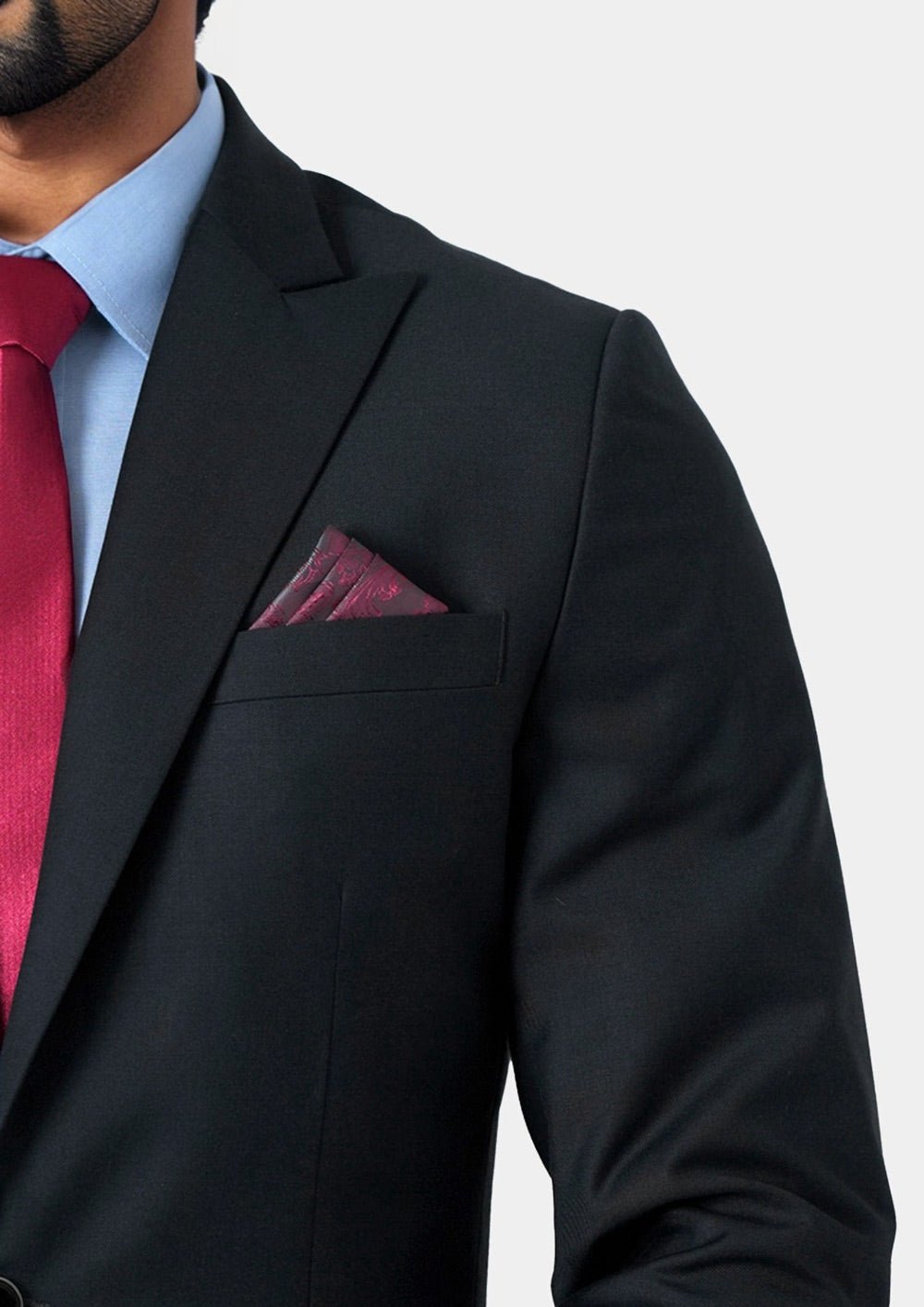
- Tie: a dark solid, a fine stripe or a small dot, in navy, burgundy or gray. The ties collection covers these, and the guide to tie colors with a navy suit helps you choose.
- Shoes: black leather oxfords, the closed-lacing dress shoe, for finance, law and the most formal interviews. Elsewhere, wear black or dark brown oxfords or derbies. Derbies are the open-laced version. Polish them the night before. The Italian leather dress shoes collection carries both colors, and the guide to shoe colors with a navy suit explains when each fits.
- Accessories: a belt in the same color as the shoes, dark socks and a simple watch.
- Grooming: tidy hair and nails, with fragrance kept light or left off.
How to find out the dress code
The most reliable way to find out an interview dress code is to ask. A one-line email to the recruiter or hiring coordinator, such as "Could you tell me the dress code for the interview?", is a normal request and shows you prepared.
If you cannot ask, look at the company's careers page, its team photos, and recent posts by employees on LinkedIn or the company's social channels. They show what people wear day to day. Dress one step above that.
When those signals are mixed, wear the tie. You can put it in your jacket pocket in the lobby if everyone you see has an open collar.
What to wear to a video interview
For a video interview, wear the same outfit you would wear in person, at least from the waist up. The camera frames little more than your shoulders and collar, so fit problems there are the ones the interviewer sees. A jacket too wide in the shoulders looks boxy on screen, and a gaping collar is hard to miss.
Solid colors such as navy, charcoal and mid-blue are the simplest choice for the jacket. Before the call, decide whether the jacket stays buttoned or open, and keep it that way. Check the frame on your own screen first.
Wearing a suit without a tie is often the right level for a remote interview at a tech or creative company.
Getting an interview suit in time
A custom interview suit is an option if you have 8 days or more. Use Rush delivery (7 to 8 days), or a slower speed when there is more time. With less time, wear a suit you own, or buy one off the rack and alter it.
- A month or more: order on standard delivery, which arrives within three weeks and leaves time to check the fit. SARTORO's own advice is to order at least a month before the date.
- More than two weeks but under a month: choose Priority delivery, which arrives within two weeks.
- Eight days to two weeks: Rush delivery arrives within 7 to 8 days, with little or no time to spare at the short end. An off-the-rack suit with quick alterations is the other route.
- Fewer than 8 days: a custom suit cannot be counted on to arrive in time. Wear the best-fitting dark suit you own, or buy a navy or charcoal suit off the rack.
Whichever route you take, buy for the shoulders and alter the rest. A tailor can shorten sleeves and hem trousers quickly. A jacket that does not fit across the shoulders cannot be fixed in a few days. Ask the tailor how long the work takes before you hand the suit over, and have it pressed.
Ordering a custom suit starts with your measurements, which SARTORO saves as a fit profile. Building one with the Digital Tailor takes 1 to 2 minutes, and a person reviews every profile before the suit is cut. The guide to buying a first suit covers the decision in more depth.
Second and final-round interviews
You can wear the same suit to a second interview. Change the shirt and tie so the outfit does not look like a repeat.
The first meeting also shows how the team actually dresses. If the team was more casual than you expected, come down one step, usually by leaving the tie off. For a final round with senior leaders, go back to the most formal version.
What not to wear to an interview
Do not wear anything to an interview that pulls attention away from what you say:
- A black suit, a tuxedo, or anything shiny.
- Jeans, sneakers, shorts and T-shirts, unless the company has told you to dress casually.
- Loud patterns, novelty ties and bright colors.
- Wrinkled shirts, scuffed shoes, and a suit that is visibly too big or too small.
- Strong fragrance and heavy jewelry.
Frequently asked questions
Should I wear a suit to an interview?
You should wear a suit to most interviews. In tech, creative, hospitality, retail and trades interviews, a suit without a tie, or a sport coat with wool trousers, is usually the better level.
Should I wear a tie to an interview?
You should wear a tie to interviews in finance, law, consulting and most corporate roles. At tech companies, startups and creative firms, an open collar is usually right. If you are unsure, wear the tie and take it off in the lobby if everyone you see has an open collar.
Can I wear jeans to an interview?
You should not wear jeans to most interviews. Even at a company where employees wear jeans, wool trousers with a sport coat are the better choice for the interview itself.
What color suit is best for an interview?
Navy and charcoal are the best suit colors for an interview. Mid-gray works for corporate, tech and creative roles.
Is a black suit okay for a job interview?
A black suit is not the best choice for a job interview, because black reads as evening or funeral wear. Navy or charcoal looks more appropriate for business.
What shoes should I wear to an interview?
Wear black leather oxfords for formal interviews, and black or dark brown oxfords or derbies for corporate and business casual interviews. Avoid sneakers and casual boots.
Can I wear a three-piece suit to an interview?
A three-piece suit is acceptable for senior roles in conservative fields. For most interviews, a two-piece suit is the better choice.
Is it overkill to wear a suit to an interview?
A suit can be more than the room needs at a startup, a creative firm or a casual workplace. There, a sport coat with a collared shirt and wool trousers keeps you a level above the team without looking out of place.
Expert insights from our team
Blake Vincent
Senior Menswear Consultant
I’m Blake Vincent, Sartoro’s menswear advisor. I’ve helped over 200 weddings and clients across the USA find clothing that fits their lives and personalities. My goal is to make you look great and feel confident, with honest advice and practical tips—always here if you want to chat about style!