How to Wear a Suit Without a Tie (and When It Works)

Contents

Wearing a suit without a tie works whenever the occasion is business casual or more relaxed, and when the rest of the outfit picks up the work the tie normally does. The way you wear a suit with no tie comes down to a few choices: a collar that holds its shape on its own, a fit that stays clean through the shoulders and chest, and a small detail like a pocket square so the neckline does not look bare. A suit no tie look reads intentional once those pieces line up. The places it does not work are the few that still ask for neckwear by rule, like black tie, formal corporate and finance settings, traditional interviews, and most diplomatic or ceremonial occasions.

This guide covers when going tie-less is the right call, when a tie is still expected, and the specific styling choices, from collar to shirt to fit to accessories, that separate a sharp open-collar look from a sloppy one.

Key takeaways

  • A suit with no tie is appropriate for business casual offices, smart-casual events, networking, weddings noted as casual, and creative settings.
  • A tie is still expected for black tie, formal finance or corporate environments, traditional job interviews, and diplomatic or ceremonial occasions.
  • The collar does the heavy lifting: a spread, semi-spread, or button-down collar holds its shape open; a soft point collar tends to collapse and look unfinished.
  • Fit matters more without a tie, because the eye goes straight to the neckline and shoulders — there is no tie to draw the line down the center.
  • A pocket square, a considered shoe, and a clean, structured shirt replace the visual weight the tie would have carried.
Close-up of a spread shirt collar holding its shape open with no tie

Close-up of a spread shirt collar holding its shape open with no tie

When can you wear a suit without a tie?

So can you wear a suit without a tie at all? Yes, and a suit no tie look is the right call any time the setting is business casual or more relaxed and no rule requires neckwear. In practice that covers most of modern professional and social life:

  • Business casual offices. Most workplaces outside formal finance and law now read an open collar as normal, not underdressed.
  • Networking and industry events. A tie-less suit signals approachability while still looking considered.
  • Smart-casual gatherings. Dinners, gallery openings, and daytime social events where a tie would feel stiff.
  • Creative industries. Design, media, tech, and similar fields where personal style is expected.
  • Weddings marked casual or beach. When the invitation does not specify formal or black tie, an open collar suits the setting.

The common thread is that nothing in the dress code demands a tie. If you are unsure what a given invitation is actually asking for, it helps to read what each dress code really expects before deciding — the line between "suit optional" and "tie required" lives there.

A man in a navy suit with an open collar and no tie in a business-casual office

A man in a navy suit with an open collar and no tie in a business-casual office

When is a tie still required?

A tie remains expected in a short list of settings where neckwear is part of the standard, not a styling choice:

  • Black-tie and formal events. These call for a bow tie with a dinner jacket; an open collar reads as a mistake.
  • Formal corporate and finance settings. Banking, law, and senior client meetings in traditional firms still treat a tie as the baseline.
  • Traditional job interviews. In conservative fields, a tie is the safe signal of seriousness. When in doubt, wear one — it is easier to be slightly over-dressed than under.
  • Diplomatic, political, and ceremonial occasions. Protocol-driven settings expect full formality.
  • Some high-end restaurants and private clubs. A number still enforce a tie at dinner; check before you arrive.

Semi-formal and cocktail events sit in the grey zone, where the answer depends on the exact wording and the time of day. Those have their own conventions, which we cover in how cocktail and semi-formal differ on neckwear.

A man wearing a navy suit with a tie in a formal corporate boardroom

A man wearing a navy suit with a tie in a formal corporate boardroom

How do you wear a suit without a tie well?

Without a tie, the neckline becomes the focal point of the whole outfit, so the details that used to sit behind the tie now have to stand on their own. Five choices decide whether the look reads sharp or unfinished.

Choose a collar that holds its shape

This is the single most important decision. A tie holds a collar in place; remove it, and the collar has to keep its structure by itself.

  • Spread and semi-spread collars stay open and frame the neckline cleanly. They are the most reliable choice for a tie-less suit.
  • Button-down collars anchor the points and look deliberately relaxed — well suited to business casual.
  • Point collars (narrow, soft) tend to droop and gap once the tie is gone, which is what makes an open collar look sloppy. Avoid them tie-less.

A collar with a little internal structure will sit better open than a very soft, unstructured one.

Get the shirt right

The shirt now carries the look on its own, so it has to be clean and considered.

  • Choose a crisp, well-pressed shirt in a solid color or a subtle pattern — white, light blue, and soft tones read well open.
  • Skip anything sheer or overly casual. A t-shirt under a suit is a specific, deliberate look and rarely the safe one; a proper shirt is the default.
  • Decide the top button on purpose. Leaving one button open at the collar looks relaxed and correct; leaving two or three open tips into casual and can look careless.

Let the fit do the work

Without a tie drawing a vertical line down the center, the eye goes straight to the shoulders, chest, and collar — so the fit has to be right. Shoulders that sit clean, a jacket that closes without strain, and a collar that hugs the neck all matter more here than they would with a tie in place. If the fit is even slightly off, an open collar will show it. For the full set of fit checkpoints, see how a suit should sit on the shoulders and chest.

Use accessories to replace the tie's weight

A tie adds a focal point and a bit of color; without it, a couple of small details keep the neckline from looking bare.

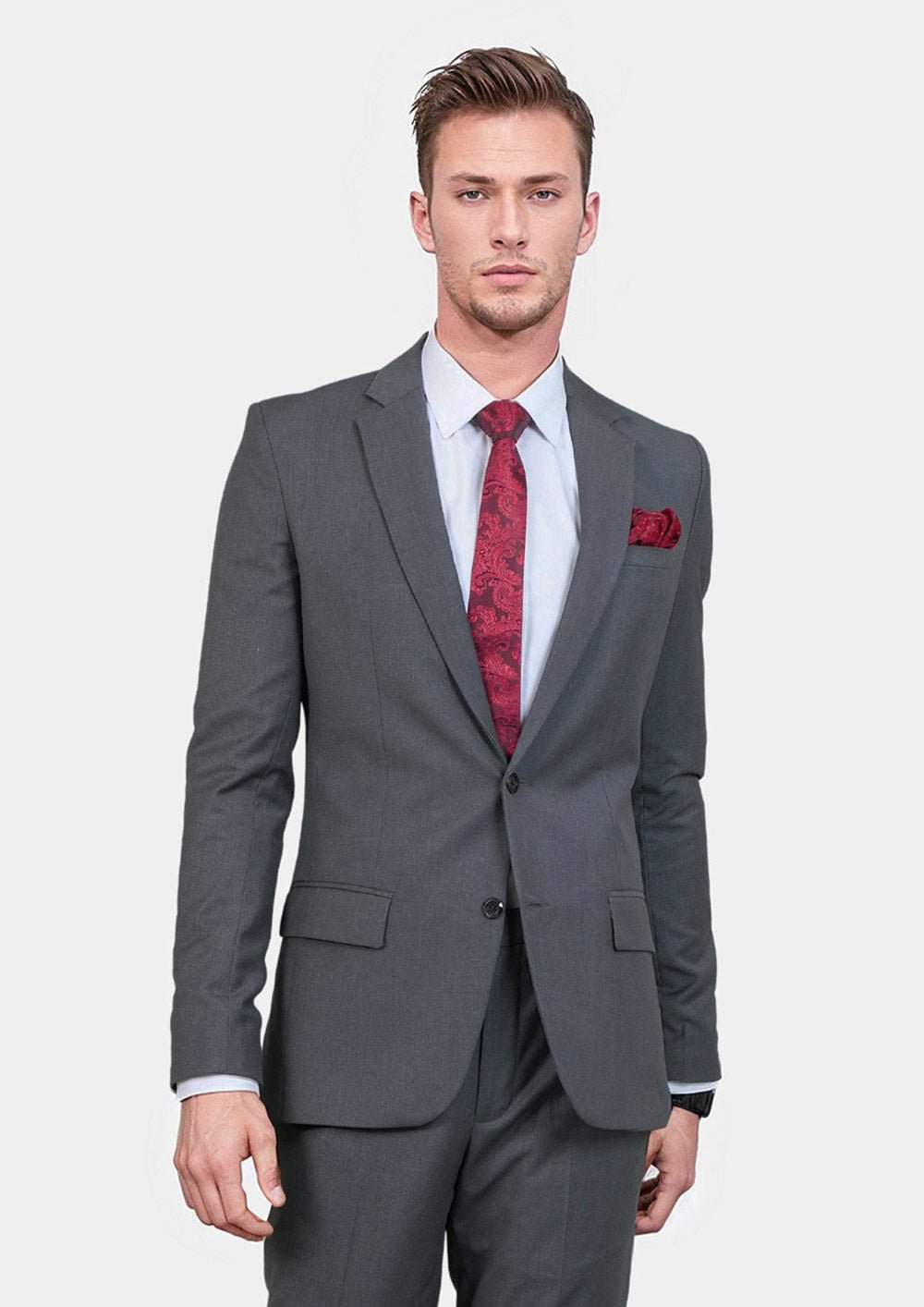
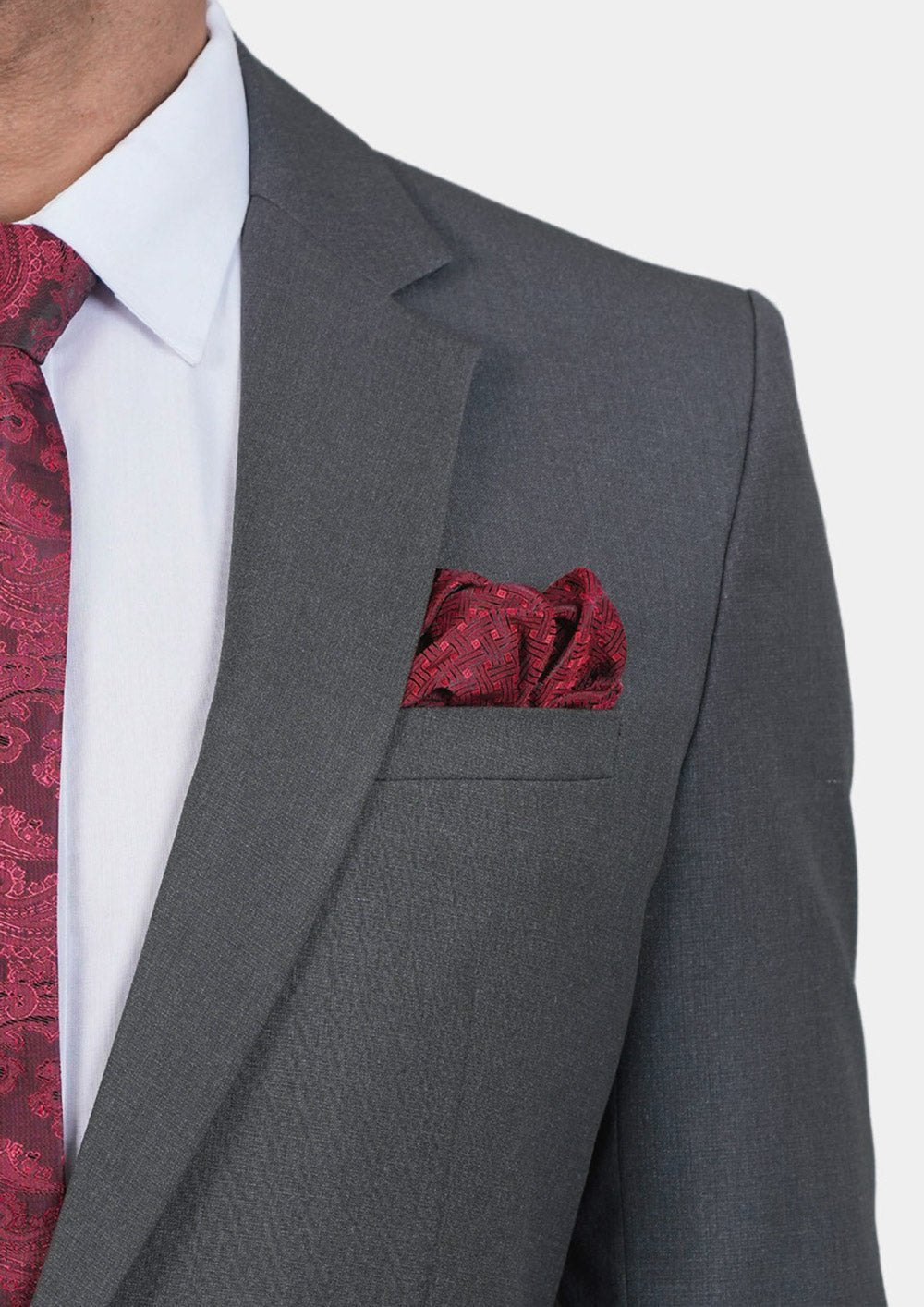
  • A pocket square is the easiest substitute — it adds the touch of color and intent the tie would have carried.
  • A considered watch or a subtle lapel detail adds personality without crowding the look.
  • Keep it restrained. One or two deliberate accessories read as considered; more starts to look busy. For options that work well tie-less, see accessories that stand in for a tie.

Mind the shoes and grooming

The outfit still has to resolve at the feet. Keep to business-appropriate footwear — clean leather shoes such as derbies, oxfords, or loafers depending on formality. Trainers undercut the whole effect. Grooming counts for more without a tie too, because there is less visual detail to distract from a rushed finish.

Close-up of an open shirt collar worn under a suit jacket with no tie

Close-up of an open shirt collar worn under a suit jacket with no tie

Close-up of a button-down shirt collar worn open with no tie under a suit jacket

Close-up of a button-down shirt collar worn open with no tie under a suit jacket

Which suit suits a tie-less look?

Some suits open up better than others. A few choices make the tie-less version look intentional rather than incidental.

  • Fit first. A clean, tailored line matters more than any single feature; a suit cut close to your own measurements reads sharp open or closed.
  • Single-breasted, softer-structured jackets sit more naturally open than rigid, formal double-breasted cuts.
  • Versatile colors. Navy, charcoal, mid-grey, and earth tones like brown or beige carry an open collar comfortably across settings. A black suit no tie is the one exception to watch, since black reads formal and an open collar can feel slightly under-dressed unless the event is clearly relaxed.
  • Cloth that reads relaxed. Matte and textured cloths look more at home tie-less than very formal, high-sheen worsteds. If you want to choose by feel and season, which cloths read more relaxed is a useful starting point.

If you are building a suit specifically to wear both ways — with and without a tie — that flexibility is easiest to get with a suit cut to your own measurements, where the collar, fit, and cloth are chosen for how you actually plan to wear it.

A man in a grey suit with an open-collar shirt and no tie, full length

A man in a grey suit with an open-collar shirt and no tie, full length

Broadway Navy Microcheck Suit949 Broadway Navy Microcheck Suit149
All-season wool blend with a subtle sheen
$525
Grey Charcoal Crosshatch Suit792 Grey Charcoal Crosshatch Suit791
Sold Out
All Season Wool in a Textured Weave
$495
White Satin Pocket Square871 White Satin Pocket Square607
On Sale

Mistakes to avoid

  • Ignoring the fit. Without a tie, a loose or pulling fit is the first thing seen.
  • Using the wrong collar. A soft point collar gone tie-less is the most common reason an open look falls flat.
  • Leaving the neckline bare. No tie and no pocket square can read as incomplete; one small detail fixes it.
  • Misjudging the occasion. Going tie-less where a tie is expected reads as a misstep, not a style choice.
  • Over-opening the shirt. One button at the collar is relaxed; three is careless.

Final thoughts

A suit without a tie is a deliberate look, not a shortcut. A suit without tie still has to carry the open neckline, so it works whenever the occasion allows it and the outfit is built for it: the right collar, a clean shirt, a fit that holds, and a small accessory in place of the tie. Keep the few tie-required settings in mind, and the no tie suit becomes one of the most useful, modern ways to wear a suit.

A man wearing a navy suit with an open collar and no tie on a city street

A man wearing a navy suit with an open collar and no tie on a city street

Frequently asked questions

Can you wear a suit without a tie?

Yes. A suit without a tie is acceptable any time the dress code is business casual or more relaxed and nothing requires neckwear. Keep the tie for the few settings that still expect it, such as black tie, formal corporate and finance environments, traditional interviews, and ceremonial events.

Is a suit without a tie business casual?

In most modern offices, yes. A suit with an open collar reads as business casual rather than formal, which is exactly why it suits networking, smart-casual events, and relaxed workplaces. For strict formal or black-tie settings it falls short, so match it to the occasion.

Can I wear a suit without a tie to a job interview?

It depends on the field. In creative, tech, and many modern offices, a well-fitted suit with an open collar is appropriate and reads as polished. In traditional finance, law, or conservative corporate roles, wear a tie — it is the safer signal of seriousness, and it is easier to be slightly over-dressed than under.

What can I wear instead of a tie with a suit?

A pocket square is the most effective substitute, adding the colour and focal point a tie would provide. A considered watch, a subtle lapel detail, or a textured shirt also add personality. Keep it to one or two deliberate touches so the neckline looks considered rather than bare.

Is it acceptable to wear a t-shirt with a suit instead of a shirt?

It can work as a specific, intentional look in casual or creative settings, but it is rarely the safe choice. A crisp, structured shirt is the reliable default for a tie-less suit and works across far more occasions.

Can I wear a suit without a tie to a wedding?

Yes, when the invitation is casual, beach, or smart-casual rather than formal or black tie. Match the suit to the setting and season, and add a pocket square so the open collar still looks finished. If the dress code is unclear, check what the wording is actually asking for before deciding.

How can I add personality to a suit without a tie?

Use the collar, colour, and one or two accessories. A spread or button-down collar, a versatile suit colour, and a single accent like a pocket square give the look character without a tie. Restraint reads as considered; piling on accessories does not.

Should I keep the top shirt button closed if I'm not wearing a tie?

Leave the top button open. A buttoned-up collar with no tie can look stiff or like something is missing. One open button at the collar is the relaxed, correct finish; opening two or three tips the look into casual.

About the author

Expert insights from our team

Blake Vincent

Blake Vincent

Senior Menswear ConsultantSenior Menswear Consultant

I’m Blake Vincent, Sartoro’s menswear advisor. I’ve helped over 200 weddings and clients across the USA find clothing that fits their lives and personalities. My goal is to make you look great and feel confident, with honest advice and practical tips—always here if you want to chat about style!

15+ years experienceThe Wedding Closer
Certified Style ConsultantStyle & Fit Specialist
Published AuthorSartoro Blog Contributor
Lorem ipsum dolor sit amet

Popular Posts

Your cart is empty
Looking for ideas?
We'll send measurement instructions
to you. Or create your fit profile now.
    Secured checkout through Shopify with: