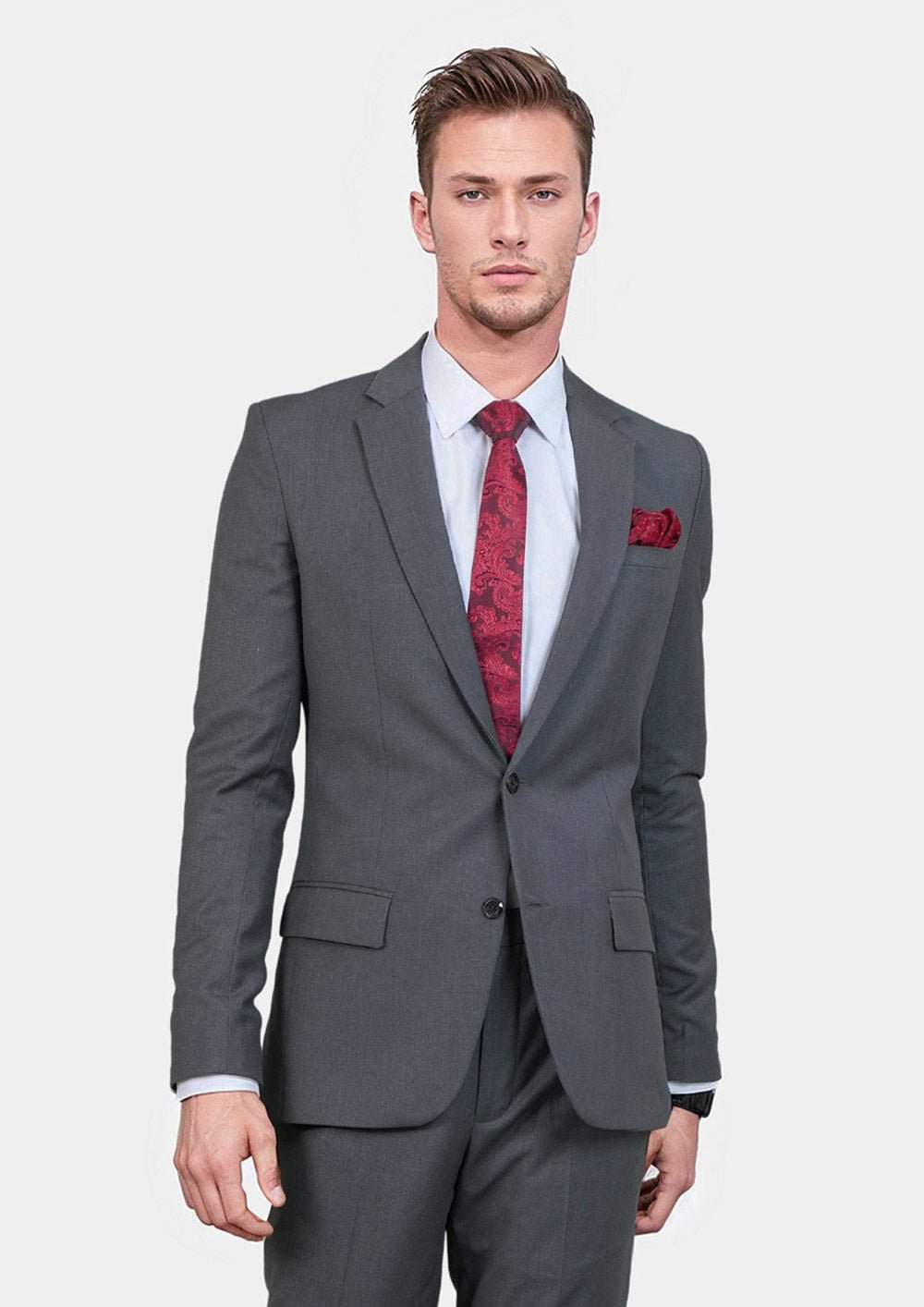
Grey Suits for Men: From Light Grey to Mid-Grey, How to Wear Every Shade

Contents

  • Grey is a three-shade system, not a single color. Light grey, mid-grey, and charcoal solve different wardrobe problems — treating them as interchangeable is why most men own a grey suit they rarely reach for.
  • Mid-grey is the anchor. If you own only one grey suit, it should be mid-grey. It handles interviews, office rotation, weddings, and dinners with a shirt-and-tie swap.
  • Fabric weight is the real calendar. A mid-grey in 8 oz tropical wool works in July; the same shade in 12 oz flannel belongs in December. The fabric, not the color, sets the season.
  • Every accessory carries more weight with grey. Because the color is neutral, shoes, belt, and watch strap do more of the talking — and mismatches show faster than they would with navy or black.

Most grey-suit advice online follows the same shape: a paragraph on light grey, a paragraph on mid-grey, a paragraph on charcoal, and a list of tie colors. It is not wrong. It is incomplete. The gap is this — grey suits do not work in isolation. They work as a system. A man who owns one grey suit has a suit. A man who understands how light grey, mid-grey, and charcoal relate to each other has a wardrobe. This guide treats the grey suit as a coordinated system: the fabric science that determines when each shade actually works, the rotation math that makes three suits feel like ten, and the pairing rules that keep every combination sharp. No filler. No "grey is versatile" platitudes. Just the mechanics of how grey behaves on a man's body, in different light, across different seasons.

Why Grey Is the Intelligent Neutral

Grey occupies a position that no other suit color holds: it is the only neutral that carries formality without personality. Navy communicates tradition. Black communicates severity. Brown communicates warmth. Grey communicates nothing specific — which is precisely its power. For a broader view of how suit colors signal, our suit color guide maps the full spectrum.

The Optical Science Behind Grey's Stability

Grey sits at the midpoint between black and white and reflects light evenly across the visible spectrum. It does not shift hue under warm tungsten the way navy does, and it does not flatten under fluorescent tubes the way brown does. Mid-grey looks essentially the same at 10 a.m. in natural light and at 10 p.m. under restaurant chandeliers; charcoal deepens slightly under warm lighting, which works in its favor.

This optical stability is why grey reproduces so reliably on camera. Mid-tone greys avoid the extremes of a sensor's dynamic range — not so dark that shadows crush, not so light that highlights blow out. For video calls, conference presentations, and any context where you will be seen on screen, grey is the safest color a man can wear. In our fitting rooms, we regularly tell clients who present on camera weekly to start their rotation with mid-grey for exactly this reason.

What Grey Signals (And What It Does Not)

Grey signals competence without aggression. In professional settings, neutral mid-tone garments communicate analytical thinking and composure more effectively than high-contrast dark suits. It does not signal authority the way charcoal-adjacent black does — and that restraint is more effective in collaborative settings. A hiring manager across from a candidate in charcoal may feel subtly pressured. Across from a candidate in mid-grey, they feel engaged.

The trade-off is that grey does not carry emotional warmth. It will not make you look approachable the way a navy blazer with an open collar does. This is not a flaw — it is a characteristic. It is why grey is the default in industries where credibility matters more than charisma — finance, law, technology. Understanding what each color communicates is how you build a wardrobe that works strategically rather than by accident.

The Three-Shade System

Light grey, mid-grey, and charcoal each solve a different wardrobe problem. Light grey covers warm-weather daytime. Mid-grey covers year-round professional life. Charcoal covers formal evening. Knowing which zone an occasion falls into is the foundation of a rotation that actually gets worn.

The Spectrum at a Glance

  • Shade: Light Grey; Formality: Low–Medium; Best Season: Spring, Summer; Best Setting: Daytime, outdoor, warm-weather; Skin Tone Match: Medium to dark complexions
  • Shade: Mid-Grey; Formality: Medium; Best Season: Year-round; Best Setting: Office, interviews, most weddings; Skin Tone Match: Universal — every complexion
  • Shade: Charcoal; Formality: High; Best Season: Fall, Winter; Best Setting: Evening, formal, high-stakes; Skin Tone Match: Universal, strongest on fair complexions

Where the Zones Overlap

The boundaries are guidelines, not walls. A mid-grey suit at a summer evening event with a white shirt and loafers bridges light and charcoal territory. A charcoal suit in early fall with a knit tie and brown shoes softens into mid-grey's register. Skin tone shifts the boundaries too: a man with olive or dark skin carries both pale light grey and deep charcoal with equal ease, because the skin provides enough contrast to anchor either extreme. A fair-skinned man finds mid-grey the most forgiving starting point.

Why Three Shades, Not One

A single grey suit — even the versatile mid-grey — cannot cover every scenario. Light grey at a winter evening dinner looks underdressed. Charcoal at a July garden wedding looks oppressive. Mid-grey handles the widest range but has limits: at a black-tie-optional event, it reads slightly casual. At a beach ceremony, it reads slightly formal.

The three-shade system works because the zones overlap. Mid-grey covers roughly 70% of occasions. Light grey extends coverage into warm-weather daytime. Charcoal extends coverage into formal evening. Together, they leave almost no gap. Most men who come to us for a first grey suit leave with a plan for a second within six months — not because they needed more, but because the system revealed a use case they had not considered.

Light Grey — The Seasonal Specialist

Light grey suits — dove, silver, powder — belong to a specific set of conditions: warm weather, natural light, and daytime formality. Used within those conditions, they are among the most elegant garments in menswear. Used outside them, they look misplaced.

When Light Grey Works

Light grey thrives between April and September in most of the United States. Its natural settings are outdoor weddings, garden ceremonies, daytime brunches, christenings, and warm-weather business events where a dark suit would feel oppressive. The shade reflects sunlight, reads as fresh and optimistic, and reproduces cleanly in outdoor photos.

The cutoff is roughly 5 p.m. After that, artificial lighting takes over, and light grey loses its advantage. Under dim indoor light, it can appear washed out — the fabric reflects so much ambient light that it flattens visually.

Fabric Weight for Light Grey

Light grey demands lightweight fabrics. The shade shows texture, wrinkles, and shadows more readily than darker tones, which means heavy fabrics create visible drag lines that look sloppy.

  • Tropical wool (7–9 oz): The best all-around choice. Lightweight worsted wool that breathes well and drapes cleanly. Sartoro's Powder Grey Twill Suit uses this weight.
  • Wool-linen blends (10–12 oz): Linen fiber is thicker than wool, so these blends run slightly heavier than pure tropical wool — but the open weave compensates with airflow, and the texture suits light grey's casual elegance. The trade-off is wrinkling.
  • Lightweight cotton twill (9–11 oz): Works for less formal settings. Cotton lacks the drape of wool but offers a matte finish that reads as relaxed.

Avoid heavy worsteds (11 oz and above) and flannel in light grey. The weight creates visual heaviness that contradicts the shade's purpose.

Light Grey and Skin Tone

Light grey creates less contrast against fair skin, which can wash out pale complexions. It works best on men with medium to dark skin tones, where the shade provides a clean frame without blending into the wearer. Fair-skinned men wearing light grey must pair it with a high-contrast shirt — white or deep navy — to restore visual separation between face and fabric.

Pairing Matrix for Light Grey

  • Element: Shirt; Best Choices: White poplin, light blue oxford, pale pink (spring only); Avoid: Grey shirts (monochrome trap), dark navy
  • Element: Tie; Best Choices: Navy, burgundy, forest green, deep plum, textured knits; Avoid: Pale ties that disappear against the fabric
  • Element: Shoes; Best Choices: Tan, cognac, medium brown; Avoid: Black (too severe for the shade)
  • Element: Style; Best Choices: Loafers, derbies, brogues; Avoid: Highly polished oxfords (too formal)

Sartoro's Powder Grey Windowpane Suit and Light Grey Stretch Suit round out the light-grey range for men who want pattern or travel-friendly stretch in this seasonal zone. Light grey's closest partner is navy — ties, knitwear, and shirts in deep navy ground the pale shade, and our navy suit coordination guide covers the reverse pairing.

Powder Grey Twill Suit687 Powder Grey Twill Suit180
All Season Wool in a Classic Weave
$550
Powder Grey Windowpane Suit912 Powder Grey Windowpane Suit677
All-season wool blend
$595
Light Grey Stretch Suit736 Light Grey Stretch Suit71
Cotton
Four-season stretch cotton for added comfort
$585

Mid-Grey — The Anchor Suit

Mid-grey is the most versatile grey suit shade — it works across all seasons, flatters every skin tone, and handles interviews, office wear, weddings, and dinners with a shirt-and-tie swap. It sits squarely between light and dark — neither pale enough to read as summer-only nor deep enough to feel like evening wear. It is the workhorse, the default, the suit that answers "what should I wear?" more often than any other garment in a man's closet.

The Rotation Math

Consider what a single mid-grey suit can cover in a year:

  • Weekly office wear, paired with different shirts and ties each rotation
  • Job interviews — competence without intimidation
  • Weddings as a guest — sharp without upstaging the groom
  • Business dinners — professional without funereal
  • Video calls and presentations — the most camera-reliable suit color
  • Holiday parties and gallery openings — appropriate without overdone

That range is why mid-grey consistently ranks as the second suit purchase after navy — and why men who buy one wear it more than any other garment they own.

Why Mid-Grey Flatters Everyone

Mid-grey's position on the value scale — roughly 50% between black and white — creates moderate contrast with every skin tone. It does not wash out fair complexions the way very pale shades do. It does not create the harsh line that charcoal can produce against lighter skin. It sits in the middle and frames the face without competing with it.

This universal flattery is the practical reason mid-grey is the safest first purchase. A man who is unsure which shade suits him can start with mid-grey and almost certainly be correct.

Mid-Grey Fabric Options

Mid-grey works in nearly every fabric weight, which is part of its versatility:

  • Worsted wool, 9–11 oz (year-round): The standard. Clean drape, moderate weight, works from heated offices to outdoor autumn events. Sartoro's Bowery Grey Microcheck uses a mid-weight worsted with a subtle pattern that adds depth without shouting.
  • Sharkskin weave (9–10 oz): A two-tone weave that creates a subtle sheen. Sharkskin mid-grey catches light at different angles, giving the fabric visual interest beyond a flat solid. The Harbor Grey Sharkskin Suit demonstrates this effect.
  • Flannel (11–13 oz): For fall and winter. Flannel's brushed surface absorbs light, giving mid-grey a soft, matte depth that reads as warm and grounded.
  • Herringbone (10–12 oz): A woven chevron pattern visible only at close range. Adds texture while maintaining a solid appearance from conversational distance.

The Slate Grey Twill sits in this range as a clean, unpatterned option for men who prefer a flat solid in a year-round weight.

Bowery Grey Microcheck Suit483 Bowery Grey Microcheck Suit668
All-season wool blend with a subtle sheen
$550
Harbor Grey Sharkskin Suit239 Harbor Grey Sharkskin Suit809
Premium
All-season premium wool blend
$595
Slate Grey Twill Suit830 Slate Grey Twill Suit321
All Season Wool in a Classic Weave
$550

Charcoal — The Authority Tool

Charcoal is the most formal grey suit shade — dark enough to be mistaken for black at a glance, it belongs to high-stakes settings: important presentations, evening dinners, winter formals, and black-tie-optional events. But it is not black, and that distinction is the entire point. Charcoal carries the gravity of black without its rigidity — serious without being severe. For a dedicated deep-dive, see our charcoal suit guide.

When Charcoal Commands a Room

Charcoal belongs to high-stakes contexts: important presentations, evening dinners, winter formal events, black-tie-optional invitations, and any situation where your clothing should signal composure before you speak. Under candlelight or dim restaurant lighting, charcoal develops a richness that mid-grey cannot match. The depth of the shade absorbs and reflects light in layers, creating a three-dimensional quality that reads as considered rather than default.

Charcoal rewards heavier fabrics. The shade's darkness hides the visual weight that would look clumsy in light grey, which means you can wear 12–14 oz flannels and dense worsteds that add structure and warmth. A charcoal flannel suit has a tactile depth that is one of the finest things in cold-weather menswear.

Ideal Charcoal Fabrics

  • Dense worsted wool (11–13 oz): Crisp, structured, reproduces with authority on camera. The Grey Charcoal Crosshatch Suit uses a crosshatch weave that catches light at different angles.
  • Flannel (12–14 oz): The definitive cold-weather charcoal. Brushed surface, matte finish, warm to the touch.
  • Performance stretch wool (9–11 oz with elastane): For travel-heavy professionals who need charcoal's authority in a wrinkle-resistant fabric. The Hudson Charcoal Stretch Suit is built for this use case.

Avoid lightweight tropical wools in charcoal. The combination of a dark shade with a thin fabric creates a suit that looks insubstantial — the darkness promises weight, but the hand-feel delivers air.

Softening Charcoal for Less Formal Moments

Charcoal does not always have to mean boardroom or black tie. Swap the dress shirt for a fine-gauge merino turtleneck in black, navy, or cream. Drop the tie, leave the top button undone, and the suit shifts from formal to sophisticated-casual. This works for dinner dates, evening social events, and creative-industry settings. The Charcoal Blue Check Flannel adds a subtle pattern that keeps the look from reading as funereal when the tie comes off.

Where Charcoal Falls Short

Charcoal at a beach wedding in July is a mismatch of both tone and temperature. It absorbs heat, reads as overdressed in casual daylight, and creates a visual severity that works against relaxed settings. Reserve charcoal for days below 65°F and indoor evening events.

Grey Charcoal Crosshatch Suit121 Grey Charcoal Crosshatch Suit846
Sold Out
All Season Wool in a Textured Weave
$550
Hudson Charcoal Stretch Suit468 Hudson Charcoal Stretch Suit144
Cotton
Four-season stretch cotton for added comfort
$570
Charcoal Blue Check Flannel Suit448 Charcoal Blue Check Flannel Suit263
All Season Wool Flannel in a Patterned Weave
$550

Building the Grey Rotation

The optimal grey suit rotation is three suits in this order: mid-grey (9–11 oz worsted wool), charcoal (11–13 oz flannel or heavy worsted), then light grey (7–9 oz tropical wool or a wool-linen blend). This sequence maximizes coverage with minimum redundancy. Browse the full grey suits collection to see each option in context.

Suit 1: Mid-Grey, Worsted Wool, 9–11 oz

This is the anchor. It covers office wear, interviews, most weddings, and business dinners. Choose a clean solid or a subtle weave — sharkskin, microcheck — that reads as solid from a distance. This suit will be worn two to three times per week in rotation with navy.

Suit 2: Charcoal, Heavier Worsted or Flannel

This extends coverage into formal evening and cold-weather events. Choose a fabric with more weight (11–13 oz) to differentiate it from the mid-grey both in shade and in seasonal use. When the mid-grey is at the cleaner, the charcoal covers professional contexts with slightly more authority.

Suit 3: Light Grey, Tropical Wool or Wool-Linen Blend

This covers the warm-weather gap. Spring weddings, outdoor events, summer brunches. Choose a lightweight fabric (7–9 oz) that breathes and photographs well in natural light. This suit will be worn 8–12 times per year — spring weddings, outdoor events, summer brunches — but when those occasions arrive, nothing else in your wardrobe works as well.

Beyond Three: Patterned Greys

After the three-shade foundation is in place, patterned greys — a Prince of Wales check, a houndstooth, or a pronounced windowpane — add texture to a rotation that has gone flat while remaining firmly in the grey family.

The Rotation Calendar

  • Month: Jan–Feb; Primary Shade: Charcoal; Backup: Mid-grey (flannel)
  • Month: Mar–Apr; Primary Shade: Mid-grey; Backup: Light grey (late April)
  • Month: May–Jun; Primary Shade: Light grey; Backup: Mid-grey (tropical)
  • Month: Jul–Aug; Primary Shade: Light grey; Backup: Mid-grey (tropical)
  • Month: Sep–Oct; Primary Shade: Mid-grey; Backup: Charcoal (late October)
  • Month: Nov–Dec; Primary Shade: Charcoal; Backup: Mid-grey (flannel)

This calendar assumes a four-season climate. Adjust for region: in warm climates — the Southeast, the Southwest — mid-grey and light grey dominate year-round, with charcoal reserved for evening events. The real rule is fabric weight, not shade — a mid-grey in 8 oz tropical wool works in July, and a charcoal in 9 oz performance wool travels well year-round.

The Fabric Science Behind Every Grey Suit

Fabric weight and weave determine how a grey suit drapes, photographs, and performs across seasons — two suits in identical mid-grey can feel like entirely different garments depending on whether they are cut from 8 oz tropical wool or 13 oz flannel. For a full breakdown, our suit fabric types guide covers every weave in detail.

Understanding Wool Weight

Wool weight is measured in ounces per yard (oz). The number tells you how heavy the fabric is, which directly affects drape, breathability, and seasonality:

  • Weight: 7–9 oz; Category: Tropical / Lightweight; Best Season: Spring, Summer; Example Use: Garden weddings, warm offices
  • Weight: 9–11 oz; Category: Mid-weight; Best Season: Year-round; Example Use: Daily office wear, most occasions
  • Weight: 11–13 oz; Category: Heavyweight; Best Season: Fall, Winter; Example Use: Cold-weather events, structured suits
  • Weight: 13+ oz; Category: Overweight; Best Season: Deep Winter; Example Use: Overcoats, heavy flannel suits

Flannel is a finish, not a weight — brushed for softness, it can be woven anywhere from 9 to 14 oz. The 13+ oz row refers to the heaviest winter cloth, not to flannel in general.

Super Numbers: What They Actually Mean

You will see suits labeled "Super 100s," "Super 120s," "Super 150s." The number refers to the fineness of the wool fiber, measured in microns: Super 100s means fiber of 18.75 microns or finer, Super 120s means 17.75 or finer, Super 150s means 16.25 or finer. Higher Super numbers mean finer fibers, which produce softer, more luxurious fabric with a better drape.

The catch: finer fibers are more delicate. A Super 150s suit feels extraordinary but wears faster than a Super 110s. For daily rotation suits, Super 100s to 120s offer the best balance of hand-feel and durability. Reserve Super 130s and above for suits you wear occasionally.

Weave Patterns That Add Depth

Weave patterns — sharkskin, herringbone, birdseye, microcheck, windowpane, crosshatch — add texture that prevents a flat solid grey from looking one-dimensional:

  • Sharkskin: A two-tone sharkskin weave creating a subtle sheen. Best in mid-grey. The Dorian Grey Sharkskin Suit demonstrates the effect.
  • Herringbone: A herringbone chevron pattern visible at close range. Adds warmth to mid-grey and charcoal.
  • Birdseye: Tiny diamond pattern. Adds depth without visible pattern from a distance. The Granite Grey Birdseye Suit uses this weave to strong effect.
  • Microcheck: Fine grid pattern. Adds texture while reading as solid from conversational distance.
  • Windowpane: Larger grid overlay. More visible, more character. The Dark Grey Windowpane Suit carries this pattern in a deep grey base.
  • Crosshatch: Diagonal intersecting lines. Catches light dynamically.

The weave is what separates a grey suit that photographs flat from one that comes alive on camera. In our experience, men who start with a solid often add a textured weave as their second grey — the sharkskin and birdseye options are the most requested upgrades.

Dorian Grey Sharkskin Suit689 Dorian Grey Sharkskin Suit628
Premium
All-season premium wool blend
$625
Granite Grey Birdseye Suit218 Granite Grey Birdseye Suit621
Super 120s
All-Season S120s Merino Wool by Cavani
$750
Dark Grey Windowpane Suit424 Dark Grey Windowpane Suit420
All-season wool blend
$585

Shirt, Tie, and Shoe Pairings — The Complete Matrix

Because grey is neutral, every other element in the outfit carries more visual weight than it would with a colored suit. This means pairings matter more with grey — and mistakes are more visible. For guidance on shirt quality, explore our custom dress shirts.

Shirts by Shade

Light grey suit:

  • White poplin or twill (sharpest contrast, most elegant)
  • Light blue oxford (approachable, slightly relaxed)
  • Pale pink or lavender (spring and summer events only)
  • Sartoro's Maya Blue Linen Blend Shirt works here in warm months — linen keeps the collar cool while the shade does summer work
  • Avoid: Grey shirts (monochrome trap), dark navy (too much contrast for daytime)

Mid-grey suit:

  • White (the universal answer)
  • Light blue (daily office rotation)
  • Subtle stripes or checks (mid-grey is the most forgiving shade for patterns)
  • Deep navy or black (evening events — high-contrast modern look)
  • Avoid: Nothing. Mid-grey works with nearly every shirt color.

Charcoal suit:

  • White (the gold standard for formal contexts)
  • Light blue (professional daytime)
  • Black or deep navy (tonal evening look)
  • Avoid: Pastels. The contrast between a deep charcoal and a pale pink shirt looks mismatched rather than intentional.

Ties by Shade

Light grey: Navy, burgundy, forest green, deep plum. Textured knits and woven ties add depth. Browse our silk ties for options that pair cleanly. Avoid pale ties that disappear against the suit fabric.

Mid-grey: Nearly everything. Navy, burgundy, teal, mustard, geometric prints, classic stripes, foulards. This is the shade where experimentation is safest.

Charcoal: Black, dark navy, deep burgundy, silver-grey. A Silk Satin Black Tie is the standard for charcoal evening wear. Keep the palette tight and the tones deep. The power of a charcoal suit outfit comes from restraint.

Shoes and Belts

The belt matches the shoes. This is the single easiest way to make a grey suit outfit look cohesive. A brown belt with black shoes, or vice versa, registers as a mistake even to people who cannot articulate why the outfit feels off.

  • Shade: Light Grey; Best Shoe Colors: Tan, cognac, medium brown; Best Shoe Styles: Loafers, derbies, brogues
  • Shade: Mid-Grey; Best Shoe Colors: Dark brown, oxblood, black; Best Shoe Styles: Oxfords, derbies, monk straps
  • Shade: Charcoal; Best Shoe Colors: Black (standard), dark oxblood (alternative); Best Shoe Styles: Oxfords, cap-toe derbies

Avoid tan or light brown shoes with charcoal — the contrast is too stark and draws the eye away from the face. In the Sartoro range, the Windsor Brogue Cap-Toe in Obsidian Black pairs cleanly with mid-grey and charcoal, while a chestnut cap-toe suits mid-grey in daytime. For a polished finishing touch, our pocket square folding guide covers the folds that work best with grey's quiet palette.

Maya Blue Linen Blend Shirt852 Maya Blue Linen Blend Shirt71
Linen
Linen-cotton blend for slight wrinkle resistance.
$120

Grey for Every Occasion

Grey suits work across the full calendar of modern menswear — from weddings to boardrooms to evening dinners — but the right shade and fabric change with the setting. For occasion-specific tailoring, explore our wedding suits for men collection.

Weddings

Grey suits have become a staple of modern weddings because they reproduce well in both color and black-and-white photography, coordinate with diverse palettes, and allow the wedding party to look unified without matching black tuxedos.

As the groom: Light grey or mid-grey for spring and summer (paired with a white shirt and a tie that picks up the wedding's accent color). Charcoal for fall and winter (paired with white shirt, deep burgundy tie, and a textured pocket square). A grey suit captures as distinct from groomsmen in navy or black while remaining cohesive in group shots. The Bond Powder Grey Tuxedo is a strong option for formal evening weddings where a black tuxedo feels too severe.

As a groomsman: Mid-grey is the safest choice. It coordinates with almost any color palette — blush, sage, navy, burgundy, ivory.

As a guest: Any shade works as long as it does not match the groom's outfit too closely. When in doubt, go one shade lighter or darker than what the wedding party is wearing.

Business and Interviews

In professional settings, grey communicates analytical competence. Where navy suggests tradition and trust, grey suggests precision and clarity.

For interviews: Mid-grey is optimal in most industries. It is formal enough to show respect without the intimidation factor of charcoal. Pair with a white or light blue shirt, a conservative tie (navy or burgundy), and polished dark brown or black shoes. For creative or casual industries, drop the tie and open the collar — the suit still communicates seriousness.

For daily office rotation: A mid-grey and a navy suit, rotated with varied shirts and ties, cover virtually every professional scenario. Browse our business suits collection for cuts designed for all-day professional wear.

Evening and Smart-Casual

Grey suits dress down better than navy or black. Separate the jacket from the trousers and each piece works independently:

  • Jacket alone: Pair with dark denim and a merino crewneck for smart-casual dinners.
  • Trousers alone: Pair with a navy blazer or a fine-gauge knit for business-casual offices.
  • Full suit, softened: Replace the dress shirt with a black turtleneck or a crewneck tee. Drop the tie. The suit shifts from formal to sophisticated-casual — effective for dinner dates, gallery openings, and creative-industry events.

The Grey Two-Tone Plaid and French Gray Checked Suit both work well in this softened register — the pattern keeps the look from reading as too severe when the tie comes off.

The Grey Jacket as a Blazer

A grey suit jacket works independently as a blazer — more effectively than navy or black in some ways, because grey's neutrality anchors a wider range of trousers. Pair a mid-grey jacket with dark denim and a white oxford for smart-casual dinners, or with navy or olive trousers for a contrast that reads as intentional rather than mismatched. The fabric matters: a grey jacket in a textured weave — herringbone, birdseye, sharkskin — separates cleanly from odd trousers, while a flat solid can look like an orphaned suit jacket missing its trousers.

Grey Two-Tone Plaid Suit766 Grey Two-Tone Plaid Suit810
All-season classic wool blend
$550
French Gray Checked Suit369 French Gray Checked Suit740
Sold Out
Super 130s
Luxury S130s Merino Wool by Cavani
$850
Bond Powder Grey Tuxedo898 Bond Powder Grey Tuxedo595
All-season wool blend
$625

How a Grey Suit Should Fit + Care and Maintenance

No amount of correct color coordination compensates for a poorly fitting suit, and no suit lasts without a care protocol. Fit and maintenance are the two foundations that make everything else work. For a complete fit reference, see our how a suit should fit guide.

Fit Checkpoints

Shoulders: The shoulder seam of the jacket should end exactly where your natural shoulder ends — at the acromion bone. If the seam extends past your shoulder, the jacket is too wide and will create divots. If it ends before your shoulder, the jacket is too narrow and will pull. Shoulder width is effectively fixed after purchase — get it right at the fitting.

Chest and waist: The jacket should close over your chest without pulling or creating an X-shaped wrinkle at the button. When buttoned, you should be able to slide a flat hand between the jacket and your shirt with slight resistance. The waist should be slightly suppressed — tapered inward from the chest to create shape without squeezing.

Jacket length: The jacket should cover your seat and end roughly at the mid-crotch level. A quick test: let your arms hang naturally at your sides. The jacket hem should land at the middle of your cupped fingers.

Sleeves: Jacket sleeves should end at the wrist bone, showing roughly a quarter to a half inch of shirt cuff. Too much visible shirt and the jacket looks short. No visible shirt and the jacket looks borrowed from someone taller.

Trousers: Trousers should sit at your natural waist (not the hips), be tailored through the thigh without being skin-tight, and have a clean line from the knee to the ankle. The break — where the trouser meets the shoe — should be slight. A quarter break or no break gives a modern, clean silhouette.

Care Rules for Grey Suits

Grey suits — particularly light grey — show neglect faster than darker colors. A maintenance protocol keeps them looking sharp for years rather than seasons. Our full suit care guide covers every fabric in detail.

  • Rotation: Never wear the same suit two days in a row. Wool fibers need 24–48 hours to recover their shape.
  • Brushing: After each wear, brush the suit with a horsehair garment brush. This removes surface dust and lint before they settle into the fibers. For light grey, this step is especially important — pale fabric shows accumulated dust as a dulling film.
  • Steaming vs. ironing: Steam is preferable to ironing for grey suits. A handheld steamer removes wrinkles without the risk of shine — the flat, glossy patches that develop when an iron presses wool fibers too aggressively.
  • Dry cleaning: Dry clean only when necessary — typically every 4–6 wears, or immediately after spills. Over-cleaning degrades wool fibers and fades the fabric over time.
  • Storage: Store grey suits on wide, contoured wooden hangers (not wire hangers, which create shoulder divots). Use a breathable garment bag for travel — never plastic, which traps moisture and encourages mildew.

The most common grey-suit mistakes are not about color — they are about context, fabric, and fit. Here is what we see most often in our fitting rooms, followed by the Sartoro suits that solve each case.

The Mistakes

Wearing the wrong shade for the occasion. A light grey suit at a formal evening dinner looks underdressed. A charcoal suit at a noon garden party looks overdressed and slightly grim. The rule is simple: light for day and warm months. Dark for evening and cool months. Mid-grey for everything in between.

Ignoring fabric weight. A mid-grey suit in heavy flannel worn to a summer wedding is technically the right shade but the wrong garment. Fabric weight sets the season. Check the weight before choosing which suit to wear — and if your wardrobe is missing the deep end of the spectrum, our charcoal suits collection gathers the formal heavyweights.

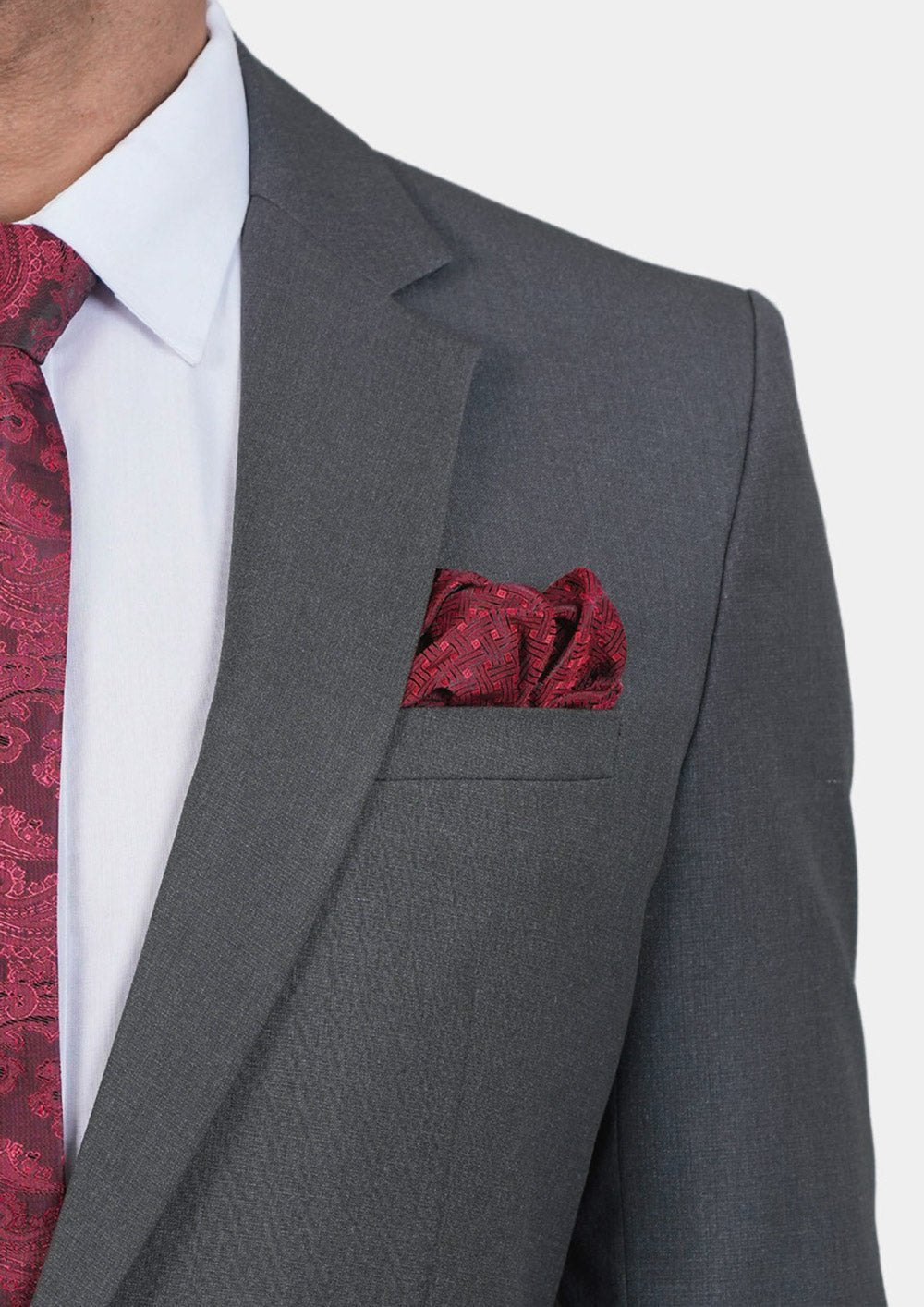
Over-accessorizing. Grey is a quiet color. It does not compete with accessories — it showcases them. One well-chosen pocket square, a simple tie bar, and a clean watch are sufficient. With grey, restraint is the accessory.

Featured Grey Suits from Sartoro

Every Sartoro grey suit is custom made to your measurements, in the $495–$850 range depending on fabric and weave. The range spans powder grey twill and windowpane in the light zone, microcheck and sharkskin in mid-grey, and crosshatch and flannel in charcoal — with stretch options for travel-heavy professionals. Three favorites above the foundation: the Mid Grey Herringbone Suit for texture that rewards a second look, the Charcoal Prince of Wales Suit for heritage pattern at full formality, and the Glacier Grey Twill Suit for men who want the light zone in a premium cloth. The cards below show the spectrum.

Mid Grey Herringbone Suit635 Mid Grey Herringbone Suit76
Super 130s
Luxury S130s Merino Wool by Cavani
$850
Charcoal Prince of Wales Suit967 Charcoal Prince of Wales Suit88
Premium
All-season premium wool blend
$645
Glacier Grey Twill Suit290 Glacier Grey Twill Suit103
Italian
All Season Pure Merino Wool S110s by Vitale Barberis Canonico, Italy
$800

Frequently Asked Questions

What is the most versatile grey suit shade?

Mid-grey is the most versatile shade in the grey suit spectrum. It works across seasons, flatters every skin tone, and transitions from job interviews to weddings to evening dinners with nothing more than a shirt and tie change. If you are buying your first grey suit, start with mid-grey.

Can you wear a grey suit to a wedding?

Yes — grey is one of the most popular suit colors for modern weddings. Light grey and mid-grey suit spring and summer daytime ceremonies; charcoal is the stronger choice for fall and winter or evening receptions. As a groom, grey photographs cleanly alongside groomsmen in navy or black while remaining visually distinct.

What color shirt goes with a grey suit?

White is the universal answer for all three shades. Light blue works for daily office wear. With charcoal, black or deep navy creates a tonal evening look. With light grey, pale pink or lavender work in spring and summer only. Avoid grey shirts unless you are deliberately building a tonal outfit.

What shoes go with a grey suit?

Brown shoes — tan, cognac, or dark brown — pair naturally with light grey and mid-grey. Black shoes are the standard for charcoal, and oxblood works across all shades. The one rule grey does not forgive: your belt must match your shoes. Avoid tan shoes with charcoal — the contrast is too stark.

Is a grey suit appropriate for a job interview?

Mid-grey is the strongest interview suit choice in most industries — it communicates professionalism without the severity of charcoal. Pair it with a white or light blue shirt, a conservative tie, and polished dark shoes. For creative industries, drop the tie and open the collar; the suit still communicates seriousness.

What is the difference between grey and charcoal?

Charcoal is the darkest grey shade — dark enough to be mistaken for black at a glance. It carries more formality and authority than mid-grey, which sits in the middle of the spectrum and stays more versatile and forgiving. Charcoal is reserved for high-stakes evening and formal contexts; mid-grey covers everything else.

A grey suit is not a single purchase. It is a system. Light grey handles the sun-drenched afternoons. Mid-grey handles the Tuesday-through-Saturday grind. Charcoal handles the moments when you need to walk into a room and be taken seriously before you say a word. Start with mid-grey. Add charcoal when the calendar demands evening formality. Add light grey when spring arrives. Layer in patterns — a herringbone, a Prince of Wales, a windowpane — when the foundation is solid and the rotation needs texture. Every Sartoro grey suit is custom made to your measurements, in the $495–$850 range depending on fabric and weave. The shoulders sit where they should. The sleeves show the right amount of cuff. The trousers break cleanly at the shoe. Browse the grey suits collection to see the range, or book a virtual consultation to discuss shade, fabric, and fit with a Sartoro consultant — and build a wardrobe that works as a system, not a single garment.

Shop Grey Suits
About the author

Expert insights from our team

Blake Vincent

Blake Vincent

Senior Menswear Consultant

I’m Blake Vincent, Sartoro’s menswear advisor. I’ve helped over 200 weddings and clients across the USA find clothing that fits their lives and personalities. My goal is to make you look great and feel confident, with honest advice and practical tips—always here if you want to chat about style!

The Wedding Closer
Style & Fit Specialist
Sartoro Blog Contributor