Cocktail Attire for Men: A Tailor's Complete Guide

Contents

Cocktail attire for men is a polished but flexible dress code that sits between business casual and black tie. The core uniform is a dark suit, a crisp dress shirt, leather dress shoes, and a tie that ranges from required to optional depending on the venue. Cocktail attire rewards a precise fit and quiet confidence far more than it rewards expensive fabric, which is why the same suit reads differently on two men of similar size but different tailoring.

Key takeaways

  • Cocktail attire occupies the upper middle of the formality scale. Relaxed enough to allow expression, polished enough to demand a tailored suit and leather shoes.
  • The reliable uniform is a dark suit (navy, charcoal, midnight blue, or deep gray), a dress shirt, leather oxfords or derbies, and a silk or knit tie.
  • Suit color matters more than the price tag: navy and charcoal carry almost every cocktail event correctly.
  • A tie is the safe default for weddings and corporate cocktail events; tie-less is acceptable at gallery openings and relaxed social cocktail venues.
  • Fit is the discipline that separates well-dressed from costume. Shoulder line, jacket length, and trouser break do most of the work.

What Cocktail Attire Means for Men

Where it sits on the formality scale

The dress code scale moves from casual through smart casual, business casual, cocktail, semi-formal, black tie, and white tie. Cocktail attire sits in the upper middle of that scale. It is more polished than business casual, less rigid than semi-formal, and several steps below the tuxedo-mandatory dress codes.

Read functionally, cocktail attire expects a jacket, real trousers, a dress shirt, leather shoes that take polish, and a finished look across accessories. It rules out anything that reads daytime casual (chinos, polos, denim, sneakers) and anything that reads black tie (a tuxedo, dress studs, a cummerbund). The space between those two boundaries is where the dress code lives.

The spirit of the dress code

Cocktail attire emerged from the American cocktail hour in the 1920s, when men needed a uniform sharper than daywear but less rigid than evening dress. That spirit still defines the dress code. A cocktail wearer is dressed to move comfortably in a room of strangers, holding a drink, navigating conversation, and looking composed in photographs. The cocktail dress code rewards quiet confidence and a precise fit, and it punishes anything loud, costume-like, or under-finished.

The Cocktail Attire Uniform

The suit

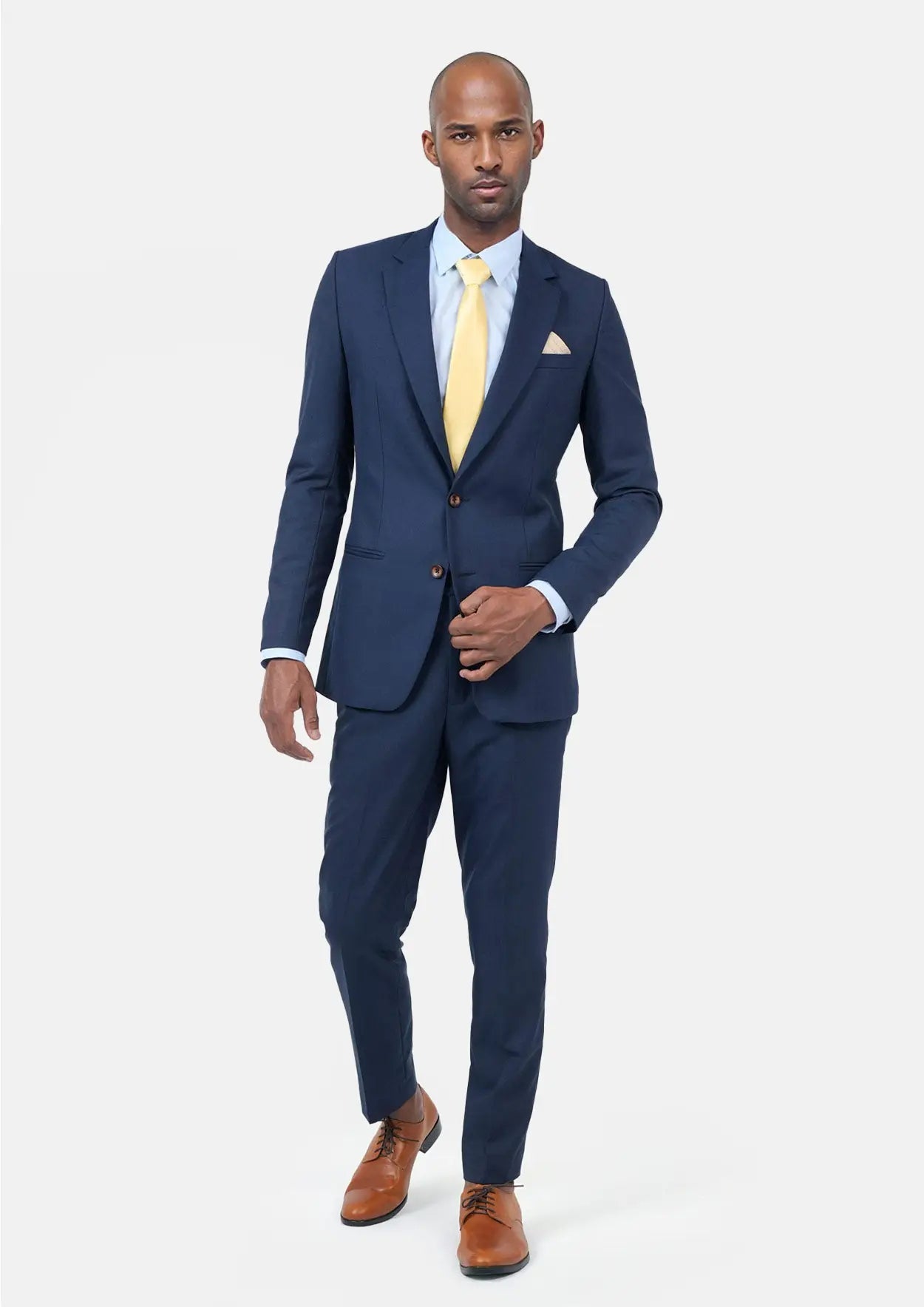
A single-breasted two-piece suit in a dark color is the canonical answer to cocktail attire for men. Navy, charcoal, midnight blue, or deep gray will carry almost every cocktail event a man is likely to be invited to, year-round. A double-breasted jacket is a confident modern variant for men comfortable with stronger silhouettes; it works best on taller frames and in evening settings. The trouser break should be clean rather than pooled, and the jacket length should hit roughly mid-seat. Proportions, not trend extremes, do the work.

The shirt

A crisp dress shirt is the floor. White is the most versatile and the safest default for any cocktail event with formal weight; pale blue and soft pink work cleanly across most cocktail settings and read slightly less rigid than white under social lighting. Fine textures such as twill or end-on-end read more refined than flat poplin under evening light. The collar should be a semi-spread or spread cut. Button-down collars carry casual associations that read off-register at cocktail attire events.

The tie (or no tie)

Cocktail attire tolerates a more flexible tie convention than most dress codes. A silk tie in a restrained pattern is the most formal interpretation and is the safer default for weddings and corporate cocktail events. A knit silk or grenadine tie reads modern and considered, and works particularly well at social cocktail venues. Tie-less is acceptable at relaxed venues (gallery openings, casual evening parties, contemporary art settings) provided the rest of the outfit is precise. Bow ties are a deliberate signal at cocktail attire events; choose one only if the event invites the gesture, otherwise the look slides toward black tie costume.

The shoes

Leather oxfords and derbies are the canonical cocktail shoes. Black leather reads correctly for evening cocktail events and any venue with formal weight; dark brown, burgundy, or oxblood reads correctly for daytime cocktail and for most social cocktail settings. Polished leather loafers (bit, tassel, or plain) work at relaxed cocktail events but slide out of bounds at the most formal end of the dress code, particularly at semi-formal-adjacent weddings. Suede dress shoes are appropriate for warm-weather or daytime cocktail. Sneakers, heavy boots, and square-toed dress shoes all break the dress code.

Pocket square, belt, and watch

A silk or fine cotton pocket square in white or a single quiet color finishes the jacket without effort. The belt should match the shoe leather in both color and finish: a brown belt with brown shoes, black with black. A leather-strap dress watch reads correctly at every cocktail event; a sport watch on a rubber strap does not. Cufflinks are optional and should remain restrained if worn. Lapel pins, novelty tie bars, and statement jewelry push the look from refined to costume.

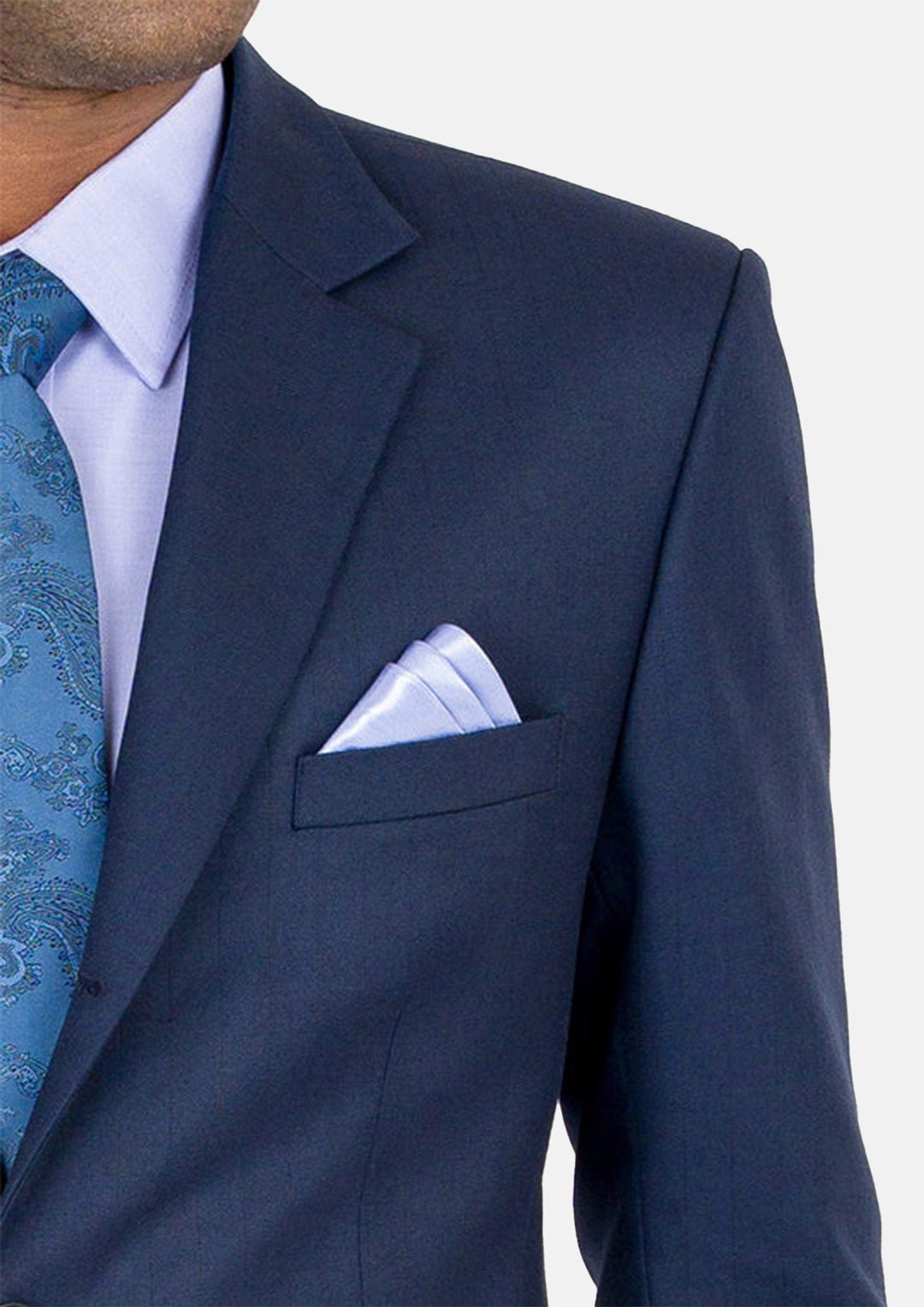
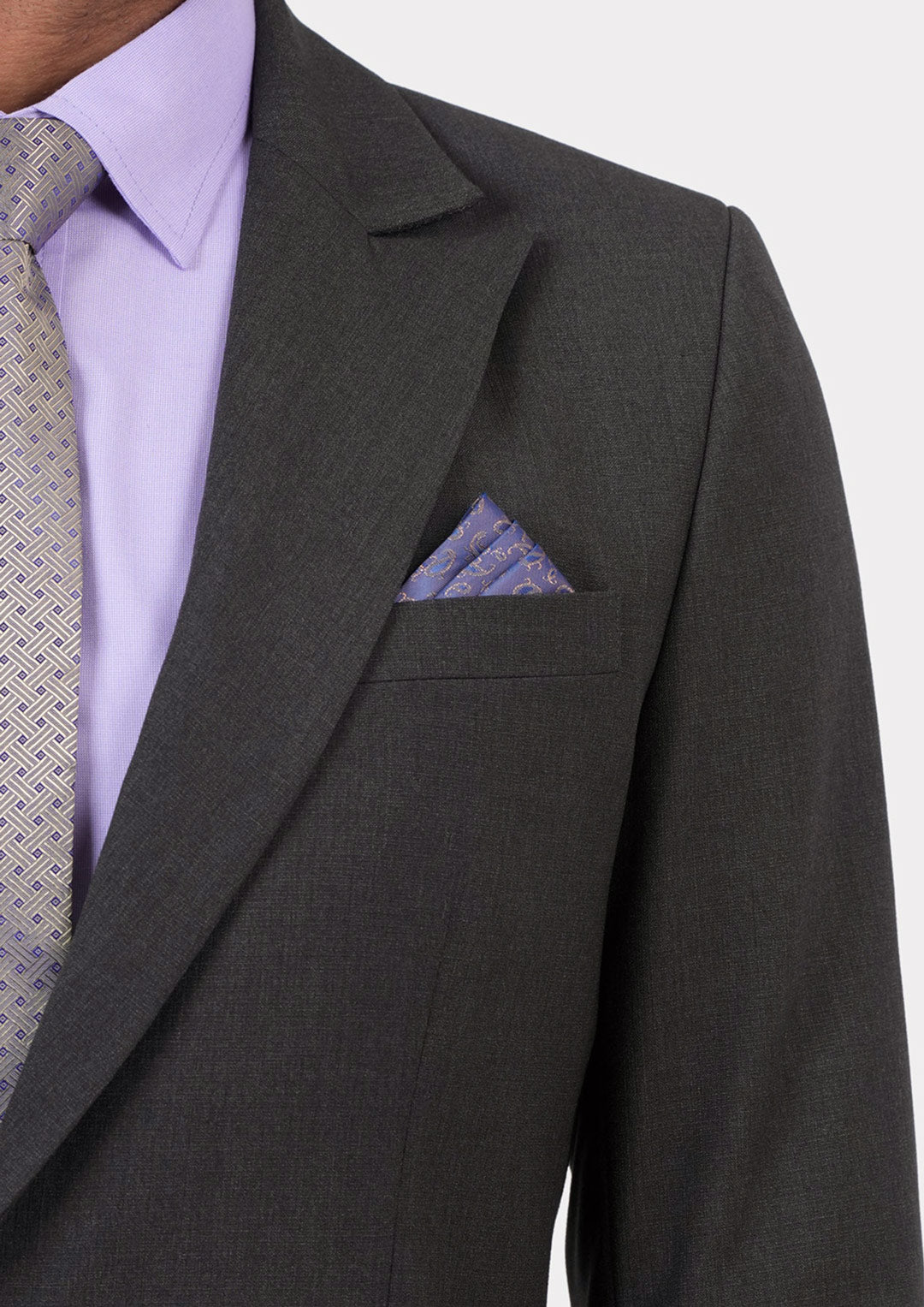
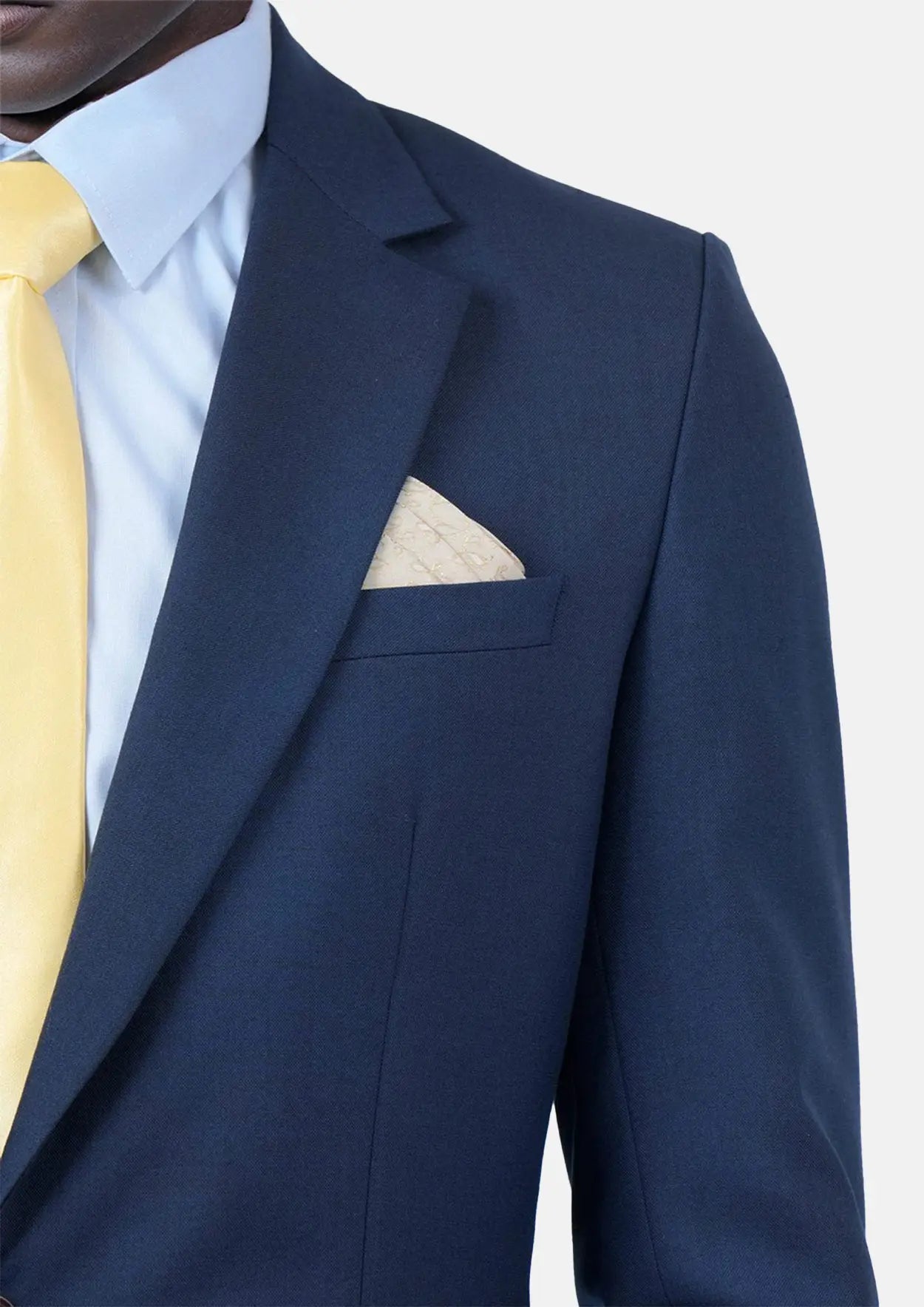
Tight detail of cocktail attire, navy lapel, white collar, muted teal silk tie, and ivory linen pocket square layered together

Tight detail of cocktail attire, navy lapel, white collar, muted teal silk tie, and ivory linen pocket square layered together

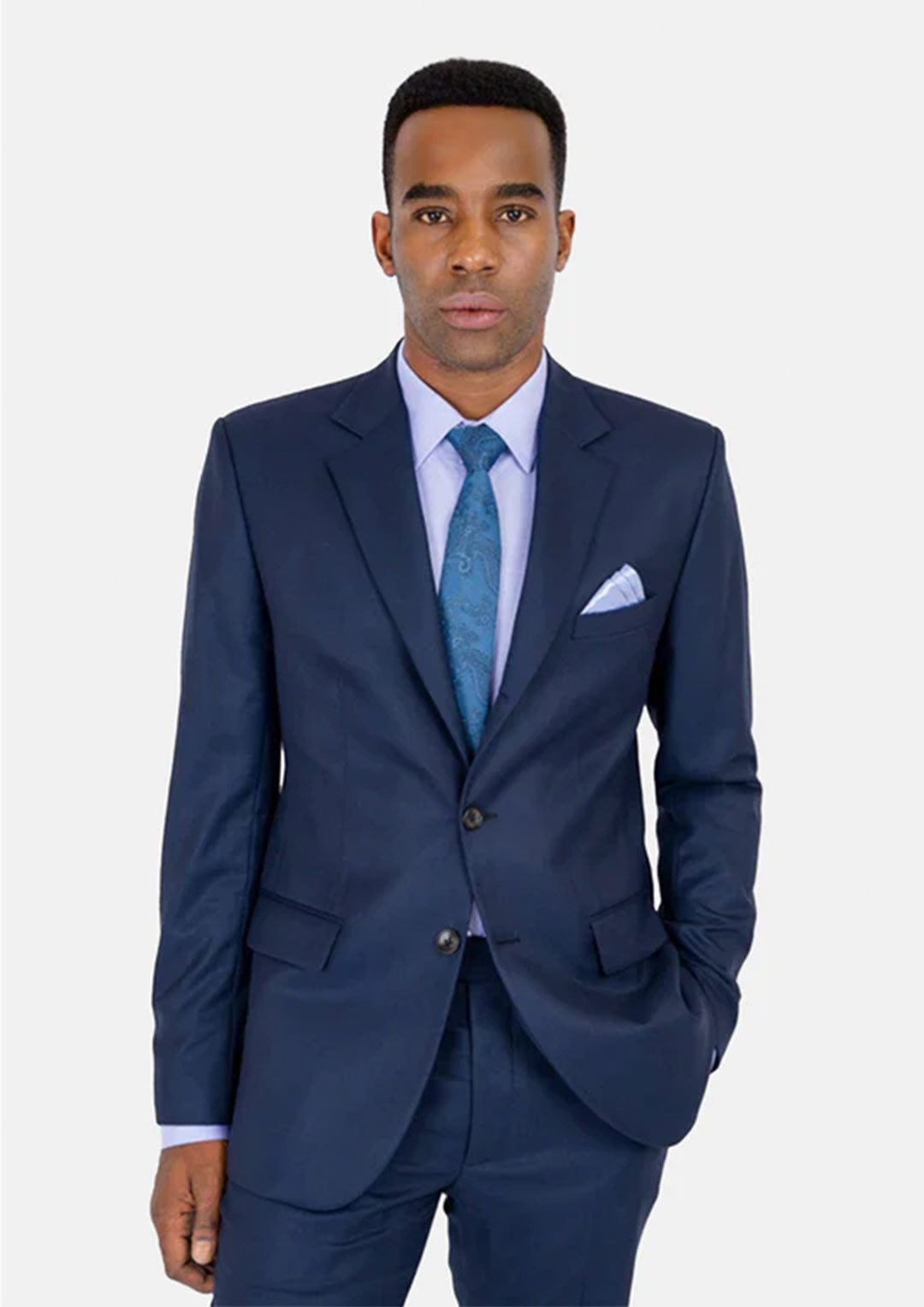
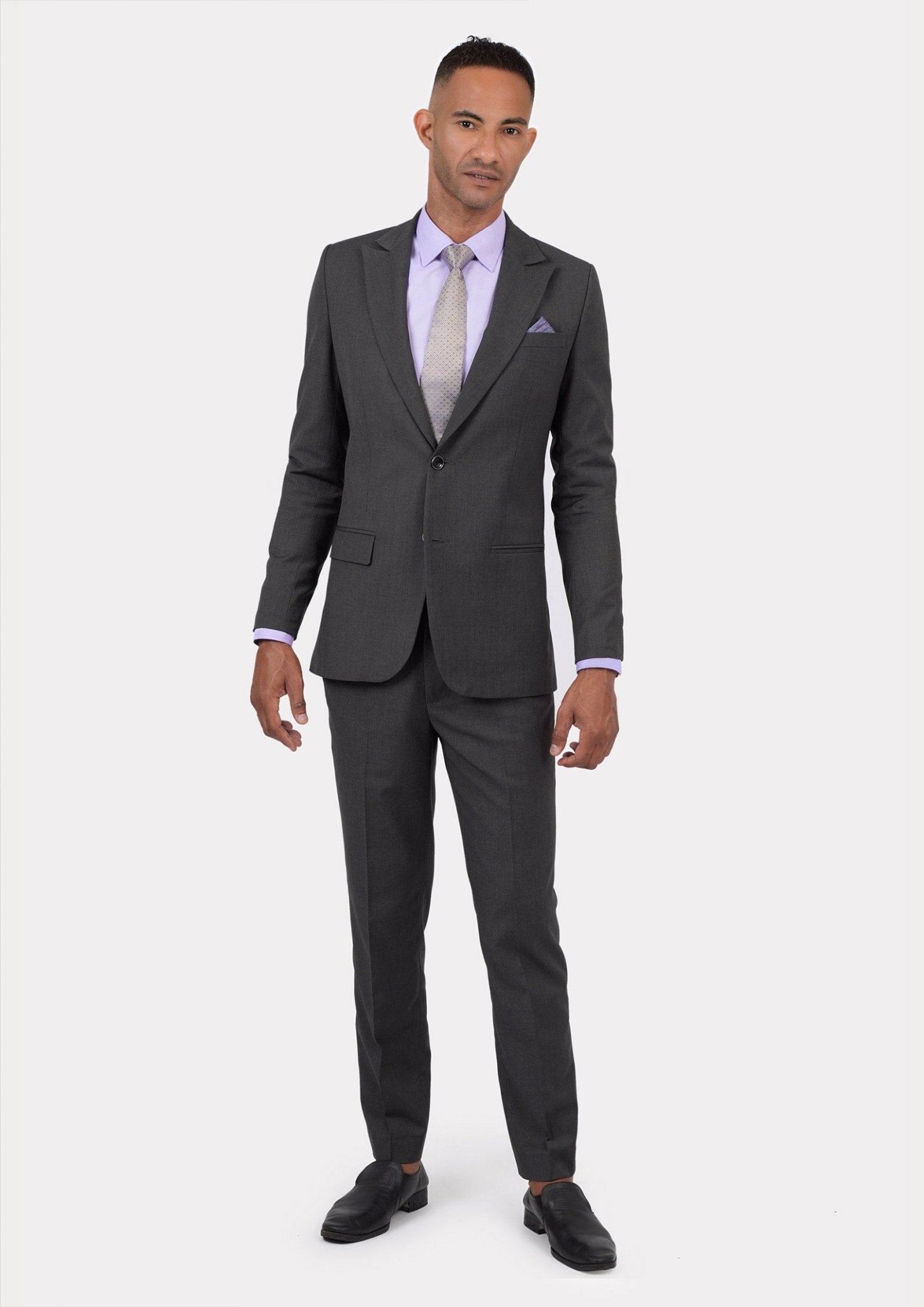
Thompson Navy Twill Suit - SARTORO259
Thompson Navy Twill Suit - SARTORO174
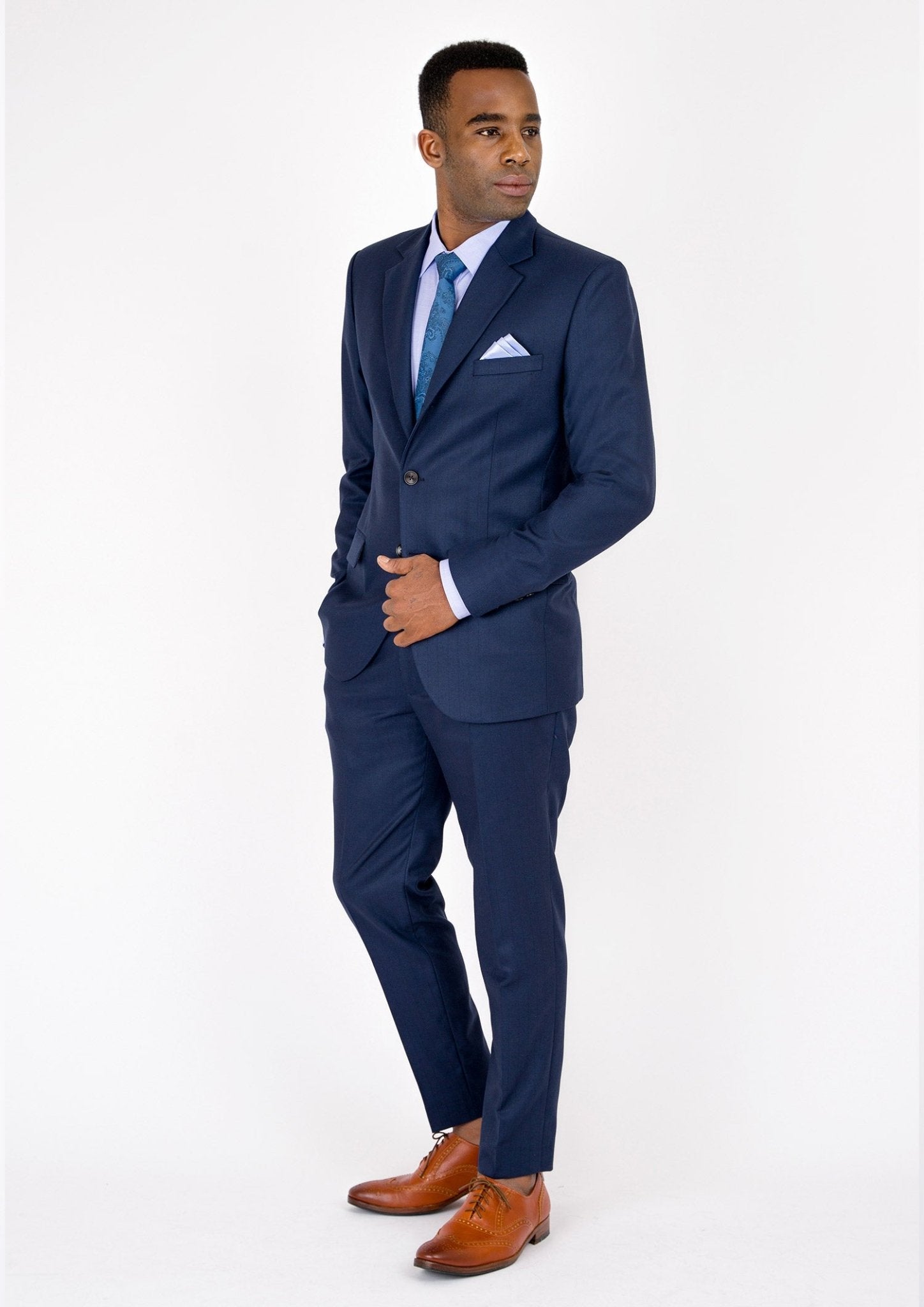
Thompson Navy Twill Suit - SARTORO301

Thompson Navy Twill Suit

Products in the outfit

Cocktail Attire by Occasion

Cocktail attire for a wedding

Most modern weddings that list "cocktail attire" sit at the more polished end of the dress code. The default outfit is a dark suit (navy or charcoal is the safest), a crisp white or pale blue shirt, a silk tie, and polished leather shoes. Coordinate with the wedding party where reasonable: avoid the suit color the groom is wearing if that information is available, and avoid white anywhere on the outfit. A pocket square in a quiet color completes the look. When the invitation is unclear about how formal the wedding will run, lean half a step closer to semi-formal. Overdressing reads attentive at a wedding; underdressing reads careless.

Cocktail parties and gallery openings

Social cocktail events allow more expression than weddings. A textured suit (hopsack, fresco, a quiet windowpane pattern), a knit tie, or a tie-less open-collar shirt all work in the right room. Loafers are acceptable. The discipline is restraint within the expression: one expressive element at a time, anchored by a precise fit. A pocket square or a quiet pattern is enough. Loud combinations push the look toward costume in a setting that already invites a personal touch.

Business cocktail and corporate events

Corporate cocktail events sit closer to business formal than social cocktail. A matched dark suit, a white shirt, a silk tie in a restrained pattern, and black leather oxfords or derbies are the reliable choice. Skip overt expression at corporate cocktail. The dress code reads as professional polish first, personal style second. A quiet pocket square and a dress watch finish the look without distraction.

Daytime cocktail events

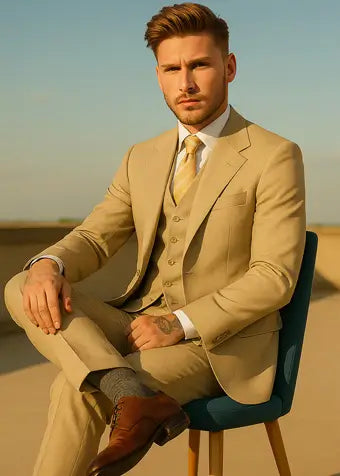
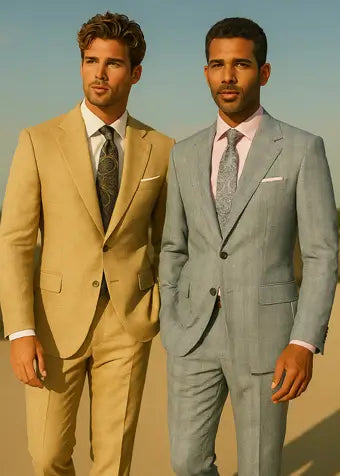
Daytime cocktail (late-afternoon weddings, garden parties, daytime galas) invites lighter colors and softer construction. Mid-gray, soft blue, light tan, and stone all read appropriate. A linen, cotton, or seersucker suit handles warm-weather daytime cocktail without breaking dress-code discipline. Brown or burgundy shoes outperform black under sunlight. Reserve the black suit for evening cocktail events specifically, where indoor lighting flatters its weight.

Wedding guest in a charcoal cocktail suit with pale blue shirt and patterned silk tie at an outdoor wedding cocktail hour in soft early-evening light

Wedding guest in a charcoal cocktail suit with pale blue shirt and patterned silk tie at an outdoor wedding cocktail hour in soft early-evening light

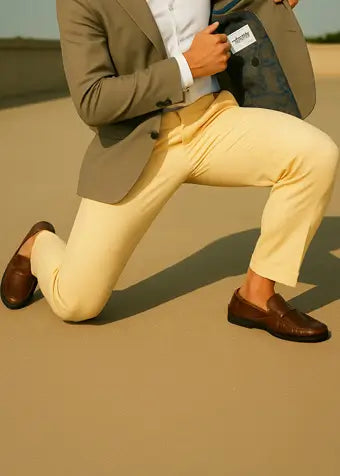
Man in a mid-gray daytime cocktail suit with open-collar pale blue shirt and brown loafers in a sunlit garden gallery setting

Man in a mid-gray daytime cocktail suit with open-collar pale blue shirt and brown loafers in a sunlit garden gallery setting

Bryant Charcoal Crosshatch Suit - SARTORO950
Bryant Charcoal Crosshatch Suit - SARTORO990
Bryant Charcoal Crosshatch Suit - SARTORO531

Bryant Charcoal Crosshatch Suit

Products in the outfit

Color and Fabric for Cocktail Events

Year-round palette and weight

Navy, charcoal, midnight blue, and deep gray are the year-round cocktail colors. Mid-weight worsted wool handles most rooms across most seasons. For winter cocktail events, a flannel or a slightly heavier wool weave adds depth and warmth without sacrificing the dress code. For evening events specifically, a deeper saturated color (midnight blue or deep charcoal) photographs and reads sharper under indoor lighting than a flat black.

A suit-color audit, run honestly, often saves more cocktail outfits than any tie change can. The color of the suit is the first visual signal of how seriously the wearer read the dress code.

Warm-weather cocktail attire

Summer cocktail and destination weddings invite lighter cloth and softer color. Tropical wool, fresco, linen blends, and seersucker all handle heat without surrendering the dress code. Mid-gray, stone, soft blue, and pale tan are all appropriate; the same dress shirt and shoe discipline holds. Half-lined or unlined construction preserves the breathability that makes the cloth choice worth it. A linen pocket square and brown or tan leather shoes finish the warm-weather look correctly. For a deeper look at the warm-weather suit that handles cocktail events especially well, the case for seersucker as a refined summer cloth covers the fabric, the color palette, and the fit considerations in detail.

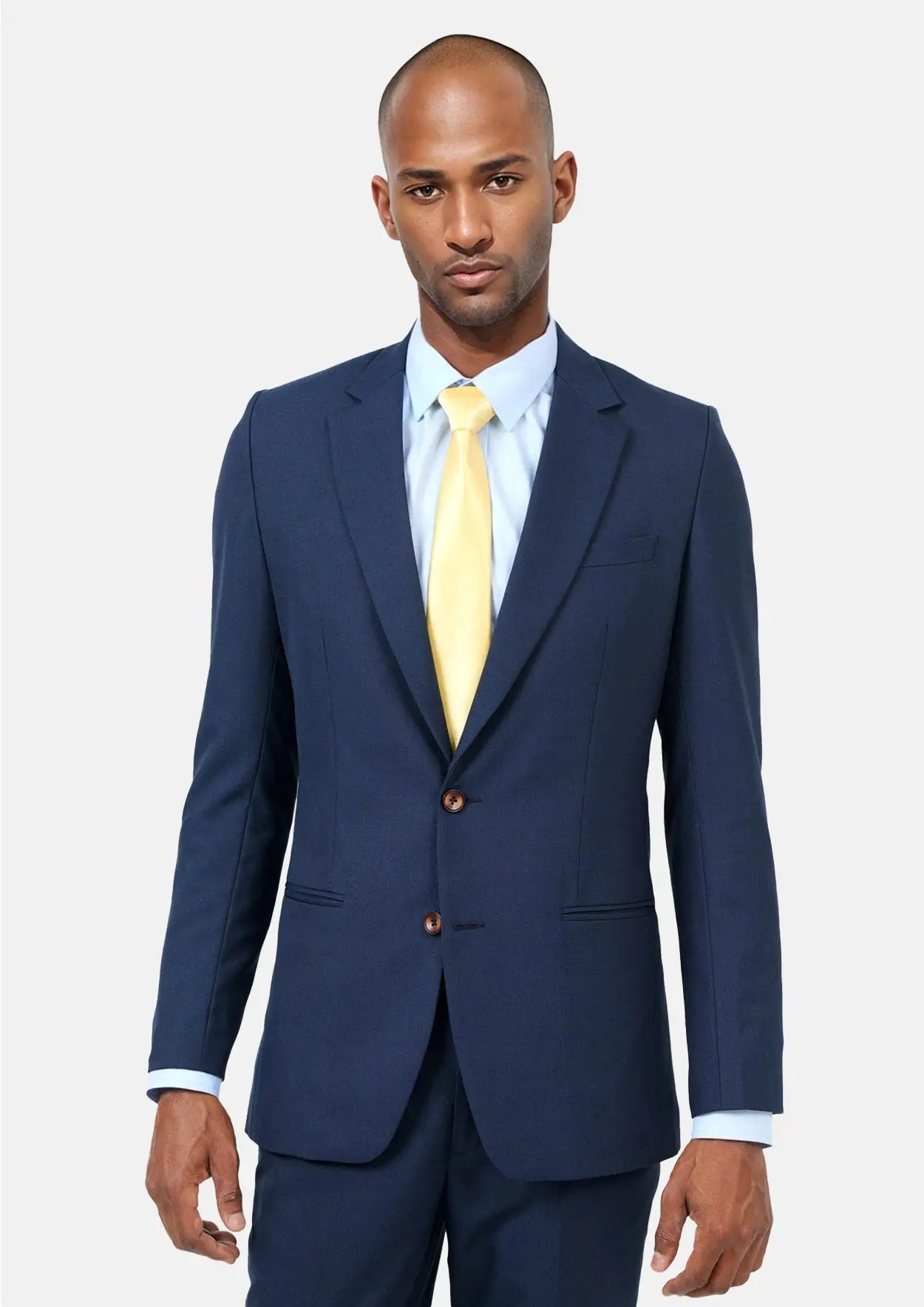
Astor Deep Blue Suit - SARTORO45
Astor Deep Blue Suit - SARTORO966
Astor Deep Blue Suit - SARTORO405

Deep Blue Sharkskin Suit

Products in the outfit

How Cocktail Attire Differs from Adjacent Dress Codes

Cocktail attire sits one step below semi-formal and two steps below black tie. Read the line this way: semi-formal expects a matched dark suit, a crisp shirt, and a conservative silk tie, with discipline tilted closer to black tie. Cocktail attire allows softer construction, expressive ties, and broader color or texture choices. Black tie requires a tuxedo and is a separate scale entirely. Business formal is also a separate scale (daytime, conservative, matched dark suit, quiet tie).

For a full side-by-side of cocktail and semi-formal, which is the dress code most often confused with cocktail, Sartoro covers the comparison in detail at cocktail attire versus semi-formal. For the broader landscape of all major men's dress codes, a field guide to what each dress code really means maps the full scale from white tie through smart casual. For events tilting toward the formal end, the line between a suit and a tuxedo clarifies when each garment is the correct call.

Common Cocktail Attire Mistakes

  • Wearing a black suit to a daytime cocktail event. Black reads heavy under sunlight; charcoal, midnight navy, or deep gray reads more refined for any cocktail event before sunset.
  • Skipping the jacket. A dress shirt and dress trousers without a jacket is not cocktail attire. The jacket is the floor of the dress code.
  • Wearing tuxedo elements. Satin lapels, bow ties with cummerbunds, dress studs, and patent leather all belong at black tie events. They overshoot cocktail attire.
  • Treating cocktail attire as business casual. Chinos, polo shirts, and loafers without a jacket undershoot the dress code at every cocktail event.
  • Loud novelty patterns. Wild ties, statement pocket squares, and bold floral jackets push the look from refined to costume — particularly at weddings where the focus belongs elsewhere.
  • Poor fit. A correctly fitted off-the-rack suit always reads better than a poorly fitted expensive suit. Shoulder line, jacket length, and trouser break are where most men lose the cocktail look. For the visual markers that define a clean suit silhouette, Sartoro's guide to how a suit should fit breaks them down section by section.
  • Mismatched leather. Belt and shoes should agree in color and finish; mixing brown shoes with a black belt undoes the rest of the outfit.
Man in a midnight blue cocktail suit with white shirt, navy silk tie, and black oxfords in an upscale lounge, every cocktail attire element executed correctly

Man in a midnight blue cocktail suit with white shirt, navy silk tie, and black oxfords in an upscale lounge, every cocktail attire element executed correctly

Frequently Asked Questions

What is cocktail attire for men?

Cocktail attire for men is a semi-formal dress code that sits between business casual and black tie. It expects a dark suit, a crisp dress shirt, leather dress shoes, and usually a tie. The dress code allows more expression than semi-formal but more polish than business casual. It does not require a tuxedo, and it rules out jeans, polo shirts, and sneakers in any form.

Is a tie required for cocktail attire?

A tie is the safe default for cocktail attire, particularly at weddings and corporate events. At more relaxed cocktail venues such as gallery openings, social parties, or contemporary art settings, a tie-less open-collar shirt is acceptable provided the rest of the outfit is precise. Read the invitation and the venue together. When uncertain, wear the tie; removing one is easier than producing one.

What color suit is best for cocktail attire?

Navy is the most versatile cocktail suit color and the safest choice for any first cocktail suit. Charcoal gray is the most formal of the standard cocktail choices and reads particularly well at evening events. Midnight blue and deep gray handle evening cocktail events with depth and presence. Lighter colors like mid-gray, soft blue, and stone work for daytime or warm-weather cocktail.

Can you wear a black suit to a cocktail event?

A black suit works for cocktail attire at evening events, holiday parties, and indoor venues where its weight reads sharp rather than heavy. For daytime cocktail events — afternoon weddings, garden parties, daytime galas — charcoal, midnight navy, or deep gray reads more refined than black under sunlight. Black at daytime can read funereal; the same color after sunset reads composed.

What shoes go with cocktail attire?

Black leather oxfords and derbies are the most formal cocktail shoes and the right choice for evening events or any cocktail venue with formal weight. Dark brown, burgundy, or oxblood leather reads correctly for daytime and most social cocktail events. Polished leather loafers work at relaxed cocktail venues but slide out of bounds at semi-formal-adjacent weddings. Avoid sneakers, heavy boots, and square-toed dress shoes at any cocktail event.

Can you wear jeans or chinos as cocktail attire?

No. Denim of any color falls outside the cocktail dress code. Chinos are too casual even in dark colors; the dress code expects real dress trousers, either as part of a suit or paired with a dress jacket. If an event invitation lists cocktail attire, the trousers should belong to a suit.

What's the difference between cocktail attire and semi-formal?

Semi-formal sits one step closer to black tie than cocktail attire does. A semi-formal event expects a matched dark suit, a crisp shirt, and a conservative silk tie. Cocktail attire allows softer construction, expressive ties, broader color, and broader texture. For a complete side-by-side of the two dress codes — when each one applies, what each expects piece by piece — Sartoro covers the full comparison in a tailor's view of cocktail attire and semi-formal.

A final note on fit

Cocktail attire rewards precision more than it rewards expense. The dress code's flexibility magnifies every fit issue: a shoulder line that is half an inch too wide, a jacket that drops too low, a trouser leg that pools at the shoe. The same dark suit in two different fits reads as two different outfits across a cocktail room. A suit built around an individual carries the dress code in every direction — from afternoon wedding to late-evening party — without effort. When an event calls for a suit that needs to handle cocktail attire across seasons, occasions, and settings, a custom suit cut to personal measurements holds the architecture that the dress code is asking for.
About the author

Expert insights from our team

Blake Vincent

Blake Vincent

Senior Menswear ConsultantSenior Menswear Consultant

I’m Blake Vincent, Sartoro’s menswear advisor. I’ve helped over 200 weddings and clients across the USA find clothing that fits their lives and personalities. My goal is to make you look great and feel confident, with honest advice and practical tips—always here if you want to chat about style!

15+ years experienceThe Wedding Closer
Certified Style ConsultantStyle & Fit Specialist
Published AuthorSartoro Blog Contributor
Your cart is empty
Looking for ideas?
We'll send measurement instructions
to you. Or create your fit profile now.
    Secured checkout through Shopify with: